Over the past several months, I’ve found myself falling farther and farther behind with my book reviews. I’ve shared with some of my closest author friends that I’ve been dealing with some health issues, and they have been wonderfully understanding and supportive.
After giving it a lot of thought, I’ve decided that I need to step away from my blog for a while to give myself the time and attention I need to take care of my health and get a few things figured out. It always breaks my heart when I fail to follow through with a review that I’ve promised.
This is NOT goodbye. I love my blog, I love books, and I love the wonderful authors who have trusted me with their stories. Furthermore, I love all my friends in the book world. I fully intend to return when I’m in a better place to give the blog—and the books and authors I review—the time and attention they deserve.
For now, I’m giving myself permission to step back without feeling guilty about the books waiting in my reading pile. ❤️ Feel free to continue to visit my blog and check out all the archives.
Please know that I will still be reading and reviewing as I am able. I’m just not able to keep up with deadlines and schedules at this time.
Thank you to all of you who have supported me, encouraged me, and will continue to think of me during this time. It means more than you know.
Genre: Contemporary Fiction Release Date: August 31, 2026
REVIEW:
Hello my friends! Come on in, grab a cuppa and sit a spell.
Harbor Reflections by Tammy L. Grace is book five in her Stillwater Inn series. Every book in this series is so heartfelt and her characters are troubled and easy to love because you can feel their pain. I have loved all of Tammy’s series and books, but I have to say that this series is a standout! I don’t believe I’ve ever read a series as good as this one that hits all the right notes.
First of all let me tell you a little tiny bit about the series. Book one is about the matriarch and her wish to pass the Stillwater Inn to the ones she loves and who need each other, but don’t know it yet. Each of the following books is about each of the six heirs. This one is about Nolen Gallagher. Every book I’ve read so far makes me think this is my favorite heir so far. I don’t want it to end because I know the next book will bring another heir.
Nolan is the strong silent type. He keeps his distance from the other heirs and carries on with is part of restoring the Inn they all have a piece of. Nolan has carried a secret heartache with him for many years and it is going to take a lot to get him to share and come to terms with his past. He is such a great guy.
If you love a series that is heartfelt and yet fun to read with a little bit of a mystery thrown in, then this series is for you. It has all the feels! It has love, angst, pride, accomplishment, DIY, you name it. I believe it has something for everyone. I love these characters. If you are a fan of the Hometown Harbor series, you will also meet some of your favorite characters from those books too! How fun is that?
I love this series and will be very sorry to see it end. If you don’t have any plans for the upcoming holiday, here you go! You can start reading now and be caught up by the time book number six rolls out. You won’t regret it. Tammy L. Grace is a wonderful author and her Stillwater Inn is a great place to spend the long weekend.
Until next time, Happy Reading!
P.S. Don’t forget to support the authors you read by leaving a review. Even a few words help to get their books into more hands.
P.P.S. I received a complimentary copy of this book from the author. The opinions I have expressed are my own and I was not required to write a review. I am disclosing this in accordance with the Federal Trade Commission’s 16 CFR, Part 255.
SYNOPSIS:
“Heartbreak and healing collide in the Stillwater Inn Series—an emotional family drama that breaks your heart, mends it again, and stays with you long after the last page.”—Kay Bratt, Multi-Million Copy Bestselling Author
Master carpenter. Master at hiding. One truth could finally set him free.
Nolan Gallagher prefers the quiet company of his tools and his golden retriever, Tucker. A master woodworker and carpenter, he honors his mother’s memory through meticulous craftsmanship, restoring the Stillwater Inn’s intricate woodwork one careful piece at a time. The year-long obligation forces this lifelong loner into the company of five others, but Nolan keeps his distance. His regrets stay locked away like the secret he’s carried for over two decades.
When he meets a kind island native and longtime family friend who sees past his silence, Nolan feels the pull of connection. She offers the warmth he’s long avoided and the possibility of a second chance. He fears sharing his hidden truth might shatter the fragile bonds forming between them.
With Tucker at his side and the inn’s restoration revealing more than old beams, Nolan must choose—cling to isolation or finally let his walls fall, risking vulnerability for the healing and love he never believed he deserved.
Dive deeper into the island you love with Harbor Reflections, the fifth book in the Stillwater Inn series—an emotional story of quiet strength, long-held secrets, and the transformative power of found family and a second chance at life.
Read more from USA Today bestselling author Tammy L. Grace
HOMETOWN HARBOR SERIES
Hometown Harbor: The Beginning (Prequel Novella) Finding Home Home Blooms Promise of Home Pieces of Home Finally Home Forever Home Follow Me Home Long Way Home Come Home for Christmas Feels Like Home Whispers of Home
STILLWATER INN SERIES Harbor Dreams Harbor Echoes Harbor Winds Harbor Lights Harbor Reflections Harbor Shores Harbor Hearts
COOPER HARRINGTON DETECTIVE NOVELS
Killer Music Deadly Connection Dead Wrong Cold Killer Deadly Deception Deadly Pursuit
GLASS BEACH COTTAGE SERIES
Beach Haven Moonlight Beach Beach Dreams
SISTERS OF THE HEART SERIES Greetings from Lavender Valley Pathway to Lavender Valley Sanctuary at Lavender Valley Blossoms at Lavender Valley Comfort in Lavender Valley Reunion in Lavender Valley
CHRISTMAS BOOKS
A Season for Hope (Christmas in Silver Falls) The Magic of the Season (Christmas in Silver Falls) Christmas in Snow Valley (Hometown Christmas Series) One Unforgettable Christmas (Hometown Christmas Series) Christmas Sisters (FREE PREQUEL to Soul Sisters at Cedar Mountain Lodge) Christmas Wishes (Soul Sisters at Cedar Mountain Lodge) Christmas Surprises (Soul Sisters at Cedar Mountain Lodge) Christmas Shelter (Soul Sisters at Cedar Mountain Lodge) Christmas Hearts (Soul Sisters at Cedar Mountain Lodge)
OTHER TITLES The Wishing Tree Wish Again Overdue Wishes One More Wish Pick of the Litter Hearts Unleashed Welcome Aboard Uncharted Waters
WRITING AS CASEY WILSON A Dog’s Hope A Dog’s Chance
ABOUT THE AUTHOR
Tammy L. Grace is a USA Today bestselling author of women’s fictions, family sagas, mysteries, and Christmas stories. She’s known for writing perfect escapes, unforgettable characters, and binge-worthy stories. Readers often say her characters feel like old friends and love the dogs she weaves into all her books. She brings readers entertaining stories that take them on an emotional journey, filled with complex relationships of friendship and family in her women’s fiction novels. Mystery readers delight in her fast-paced whodunits and fans of Christmas love her small town holiday stories filled with family, friendship, and furry characters.
Tammy also writes under the pen name Casey Wilson and has released two emotional and heartwarming stories about the bond we have with our beloved canine companions.
When Tammy isn’t working on ideas for a novel, she’s spending time with family and friends or supporting her addiction to books, tea, and chocolate. She and her husband make their home in Nevada and have one grown son and a spoiled golden retriever.
Tammy invites you to subscribe to her newsletter at http://www.tammylgrace.com/newsletter and she’ll send you a free interview with all the dogs in her Hometown Harbor Series as a thank you gift. Find her on Facebook at https://www.facebook.com/tammylgrace.books and be sure and click the follow button here on Amazon.
Genre: Black and African American Historical Fiction Release Date: August 10, 2026
INTRODUCTION:
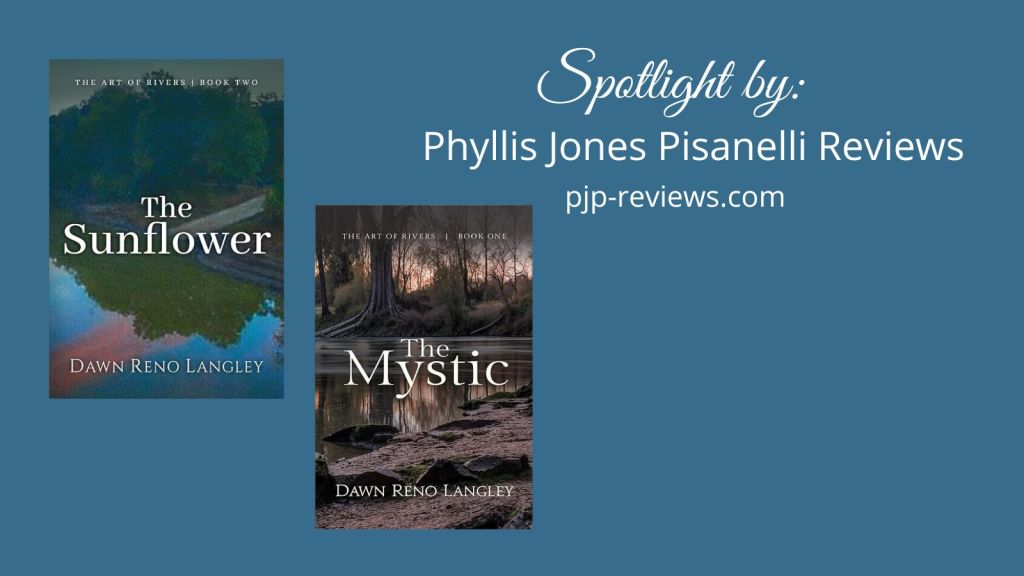
I’m so excited to bring you the first two books in The Art of Rivers series. The Mystic is book one and The Sunflower is book two and just released for our reading pleasure. One of my favorite genres is Historical Fiction and I can’t wait to sit down and immerse myself in these books. For us lovers of series, there is a book three in the works!
THE MYSTIC:
“An enticing deep dive into the mind of the main character as she grapples with her role in a terrible accident.” –Drew Becker, author of The Joyful Brand
It’s the 1950s in Massachusetts when Beth Robbins’ world is shattered by her husband’s hit-and-run accident compounded by his mysterious disappearance. The police investigating the accident include Graham Jackson, the only Black officer on the force, and a man Beth feels strangely drawn to. As Beth navigates a complex web of secrets, racial tensions, and moral dilemmas, she must face the truth about her husband’s actions while forging her own path forward, perhaps toward fulfilling her dream of becoming an artist.
With twists and turns centered around the search for Jack Robbins, The Mystic offers an unforgettable exploration of remorse, responsibility, and the power of human connection. Let the river sweep you away into a gripping tale of mystery, relationships, and the transformative nature of truth.
THE SUNFLOWER:
In the heart of 1960s Mississippi, where every act of courage risks everything, a Black police officer and his White wife dare to love—and to hope—in the shadow of segregation. “The Sunflower” by Dawn Reno Langley follows Graham Jackson and Beth as they navigate a world hostile to their union, facing threats from the Ku Klux Klan, community scorn, and the looming danger that follows every step. When Beth discovers she is pregnant, their fears intensify, yet so does their determination to build a better life for their child.
As Beth finds solace and purpose in teaching art to a gifted student, and Graham is called upon by Senator Kennedy himself to help shape the course of history, the couple is drawn deeper into the struggle for justice. Tragedy, loss, and unexpected kinship force them to make a heartrending decision: escape the only home they’ve known for the promise of a safer future.
In this poignant and gripping novel, Langley paints a portrait of resilience and hope, reminding us that love—in all its forms—can bloom even in the most inhospitable soil.
QUESTIONS & ANSWERS
You published your first article at nine years old, about the Cuban Missile Crisis. What made a child want to write about the fate of the world?
My parents encouraged open communication about what was happening in the world around us. We always had great dinner conversations, even when I was very young. I remember being curious about what was happening with the Cuban Missile Crisis, because my school taught us how to remain safe during that time. We had drills in grammar school on a daily basis that sent us down to the basement where we would line up by classroom until the bell rang to send us back to our rooms. I felt safe in that cement bunker, but I wanted to know what we were hiding from. My mother told me about nuclear war and how she coped with it when my father was fighting in World War II and Korea, and that is what inspired the article.
You have written everything from children’s books to novels about gender identity, from antiques guides to a book about the goddess in all of us. Is there a thread connecting it all, and can you put it into words?
To be honest, everything I’ve written has been about me exploring something I’m interested in. The first children’s books I wrote (The Jenny Books) were for my daughter, and she really loved that I had written stories with a character who had her name—but the stories were part of my own story and spawned from my childhood.
My antiques books started when I was writing articles for antiques and collectibles newspapers and magazines. I was an antiques dealer, so I researched everything I sold, and I wrote articles about those items. When I created a two-page spread about Black American collectibles, an editor at Crown Publishers contacted me about expanding what I’d written into a whole book. After that, I kept writing for newspapers and magazines, and having written one book, I queried editors about additional ones. I was very lucky to find an editor who liked my work, and we collaborated for many years and many books after that.
I’ve always wanted to write novels, and my first one (All That Glitters) was born when my editor and I were relaxing in a hot tub at her cottage in Maine. She helped me get an agent, and pretty soon, ATG found a home. After that, I continued to write novels, and I produced four more. Analyzing the Prescotts was actually the result of my PhD dissertation, which centered on transgender authors.
You Are Divine came from the love I have for feminist studies and my yoga background. I’ve always felt strongly about the world we women create, and I’ve read widely about goddesses and strong women. To put together those “loves” was a work of the heart for me.
Your novel Analyzing the Prescotts follows a family torn apart when the father chooses to live as a woman. How do you prepare yourself to write about something that sensitive, and why do stories like that matter right now?
I studied transgender authors and their voice pre- and post-transition during my doctoral program, and my writer’s mind automatically wanted to create a story about what happens to families who live through such a drastic change in the family makeup. My research in my PhD years helped me truly understand what it means to transition from one gender to the other, and I hope it’s obvious that I have compassion for what it means to each member of the family as the father transitions to her female self.
Preparation to write about sensitive topics changes as the topic changes. I try to do as much research about the topic as possible, and I immerse myself in what human beings might be experiencing and feeling. Compassion is extremely important when one is writing about topics that are not always understood by the general public. I feel that my job as a writer is to open up the discussion people should have about those topics. It’s not always easy to present a difficult subject in a way that might allow readers to understand.
Stories like the Prescotts, and the interracial relationship I write about in The Art of Rivers series, are not always accessible to all readers, and I like to think that readers want to explore difficult stories like transgender issues and civil rights in the fiction arena, because it’s easier to understand those topics in a story rather than, say, a documentary. The fiction format brings people closer to the characters because they’re “not real,” and readers can relate when there isn’t the challenge of facing a real person.
You are a Fulbright scholar, hold a PhD and an MFA, and have worked with university programs in Pakistan. How has that academic journey shaped you as a storyteller rather than constrained you?
The academic journey actually happened long after my writing journey began. I appreciated education during my formative years and got great grades, but after I graduated from high school, I felt like my education had ended, and that was a big disappointment for me.
Every one of my educational experiences was separated from the next one by at least five years, and to be honest, that was good because it gave me time to digest what I had learned. I’ve always been thirsty for learning new things, and I believe that started the moment I entered my first library. When I realized that books existed on any topic I was curious about, I felt as though I’d opened a treasure trove. The first book I read that spawned my love for travel was Kon Tiki, and it gave me a thirst for discovery that still hasn’t been quenched.
The MFA program at Vermont College made me feel for the first time that I was a writer—and a successful one, at that. I had always felt as though someone would find out, sooner or later, that I had come to this profession too easily. I felt like everyone else was a better writer than I was—true imposter syndrome. But being at VC made me realize that I was finally accepted as a professional writer, and that I could explore the fictional world even more than I already had.
When I came to my PhD program, they asked what I wanted to research, and since I had looked into women writers and their private and public writings during my MFA program, I knew I had to take it up a notch. I realized that I had some prejudice toward transgender folks, and in order to conquer that prejudice, I knew I had to understand trans people. And it did. As a result of that research, I created a story that I believe is one of the best I’ve created.
So, all in all, creativity and education go hand in hand.
You live with an ocean view, you call it “Writing from the Beach,” and you have even opened your guest room to other writers on a donation basis. What does the sea give you that nothing else can?
I no longer live on the coast of North Carolina, but I’ll soon be moving to the coast of Portugal! When I opened my house to other writers in North Carolina, I felt both like I was giving back, as well as spending time with other writers (and there is nothing better than that). The sea gives me a feeling of peace, and it also reminds me that the peace I feel is often offset by the strength and power of the ocean. When I can walk on a beach, my mind is free to explore whatever ideas I have and creativity expands.
You are working on a memoir about the loves of your life, you are a certified yoga instructor, a mosaic artist, and you travel the world with your husband Ian. How do you protect your creativity in the middle of all that living?
I’m no longer married to Ian.
All of the work that you mentioned actually buoys my creativity. One idea gives birth to another. I find that I can creative when working up a yoga lesson, and my mosaic work is inspired by nature, literature, and art. I don’t feel like I have to protect my creativity while I live, because living is what inspires me creatively.
What do you want the children who one day read your books to understand about who you were and what you fought for?
Oh, this is a great question.
I want future children to know that I was once a child, too, and that my days in libraries and reading as many books as I could were what helped me become a writer. I learned early in my childhood to dream, and the more I dreamt, the more I realized there were people in the world who had different experiences than I did. Once I realized that, I wanted to travel and to meet those people and see those places that I had read about. Offering stories of my own world—or of others I’d learned about—gave me a reason to write and to be as a human being. I do hope that those future children realize that if they care about something, whether it’s a person or an issue, they can fight for/against it, they can write about it/them, and their voices matter.
ABOUT THE AUTHOR:
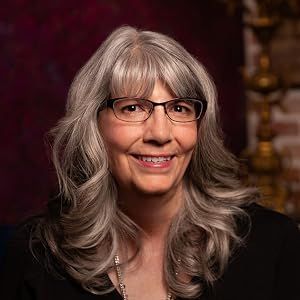
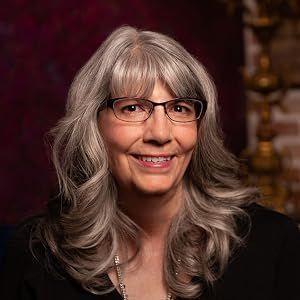
Dawn Reno Langley
Book Two of the Art of Rivers, THE SUNFLOWER, will launch on August 10!
At the tender age of nine, Dawn Reno Langley wrote her first published piece: an essay on the Cuban Missile Crisis. Since then her pen/computer has spewed forth a great number of written works ranging from newspaper articles to novels, poetry to children’s books, memoirs to fantasies. Her pseudonyms include: Dawn Reno, Dawn E. Reno, Dawn Elaine Reno, Dawn Reno Langley, and Diana Lord.
A nomad, she travels the world, caring for other people’s homes and animals. She’s traveled throughout Europe, the Far East, South America, and Africa–and is always looking for new places to visit.
As a teacher, Dawn has touched the lives of students from a 6th grade Montessori class to students in honors-level university courses, and writers in MFA and PhD programs. She counts many of them among her friends.
She blogs about books on Goodreads; talks about writing and the world around her on LinkedIn; and speaks to groups about writing, the social justice issues she stands for, and life as a Buddhist-yogi-writer. Her business, Rewired Creatives, Inc., offers editing, ghostwriting, coaching, and writing retreats.
Next on her plate: launching Love, Leashes & Letting Go — a memoir — in September!
Genre: Contemporary Fiction Release Date: July 30, 2026
REVIEW:
Hello, my reading friends!
I am so blessed to be able to talk to you about Harbor Lights, the fourth book in The Stillwater Inn Series by Tammy L. Grace. I love this series, and there are so many wonderful things about it. The story takes place in the world of Hometown Harbor. If you loved that series, you’ll enjoy this one because it’s a spin-off, you’ll be reacquainted with some of the characters from Hometown Harbor. What fun is that?
The first book in this series, Harbor Dreams, introduces us to Ida Grayson, who is nearing the end of her life and making plans for the future of her beloved Stillwater Inn. The second book, Harbor Echoes, brings all of the heirs together to hear the details of her will and discover the stipulations they must meet. The third book, Harbor Winds, tells the story of Miles Larson, Ida’s stepson. Now we come to Harbor Lights, which focuses on Dawn Larson, Ida’s stepdaughter and a trained chef. As you might guess, each book centers on a different heir. I am really enjoying the journey of getting to know each one and discovering why they meant so much to Ida.
In Harbor Lights, we learn what makes Dawn tick. We discover her backstory and watch her relationships at the Inn grow and deepen. Each character adds another layer to the story while helping move it forward. We also see the beautiful Inn continue to be restored and come to life. Along the way, a mystery hidden within the walls of Stillwater Inn begins to unfold.
We find something for everyone within the covers of these books. There are DIY restoration projects, an intriguing mystery, and love stories from both the past and present. Every book leaves me eager to return to Stillwater Inn.
If you’re like me and enjoy a series filled with richly developed characters, a wonderful storyline, a touch of mystery, and the charm of restoration projects, then this series deserves to be your next great read. It definitely belongs on your nightstand. Until next time, Happy Reading!
P.S. Don’t forget to support the authors you enjoy by leaving a review. Even a few words can help put their books into more readers’ hands.
P.P.S. I received a complimentary copy of this book from the author. The opinions expressed are my own, and I was not required to write a review. I am disclosing this in accordance with the Federal Trade Commission’s 16 CFR, Part 255.
SYNOPSIS:
“Heartbreak and healing collide in the Stillwater Inn Series—an emotional family drama that breaks your heart, mends it again, and stays with you long after the last page.”—Kay Bratt, Multi-Million Copy Bestselling Author
The chef who lost everything. The daughter who won’t forgive. One summer to prove she’s changed.
Dawn Larson’s life is a master class in self-destruction: failed marriage, ruined career, and a daughter who hasn’t spoken to her in years. When her stepmother’s will forces her to spend a year at the Stillwater Inn with five others, Dawn sees only punishment.
Desperate for money and a chance to rebuild, she buys a food truck and pours herself into restoring the inn’s kitchen—every dish, every repair a quiet plea to Maris. This time she’s changed.
But starting over means facing the truth—the lies she told, the shortcuts she took, the family she resented for decades. As a sixty-year-old mystery pulls the fractured group together, the heirs search for answers about the past. Dawn searches for something more elusive—forgiveness from her daughter, from herself, and from the stepmother she spent decades resenting, whose grace she’s only now beginning to understand.
Return to the world of Hometown Harbor with Harbor Lights, the fourth book in the Stillwater Inn series—an emotional women’s fiction story about the mess we make, the families we break, and the fragile hope that can be more than our worst decisions.
Read more from USA Today bestselling author Tammy L. Grace HOMETOWN HARBOR SERIES Hometown Harbor: The Beginning (Prequel Novella) Finding Home Home Blooms Promise of Home Pieces of Home Finally Home Forever Home Follow Me Home Long Way Home Come Home for Christmas Feels Like Home Whispers of Home STILLWATER INN SERIES Harbor Dreams Harbor Echoes Harbor Winds Harbor Lights Harbor Reflections Harbor Shores Harbor Hearts COOPER HARRINGTON DETECTIVE NOVELS Killer Music Deadly Connection Dead Wrong Cold Killer Deadly Deception Deadly Pursuit GLASS BEACH COTTAGE SERIES Beach Haven Moonlight Beach Beach Dreams SISTERS OF THE HEART SERIES Greetings from Lavender Valley Pathway to Lavender Valley Sanctuary at Lavender Valley Blossoms at Lavender Valley Comfort in Lavender Valley Reunion in Lavender Valley CHRISTMAS BOOKS A Season for Hope (Christmas in Silver Falls) The Magic of the Season (Christmas in Silver Falls) Christmas in Snow Valley (Hometown Christmas Series) One Unforgettable Christmas (Hometown Christmas Series) Christmas Sisters (FREE PREQUEL to Soul Sisters at Cedar Mountain Lodge) Christmas Wishes (Soul Sisters at Cedar Mountain Lodge) Christmas Surprises (Soul Sisters at Cedar Mountain Lodge) Christmas Shelter (Soul Sisters at Cedar Mountain Lodge) Christmas Hearts (Soul Sisters at Cedar Mountain Lodge) OTHER TITLES The Wishing Tree Wish Again Overdue Wishes One More Wish Pick of the Litter Hearts Unleashed Welcome Aboard Uncharted Waters WRITING AS CASEY WILSON A Dog’s Hope A Dog’s Chance
ABOUT THE AUTHOR
Tammy L. Grace is a USA Today bestselling author of women’s fictions, family sagas, mysteries, and Christmas stories. She’s known for writing perfect escapes, unforgettable characters, and binge-worthy stories. Readers often say her characters feel like old friends and love the dogs she weaves into all her books. She brings readers entertaining stories that take them on an emotional journey, filled with complex relationships of friendship and family in her women’s fiction novels. Mystery readers delight in her fast-paced whodunits and fans of Christmas love her small town holiday stories filled with family, friendship, and furry characters.
Tammy also writes under the pen name Casey Wilson and has released two emotional and heartwarming stories about the bond we have with our beloved canine companions.
When Tammy isn’t working on ideas for a novel, she’s spending time with family and friends or supporting her addiction to books, tea, and chocolate. She and her husband make their home in Nevada and have one grown son and a spoiled golden retriever.
Tammy invites you to subscribe to her newsletter at http://www.tammylgrace.com/newsletter and she’ll send you a free interview with all the dogs in her Hometown Harbor Series as a thank you gift. Find her on Facebook at https://www.facebook.com/tammylgrace.books and be sure and click the follow button here on Amazon.
“Do you love a good mystery? How about a great series? I love both!
Ten to the 405 by Kevin R. Andrade is currently a standalone, but with another book featuring the same main character arriving shortly, it’s clear this is the lead-in to a new series. I think we need to jump on this train now so we can experience the journey from the very beginning!”
SYNOPSIS:
When disgraced investigative journalist Jake Hansen accepts a missing person case in Los Angeles, he uncovers a conspiracy linking organized crime, political corruption, and a powerful family determined to keep its secrets buried.
Seven years after an investigation destroyed his career, his marriage, and his reputation, Jake Hansen is barely keeping his life together.
He spends his days running a struggling dive bar with retired NYPD detective Pete Mills and reformed ex-con Lamar Wagner, taking the occasional private investigation to stay afloat. When a powerful casino executive hires them to find his missing daughter, Jake sees more than another case. He sees a chance to reclaim the life he lost.
The search leads deep into a world of gambling debts, dangerous loyalties, and long-buried secrets where every answer uncovers another layer of deception.
As the stakes rise, Jake must rely on the investigative instincts that once made him one of the city’s most respected journalists, even if finding the truth means risking everything he’s managed to rebuild.
Blending the sharp dialogue of a classic detective novel with the pace of a modern thriller, Ten to the 405 is driven by unforgettable characters, hard-earned redemption, and the unlikely friendships that hold Jake Hansen’s team together when everything else falls apart.
Ideal for readers who enjoy character-driven mysteries, flawed investigators, layered conspiracies, and fast-moving crime fiction with emotional depth. Fans of Michael Connelly, James Ellroy, Dennis Lehane, and Raymond Chandler will feel right at home with Jake Hansen.
ABOUT THE AUTHOR:
Kevin R. Andrade is the author of the Jake Hansen Mystery series, including Ten to the 405 and In For a Dime.
A Mexican American raised in Ohio, Kevin earned degrees in English and Political Science from Bowling Green State University before building a career as a speechwriter, music journalist, travel writer, and novelist. He has lived in Los Angeles, Mexico City, Boston, and New York City, experiences that continue to influence the authentic settings, dialogue, and characters throughout his fiction.
Before writing novels, Kevin crafted speeches for politicians, interviewed music legends, and explored destinations around the world as a travel writer. Those experiences taught him that every person has a story worth telling, a philosophy that continues to shape the characters and investigations at the heart of the Jake Hansen Mystery series.
Genre: Biographies of the American Revolution Release Date: February 17, 2026
INTRODUCTION:
Hello My Friends! I hope you are having a lovely day. I came across a book today that immediately caught my attention, and I knew I wanted to bring it to you right away. I know how much many of you enjoy diving into a deeply researched, well-written biography. Whether you are a history buff or simply love a story that brings the past to life, this one promises to be truly special.
SYNOPSIS:
One ordinary man. Seven years of war. A forgotten patriot whose story helped shape a nation.
History remembers the Founding Fathers. It nearly forgot the soldiers who made their vision possible.
Thomas Elwell longs for adventure, but when the American Revolution begins, he answers the call to fight for independence and finds himself swept into one of history’s defining conflicts.
Over seven years, he endures the brutal winters at Valley Forge and Morristown, fights in pivotal Revolutionary War battles including Sullivan’s Island, Monmouth, and Charleston, survives imprisonment by the British twice, and discovers that the greatest battles are fought not only for liberty, but for the people he loves.
Inspired by the documented life of the author’s fifth great-grandfather, An American Patriot blends meticulous historical research with compelling storytelling to bring one forgotten Continental Army soldier vividly to life.
Drawing from military records, genealogical research, and historical accounts, Keith Smith reconstructs the remarkable journey of an ordinary man whose courage reflected that of thousands of patriots whose names history nearly erased.
As America marks the 250th anniversary of its founding, An American Patriot turns the spotlight away from the famous names of the Revolution and toward the ordinary soldiers whose courage made independence possible.
Framed by a son’s determination to honor the father whose passion for genealogy uncovered Thomas’s story, this is both an epic Revolutionary War adventure and a moving tribute to family, sacrifice, remembrance, and the enduring legacy of those who helped build a nation.
An American Patriot is a standalone Revolutionary War historical novel inspired by the documented life of Continental Army soldier Thomas Elwell. Featuring themes of liberty, courage, sacrifice, family legacy, resilience, and enduring love, it is ideal for readers of Jeff Shaara, Nathaniel Philbrick, Kenneth Roberts, and richly researched historical fiction grounded in real events.
ABOUT THE AUTHOR:
Keith Smith is an author, genealogical researcher, and lifelong student of American history whose work focuses on uncovering the forgotten stories that shaped America’s past.
Through extensive historical research, military records, battlefield visits, and primary sources, he brings overlooked people and events to life with accuracy, depth, and compelling storytelling.
His debut novel, An American Patriot: A Revolutionary War Soldier’s Fight for Liberty and Love, is inspired by the documented life of his fifth great-grandfather, Continental Army soldier Thomas Elwell. The novel reflects Keith’s belief that history belongs not only to its famous figures, but also to the ordinary people whose courage and sacrifice changed the course of a nation.
Keith continues to research American history and genealogy, preserving stories that might otherwise be lost while encouraging others to discover the remarkable histories within their own families.
Genre: Children’s Fiction – Release Date: July 10, 2026
REVIEW:
Hello My Book Friends!
I am so excited to bring a beautiful children’s book to you today! It is Vinnie Rook and the Moonmire Fireflies by Stevie Michelle Kimbrough. I took one look at the cover of this book and fell in love with it. The cover is an example of the illustrations you will see inside this wonderful book.
As an adult, I will be reading this book more than once. It’s a fairytale fantasy that I know I will remember for a long time. Vinnie Rook is the main character and he goes on an exploration one night and finds more than he ever expected. I enjoyed the characters that he came across and the adventure that he enjoyed.
I think most children will be very enchanted with this story. It is very well written in the author’s own voice. The artwork is beautiful and I can’t stop looking at it. It is imaginative and the nighttime is captured by more than a dark page. I can’t believe how well executed this book is.
If you have children, grandchildren or young ones in your life, you will be doing not only the children, but yourself, a favor by picking up this book. I’m so excited to think of all the children and elders who will be enjoying this book long into the future.
This book deserves a special spot on every child’s nightstand. It is so beautiful. Go grab a copy of Vinnie Rook and the Moonmire Fireflies by Stevie Michelle Kimbrough! You won’t be sorry. As always, Happy Reading!
P.S. Don’t forget to support the authors you read by leaving a review. Even a few words help to get their books into more hands. P.P.S. I received a complimentary copy of this book from the author. The opinions I have expressed are my own and I was not required to write a review. I am disclosing this in accordance with the Federal Trade Commission’s 16 CFR, Part 255.
SYNOPSIS:
Some places are easy to forget.
Moonmire isn’t one of them.
Nestled deep within the Louisiana swamps, where riverboats drift through the fog, jazz music floats through the evening air, and fireflies sparkle under the moonlight, lives a curious boy named Vinnie Rook.
“Most people saw junk. Vinnie saw stories waiting to be told.”
In a town where old stories are whispered and every path seems to hide a mystery, Vinnie can’t help but wonder what secrets are still waiting to be uncovered.
And perhaps that’s exactly why…
the fireflies came looking for him.
ABOUT THE AUTHOR:
Stevie Michelle Kimbrough was born and raised in Smyrna, Tennessee. Stevie is a wife, mom, daughter, sister, wedding officiant, and preschool teacher. She has a deep love for children and for animals. Stevie began writing stories at a young age and she also studied creative arts throughout high school. A true free spirit at heart, she enjoys relaxing outdoors and connecting with people from all walks of life. Her debut children’s book became a breakout success, selling over 1,500 copies in its first week and reaching #1 in both Bestseller and New Release categories.
If you’ve been following me here at Phyllis Jones Pisanelli Reviews, you know how much joy I find in diving into a great story and supporting the incredible authors who pour their hearts and souls into their work. Today, I want to share a little update about how I plan to move forward here.
I’ve decided to retire star ratings from my blog reviews.To be completely honest, about 95% of the books I share here receive 5 stars anyway! I’ve always struggled with the stars and because I rely on a detailed schedule and carefully consider every single book before I decide to read it, the stories that make it to my reading list are almost always books I truly love and would highly recommend. If I don’t connect with a book, I will not review it. I’d rather leave that book for another reviewer who will love it.
I don’t feel a simple star count captures the magic anymore. Moving forward, I will be sharing my thoughts in a personal, “letter-style” format you may have noticed already. I feel it will let me connect more and share my thoughts with you just like I would with a close friend over a warm cup of coffee.
Please note: On external platforms like Amazon or Goodreads that strictly require a star rating to post, I will use a 5-star rating so these wonderful authors get the full visibility they deserve.
I am so excited to start this next chapter of my reviewing journey with you, and I hope these personal letters help you find your next favorite read.
Thank you so much for your support, and as always…
Genres: Small Town, Women Slueths – Release Date: July 8, 2026
REVIEW:
Hello My Friends!
I hope you are having a lovely day. I want to share with you a book that came out a few days ago. It is Working Class Hero by Kay Bratt and it’s book number sixteen in the Hart’s Ridge Series. I have read all sixteen books and I always say this is the best one yet and Kay gets better and better. These books are so good for several reasons. Let me tell you why I love these books so much.
The characters! I believe the characters can make or break a book. The author has to make you care for the characters or the books are not interesting to me. I think if I don’t like them, I lose interest in the book. Do you? This series is about the Gray family with Taylor being the central character. I’ve enjoyed all of the stories about the Gray’s. They run an animal rescue on their property and most of the family lives on the property. I think you could say they rescue more than animals.
I also love that it takes place in a small town. Everyone knows each other and nothing is secret in this town for long. Hart’s Ridge is in Georgia and Taylor in this book is the new county sheriff. A woman sheriff is unheard of Georgia. That just doesn’t happen. I have really enjoyed following Taylor and her family in the last sixteen books.
These books are about family, relationships and there is always a little crime going on in small towns. I love to hear how Taylor is going to solve the crime and how she lets it consume her mind while the investigations are being carried out. I find these books keep my interest from the time I open the cover until I am finished.
If you like a great series and like to binge read, this is a wonderful series to do that with. You can get started now. I do know that Kay Bratt has decided to continue this series. I am not sure how many more she will write. I hold my breath every time I read the next book, I worry it is the last one. You definitely need this series on your nightstand.
As always, Happy Reading!
P.S. Don’t forget to support the authors you read by leaving a review. A few words help.
P.P.S. I received a complimentary copy of this book from the author. The opinions I have expressed are my own and I was not required to write a review. I am disclosing this in accordance with the Federal Trade Commission’s 16 CFR, Part 255.
SYNOPSIS:
Because in Hart’s Ridge, justice is personal.
A house fire in Hart’s Ridge leaves a young pregnant woman dead.
At first, the tragedy seems straightforward. The fire was intentional. The victim appears to have taken her own life. Case closed.
But Sheriff Taylor Gray isn’t convinced.
As questions begin to surface about Julie Carter’s secret relationship with one of the town’s most respected public servants, whispers spread through Hart’s Ridge. Why was the relationship hidden? What was Julie planning before she died? And why does every new answer seem to point toward a man with far more to lose than anyone realized?
Determined to uncover the truth, Taylor follows a trail of rumors, half-truths, and carefully guarded secrets that forces her to confront something far more dangerous than a killer: her own assumptions.
Meanwhile, Tula Rose is facing challenges of her own as she works to build a future from the wreckage of her family’s past. When an unexpected responsibility lands in her lap, she’ll have to decide whether healing is something a person earns—or something they choose.
Inspired by real-life headlines and set against the backdrop of small-town Georgia, WORKING CLASS HERO is a gripping Hart’s Ridge mystery about image and reality, public heroes and private failures, and the fine line between seeking justice and seeing only what we expect to find.
ABOUT THE AUTHOR:
Kay Bratt
Writer, Rescuer, Wanderer
Kay Bratt is the powerhouse author behind over 30 internationally bestselling books that span genres from mystery and women’s fiction to memoir and historical fiction. Her books are renowned for delivering an emotional wallop wrapped in gripping storylines. Her Hart’s Ridge small-town mystery series earned her the coveted title of Amazon All Star Author and continues to be one of her most successful projects out of her more than two million books sold around the world.
Kay’s literary works have sparked lively book club discussions wide-reaching, with her works translated into multiple languages, including German, Korean, Chinese, Hungarian, Czech, and Estonian.
Beyond her writing, Kay passionately dedicates herself to rescue missions, championing animal welfare as the former Director of Advocacy for Yorkie Rescue of the Carolinas. She considers herself a lifelong advocate for children, having volunteered extensively in a Chinese orphanage and supported nonprofit organizations like An Orphan’s Wish (AOW), Pearl River Outreach, and Love Without Boundaries. In the USA, Kay served as a Court Appointed Special Advocate (CASA) for abused and neglected children in Georgia, as well as spearheaded numerous outreach programs for underprivileged kids in South Carolina.
As a wanderlust-driven soul, Kay has called nearly three dozen different homes on two continents her own. Her globetrotting adventures have taken her to captivating destinations across Mexico, Thailand, Malaysia, China, the Philippines, Central America, the Bahamas, and Australia. Today, she and her soulmate of 31 years live in Saint Augustine, Florida.
Described as southern, spicy, and a touch sassy, Kay loves to share her life’s antics with the Bratt Pack on social media. Follow her on Facebook, Twitter, and Instagram to join the fun and buckle up for the ride of a lifetime. Explore her popular catalog of published works at Kay Bratt Dot-Com and never miss a new release (or her latest Bratt Pack drama) by signing up for her monthly email newsletter.