Genres: Women’s Fiction, Romance Release Date: December 2, 2025
REVIEW:
I just read the book that made my whole holiday season! It is Ashley Farley’s new book entitled The First Last Kiss. Oh my goodness…this book made this old lady swoon! You already know that I love anything by Ashley Farley but of all of her books, I think this is my favorite. It only took me a couple of hours to read and I think this might be the book I read every Christmas time! I also don’t re-read books so now you know how special this book is. I’m in love with it!
First of all, she has a series that I even missed reading the first book. Don’t ask me how. I just did. The series is When Sparks Fly. The first one is Cupid’s Count Down, book two is Messy Under the Mistletoe which I read and reviewed. Now this fabulous new book The Last First Kiss is so embedded in my heart. I just finished it this morning and I feel a little bit lost. I want so much more time with these wonderful characters.
Bella is the one that Lucas broke up with because he didn’t feel like she was ambitious enough for him. He goes on to become successful and she lives her life proving she can be just as successful. Neither one of them are happy when their paths cross again. Can Bella forgive Lucas for breaking her heart? Can Lucas go on knowing that Bella was the woman for him? Ah my friends, you have to read this book for yourself to find out.
I will tell you that this is possibly the most romantic book I have ever read! That is saying a lot since I love a good romance. In my opinion, this book is a must read and deserves to be on your nightstand. Get yourself a warm cup of tea and go snuggle up in bed with Ashley Farley’s The First Last Kiss! You will have some wonderful dreams. Until next time… Happy Reading!
Don’t forget to support the authors you read by leaving a review. Even a few words help.
I received a complimentary copy of this book from the author. The opinions I have expressed are my own and I was not required to write a review. I am disclosing this in accordance with the Federal Trade Commission’s 16 CFR, Part 255.
SYNOPSIS:
She built her life to prove him wrong. The life he thought he wanted means nothing without her.
When overworked investment banker Lucas Porter takes a detour through his Brooklyn Heights neighborhood one winter evening, the last thing he expects is to glimpse Bella Quinn—the girl he once loved and lost—through the window of a cozy flower shop. In a city glowing with holiday lights, the sight of her stops him cold.
Years ago, Lucas broke Bella’s heart with a single careless truth: she wasn’t ambitious enough for his world. Now she’s everything he said she should be—successful, admired, and in demand—but her dazzling new life leaves her lonelier than ever.
Determined to earn a second chance, Lucas begins sending anonymous gifts: Juliet roses, peppermint hot chocolate, the new Christmas release by her favorite author, each one a message from the man who never stopped remembering. As Christmas fades into New Year’s Eve, his quiet gestures rekindle something in Bella she thought had long since wilted.
But when the truth comes out and old wounds resurface, forgiveness might be the only gift that can bring them together again—just in time for a midnight kiss beneath the New York sky.
ABOUT THE AUTHOR:
Amazon Charts and USA Today bestselling author
Ashley Farley writes heartfelt, faith-infused women’s fiction about love, loss, and second chances. Her stories shine a light on everyday women—mothers, daughters, sisters, and friends—facing life’s toughest moments with courage, hope, and grace.
Originally from South Carolina, Ashley now makes her home in Virginia’s Northern Neck, but her heart still belongs to the Lowcountry—with its moss-draped oaks, salty air, and soulful Southern charm. When she’s not writing, she’s spending time with family or wrangling her two opinionated Labradors.
With geopolitical tensions rising and energy markets shaping global decisions, Crude by Mike Bond pulls its story straight from the kinds of crises dominating today’s headlines. The book frames its opening around a nuclear-attack warning that sends political, financial, and media spheres into immediate upheaval. A sudden FEMA alert warns Americans to take shelter from an incoming nuclear attack, setting off a chain reaction of fear and political volatility. As tensions between the U.S. and Russia climb toward the breaking point, energy CEO Ross Bullock steps in with a warning he believes could prevent catastrophe. His attempt to alert the country backfires when the media turns his message into political ammunition, casting doubt on his motives. Then a Rawhide Energy platform in the South China Sea is destroyed, killing hundreds. The timing suggests strategy, not coincidence. As pressure builds across Washington, Asia, and Europe, Crude blends military tension, global markets, and the dangerous momentum of misinformation into a high-speed thriller rooted in the uncertainty of right now.
EXCERPT:
1
B L O O D I N T H E WAT E R
The shark hit so hard he thought it was a ship keel out of the deep, its gritty hide rasping his thigh and its huge tail ripping a dive fin off his foot. He yanked a repellant tube from his divepack, fumbled and lost it, couldn’t see it in his headlamp, faced the shark but it wasn’t there, was above him, to the left, below, grinning jaws.
He dove, grabbing for the repellant, watching the shark. It attacked, feinted and dodged, the biggest tiger shark he’d ever seen. His hand bumped the repellant, knocking it away. He grasped for it, trying to circle to face the shark, to stay upright despite the missing fin.
Don’t panic.
The shark dove, then rose toward him, teeth glinting in his head‐ lamp. His wrist grazed the repellant, driving it lower. He snapped on his Orca torch, looked around frantically for Two, but the other diver wasn’t there.
Don’t panic.
He sank deeper. His face touched the tube. He grabbed and squeezed it, repellant blinding his mask. The shark circled once, slid into the depths.
The repellant faded. He coughed, realized he had spit out his mouthpiece. He shoved it in, gurgled water, coughed and spit it out. His legs and feet were still there. The shark had just nicked him, tested him. Maybe it had smelled blood from when he’d torn his knee climbing out of the sub.
Or blood from someone else?
Where was Two?
The shark darted beneath him. He wanted to shine his torch at it, but that might attract it, anger it. He pulled in his legs and yanked out a second tube. Black repellant spurted out.
Don’t panic.
One tube left. The rebreather thundered with his panting. Larger and larger, the shark nosed toward him through clouds of repellant, crunching its jaws.
He ripped off his divepack, the rebreather hissing, and smashed the shark’s snout. It dove, tail slamming him sideways, swung round and began to circle him, closer and closer.
Don’t panic.
Faster the shark circled. With only one fin he couldn’t keep up; it would get him. He fired the last repellant.
It clouded the water and he couldn’t see the shark, only felt the crush of water as it smashed past, couldn’t hear over his own frantic gasps. Choking and crying, he shoved his arms back through the divepack straps, tugged up his legs against his body.
Beyond his torch light the watery darkness expanded forever. Without Two, how could he finish? Should he return to the sub? Maybe Two was already there, had abandoned the mission because of the shark? There’d been no message from the sub.
The water grew colder, darker; he was sinking too deep. The repellant was gone. With tiger sharks, he remembered, when there’s one, there’s many.
His watch showed 38 feet. He couldn’t see the shark. Fish schooled past, fusiliers or jacks.
01:52, the watch said. One hour left. If one diver didn’t reach the platform, the other had to do it alone. He turned to 347 degrees and began to swim, slowly kicking the one fin.
Above him the black waves glinted with light. He ached to go up, but the shark would attack if he rose to the top like a dying fish. He swam toward the light till it brightened the wavetops, then surfaced quickly to check his approach.
Before him, a wide platform of brilliant lights towered ten stories into the night, a glittering city on pylons over the waves, its gas flare blazing across the black sky.
A school of barracuda shot like missiles beneath him. He checked his watch: 02:03. He sank back into the gloom and swam northeast toward a huge metal strut descending into the sea. His first position – the southeast corner pylon. In the oily rushing darkness there was no sign of Two. For an instant, he wondered who Two was – on missions like this you never knew the others’ names, you just had numbers.
Waves roiled round the pylon, greasy and oil-turbid, slamming him against the barnacles and clams on the steel. Bounced back and forth, he tried to set his course northwest at 320 degrees and almost swam into another strut of the pylon, so big it took him half a minute to go around it. Fish struck his face – butterflies and angels and little trash feeders drawn to his headlamp.
The platform’s light dissolved down through the oily water. 02:19. He sank below it, watching for the shark, for sea snakes and scorpion fish.
At the platform’s center, a huge cluster of four pipes descended straight down. They roared with the gas rushing up them toward the platform above.
Easy part now. He touched a pipe, then yanked back his hand. That gas comes out of the earth at boiling point. And a burn attracts sharks just like blood.
He was losing it, too worried about the shark, about Two.
Don’t panic.
Above him, waves lashed the pylons, fell back on themselves and raveled on. Oil streaked the surface, distorting the light from the platform’s flare. How strange, he thought, to bore into the earth. Suck life from the past. And burn it in the sky.
He dove down the pipes to fifty feet, where a great steel ring clamped the four pipes together. The bolts on each flange were big as his head. He unslung the divepack and took out a heavy package. It was solid, malleable, crescent-shaped, as long as his forearm. He pinned it into place under the lower flange, near one of the four hot pipes.
He placed a second charge against the upper flange. Unrolling the coil of wire that linked them to two other charges from his pack, he swam a third of the way around the pipes till the wire grew taut, and fitted the two other charges above and below the flange.
On the unrolled wire midway between the two pairs of charges was a water-sealed box like a soap dish that he tucked under the flange. He ran his finger and thumb along each wire; there were no kinks, no cuts.
02:47 – ahead of schedule, despite the shark. Even without Two. When his watch hit 02:55, he pushed a two-inch button on the right side of the water-sealed box, then swam up to twenty feet below surface and southward from the platform, rechecking his watch often for depth and direction. He craved to shine down his torch to check for the shark, but that would only attract it.
Don’t panic.
You can do this in your sleep. In seven minutes you’ll be back in the sub. Fuck Two.
Far below, a huge shape crossed the deep. No, he begged. Please no. He lit the torch. The shape undulated onward, trailing phosphores‐ cence. A giant squid.
But now he’d turned on his torch.
ABOUT THE AUTHOR:
Mike Bond is the author of nearly a dozen bestselling novels and an ecologist, war and human rights journalist, award-winning poet, and international energy expert. His work spans more than thirty countries across seven continents, often drawn from firsthand experiences in remote, dangerous, and war-torn regions. His novels are praised worldwide for their intricate plots, vivid settings, and explosive pacing. His reporting has covered wars, revolutions, terrorism, and major environmental crises. Learn more at his website. Amazon: https://bit.ly/4ocGtKG
Many years ago I woke from a dream of being in a large place like a supermarket full of people. I met a young man with long dark hair who looked like me.
“Why are we here?” I asked him. “To find out what it is.” “What what is?” “Life.”
I awakened understanding that this was the task we are all given in life. That in good years and bad, joys and sorrows, our unerring goal is to understand life, to seek the meaning of this vast mystery encompassing us. To find out what life is and spread the word, like scouts returning to the tribe from distant and dangerous lands.
We are in an infinite universe of endless infinities. They stretch in all dimensions far beyond our feeble cognition. Time is forever, and forever unknowable. Even deep inside ourselves we cannot begin to understand.
We are children of the void. We go through many joys and sorrows in life, many magical mysteries we cannot comprehend. Perhaps what we experience feeds a greater wisdom far beyond our ken; we cannot know.
Like many people, I have lived through great joys and dangers – atrocious wars and vicious perils, and deep, long-lasting love, that have all made me believe in God. And to live deeply, intensely, to love, have children and give them the magical mystery of life – this is what we are born for.
Nothing else matters.
QUESTIONS & ANSWERS
Writing Process & Creativity
How did you research your book? I don’t research my books, but write from my own memory of events.
What’s the hardest scene or character you wrote—and why? The killings of Jack and Bobby Kennedy (whom I knew and loved) by the CIA.
Where do you get your ideas? From my own past experiences, or from issues that concern me, like the danger of nuclear war. Or wars I have been in and I wish to expose how they happened, and who is responsible for all the deaths, sorrow, and destruction.
What helps you overcome writer’s block? Never had it. Too many things to write about.
What’s your favorite compliment you’ve received as a writer? Among many other critical praises, when BBC called me “The master of the existentialist thriller.”
Your Writing Life
Do you write every day? What’s your schedule? I write when I want to.
Behind the Book
Why did you choose this setting/topic? Because nuclear war will end all life on earth, which is a far more important issue than anything else.
Which author(s) most inspired you? Hemingway – the greatest American writer of the 20th century. And Tolstoy, Gogol, Zola, Aristotle, Cicero, and many others.
Fun & Lighthearted Qs
What’s your go-to comfort food? For writing — Gin or vodka.
If you could time-travel, where would you go? Somewhere in our Paleolithic past, or among the Cheyenne or Sioux before the coming of Europeans.
What 3 books would you bring to a desert island? If I were on a desert island I would be happy there and wouldn’t bother with books.
Genre: Women’s Crime Fiction Release Date: December 1, 2025
REVIEW:
Kerry Schafer and Kerry Anne King have brought us a very unique Christmas story! It is A Party to Die For. If you are looking for a break from the normal holiday romance, this one might be for you. If you love a book that not only takes place during Christmas and is quirky, fun, with a little supernatural, has some odd characters and has not one but two murder stories in one book then this book is definitely going to be in your wheelhouse! This is the second book in the Addy Winters mystery series with the first one being Party Planning Can Be Murder. I found both books highly entertaining.
Addy Winters is a party planner and is quickly becoming known for throwing after death parties. This one is for Johanna Meyers. She was just told by her Psychic that she is going to die before Christmas and she wants Addy to plan an after death Christmas Party for her neighbors. I must tell you that Johanna is a recluse and has not left her home in years so there is a lot of speculation about her in the neighborhood.
This is a book that is so full of stuff going on that it will keep you turning the pages to see what is going to happen next! There are some quirky characters and then there are the characters that are like people we know in our own lives. I am not really sure how Addy keeps up with everything, but apparently, her brain is much younger than mine.
Without being in my face about it, A Party to Die For kind of made me think about how I want my “After Death” party to be handled. I think I would like to go out with a huge party rather than some funeral with everyone in tears. I’d like to lighten it up some and hope my loved ones have a blast at my expense!
Both of these books are standalone. I think you might get a little more kick out of them if you read the first one before you read A Party to Die For, but if you want, jump right in. Now is a good time to start. Kerry Schafer and Kerry Anne King did a great job with this book and I highly recommend you don’t miss this experience! Put this on your nightstand and you will go to sleep with a smile on your face. Until next time…Happy Reading!
Don’t forget to support the authors you read by leaving a review. Even a few words help.
I received a complimentary copy of this book from the author. The opinions I have expressed are my own and I was not required to write a review. I am disclosing this in accordance with the Federal Trade Commission’s 16 CFR, Part 255.
SYNOPSIS:
Nothing says small-town charm like a neighborhood Christmas party—unless the guest of honor has been murdered and the primary suspect is the party planner’s father.
“Please help me, I’m dying.” As new-client voicemails go, this one’s a doozy and Addy Winters is quick to respond. The request, an after-death Christmas party for the neighbors on Johanna Meyers’ block, is totally in Addy’s party planner wheelhouse.
Two small problems: Johanna’s imminent demise has been predicted by a psychic, not a doctor, and she wants to give away her house as a door prize. Addy feels sorry for the reclusive, lonely, and apparently delusional woman and plays along, fully planning to refund the deposit when Christmas rolls around and Johanna is still alive. What could possibly go wrong?
But then Johanna is murdered right on the psychic’s schedule and Rich, Addy’s grifter father, vanishes without a trace. Turns out he’s managed to find his way not only into the dead woman’s bed but also into her freshly written will. He’s got motive, means, and opportunity and now there’s a warrant out for his arrest.
Addy dives headlong into a tangle of psychic predictions, romantic complications, and one very messy family reunion. With Christmas only days away it will take all of her ingenuity and party planning mojo to find her father, fulfill Johanna’s dying wish, and unmask the killer.
ABOUT THE AUTHORS:
Kerry Schafer & Kerry Anne King
Kerry Schafer (aka Kerry Anne King) is the Amazon Charts and Washington Post bestselling author of fourteen novels. An incorrigible genre hopper, Kerry has written fantasy, paranormal mystery and book club fiction. Known for her lyrical writing and memorable characters, Kerry weaves deep emotional insights, humor, and often a touch of magic into all of her tales. Her most recent writing venture is an amateur sleuth novel, Party Planning Can Be Murder.
In addition to writing, Kerry co-hosts the One Happy Thing podcast with bestselling authors Jennifer Moorman and Maddie Dawson and runs Author Genie, where she provides virtual assistant services to fellow authors.
Kerry lives in a small town in northeastern Washington with her real-life Viking and a crew of neurotic rescue animals—two dogs and three cats—whose favorite pastime is interrupting her writing.
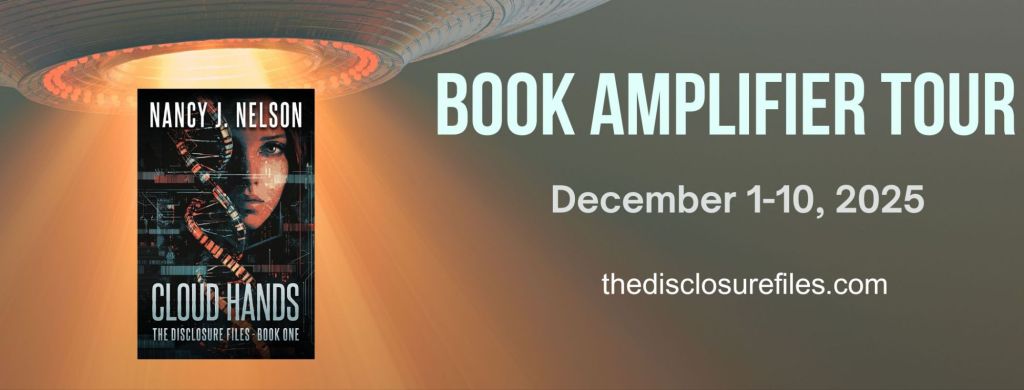
In Cloud Hands: The Disclosure Files – Book One, Nancy J. Nelson begins with a diplomat stepping into what should be a quiet summer role, only to discover forces operating far beyond ordinary influence. The story unfolds at the intersection of global secrecy, emerging truths, and the quiet personal shifts that appear when long-kept structures begin to crack. Vicki Heywood accepts a temporary position caring for the teenage children of a former professor, intending to recover from profound personal loss. What appears simple quickly reveals itself as the opposite. Vicki becomes aware of covert technologies, secret alien contact, and suppressed cures protected by a powerful corporate conglomerate known as the Partnership. As the stakes sharpen, she and the teens unintentionally uncover pieces of a larger conflict rooted in control, information, and hidden influence. Their efforts to understand what is happening place them at the center of a struggle where truth is dangerous and silence is strategic. As Vicki leans on her diplomatic training and the growing trust forming within the group, the story expands into broader questions about human potential, institutional power, and the possibility of a global awakening that redefines long-held assumptions.
EXCERPT:
Prologue
I used to think this story was about me. After all, isn’t everyone the star of their own life? It was only later that I realized we are all just bit players in some ever-repeating, cosmic pattern—a fractal pattern made up of love, hardship, desperation, joy, sorrow, and hope. Let’s never forget about hope. —Victoria Heywood Excerpt from address to the UN
There was a little cluster of forget-me-nots arranged in a vase on the table in front of Vicki. They had been Beth’s favorite flowers. Small and vibrant, so cute they made you smile. Just like Beth herself.
The waitress put a cup of coffee and a pastry before her, and the same in front of the man seated across the table. Kurt Martinsson—she had called him Professor Martinsson when he taught her senior business seminar a decade earlier—added some sugar to his cup before he took a sip. Well-built, dark hair with a touch of gray at his temples. He had aged well. His bespoke sports jacket, manicured nails, and expensive haircut suggested he was also doing well.
“It was kind of you to look me up, Professor Martinsson, especially after all this time. To be honest, I haven’t been getting out much.” She hadn’t been getting out at all. What was the point? Their parents had died in a car accident several years back, and now Beth was gone too. Per her request, there had been a closed casket; the chemo had ravaged her body and taken all her hair. There was no amount of makeup, no wig good enough, that could have fixed that.
“I heard about your sister, Vicki; I’m so sorry. I understand you left your position at the Department of State to look after her.”
Beth had argued against that. “I’m young and strong; I’ll be able to beat this—there’s no reason for you to leave the job you worked so hard to get. Mom and Dad were so proud that you became a diplomat—they wouldn’t have wanted you to give that up.” She had been wrong about being able to beat the cancer, but right that their parents had been proud. They would have been just as proud to see their youngest open up her own flower shop in a prime location in downtown Los Angeles.
“I took a year’s leave of absence when it became clear my sister’s illness was terminal. I have another four months before I either return to work or submit my official resignation.”
“So, you haven’t decided what you’ll do?” Professor Martinsson cocked his head to one side and looked at her. He had finished his croissant. She hadn’t even started on hers.
“No, I haven’t. Every time I start thinking about it…” She looked down at her coffee cup. It was too hard to think. Too hard to think about the future or anything else. She had officially shut down Beth’s flower shop the week after her sister died, although it hadn’t been in operation for a couple of months before that. At Beth’s urging, her two part-time employees had both found other jobs, and the shop sat dark and shuttered. She supposed she should do something—make arrangements to sell the building or rent it out —but she just didn’t have the bandwidth.
“I have an idea that might interest you. I need to do a lot of traveling over the next few months. My two children are more than old enough to stay home by themselves—Brad is sixteen and Jessica is twenty-two—especially since there’s household staff. But I’d feel better if someone was around to keep tabs on them specifically.”
He paused, then casually asked, “You do still have a Top-Secret Clearance, don’t you?”
Vicki looked up from her coffee and stared.
ABOUT THE AUTHOR:
Nancy J. Nelson is an author known for compelling narratives that explore mind-expanding questions about humanity’s next steps. Her most recent book, Cloud Hands: The Disclosure Files – Book One, has earned acclaim among readers drawn to thoughtful, visionary science fiction. Nelson comes into writing after 25 years as a diplomat with the U.S. Department of State and now lives in Los Angeles. Learn more through her website.
Because I write science fiction, people often ask whether I believe in UFOs—and whether I’ve ever seen one. The answer to both is yes!
A few months ago, I paid $90 to attend a UFO-spotting event in Sedona, Arizona. We gathered in a park at the edge of town—ideal for sky-watching since Sedona is a “dark skies” community and the stars shine amazingly clear in the high desert. The organizer, Melinda Leslie, handed out military-grade night-vision goggles, told us where to focus—behind a mountain deep in Coconino National Park—and briefed us on what to expect.
The goggles intensified any light but didn’t provide clear outlines. With the naked eye, we could see nothing. Through the goggles, we saw shifting blobs of light—it was like looking at a drop of water through a microscope and seeing the swarming of amoeba.
Melinda explained how to identify what we were seeing by the strobe patterns: commercial planes flash differently from military ones. (There were plenty of military aircraft that night, but no commercial ones.) The lights weren’t satellites or drones, and she told us to watch for the steady, unblinking ones that suddenly “powered up,” glowing brighter for 15–30 seconds before dimming again, sometimes shifting to amber, red, green, or blue. Sometimes their movements made it look like whoever was flying them had figured out anti-gravity.
Sedona also has other strange stories. It’s a hiker’s paradise, but some hikers report being stopped by armed men in fatigues on certain trails—only for the same path to be clear the next day. Lockheed Martin recently bought a local cement plant and installed unusually tight security, and Blackhawk helicopters are often seen overhead.
Melinda believes all this points to a DUMB—a Deep Underground Military Base—in the area. She admits it’s hard to know whether these craft are extraterrestrial or advanced military technology, but at least three people have claimed to have worked there and claimed that humans and aliens operate side by side.
Personally, I hope that’s true. It would mean we’re not alone—and that the universe is full of other civilizations waiting to be discovered. But if it’s only the military, that means anti-gravity tech exists and is being kept from the rest of us.
Either way, it gave me great material. I even worked a secret underground base into my third book—so I’m pretty sure the $90 I paid is tax-deductible.
QUESTIONS & ANSWERS
Writing Process & Creativity
How did you research your book? I didn’t research my book! I’m fascinated with the idea of aliens and UFOs, and have been following the research and news stories for a dozen years. It was logical to take these stories (and facts) and weave them into a science fiction series.
What’s the hardest scene or character you wrote—and why? The most challenging character was Melly, the Galactic Federation representative from an insectoid species. She was much harder to write than other characters, even other alien characters, for a couple of reasons: 1) Melly comes from a species that has had interstellar capabilities for thousands of years. What’s the perspective of someone from a species with such a long history? I… don’t know. 2) Melly looks very different from humans. The other alien species in my series—the Suedes, the Pleiadians, and the Alpha Centaurians—all resemble humans to some extent, which made it easier for me to give them human-like emotions and desires. A praying mantis being who is eight feet tall? Not so much.
Where do you get your ideas? From real life. I got the diplomatic/government background from my 25 years working as a U.S. diplomat. The UFO and alien background are from current events, news stories, and reports from the last few decades. Why invent something when it’s right in front of you?
What sets your book apart from others in your genre? I think my focus on Disclosure—the confirmation by world governments of an ET presence engaging the human race—is what makes my series unique in the science fiction genre. It’s not just the story—although having a good story is essential. I also explore issues such as the nature of power, who profits from keeping secrets, and how ordinary people can choose to walk down a path not approved by society.
What helps you overcome writer’s block? My writers’ group! I started Cloud Hands two years before I moved to Los Angeles, but had only written three chapters. Joining my writers’ group—we meet once a week in a café—gave me accountability. The thought of going to a meeting and admitting I hadn’t written anything since the previous meeting was embarrassing. So I wrote. In six months, I had completed the first draft.
What’s your favorite compliment you’ve received as a writer? It was a Kirkus review that described my story as “fresh, exciting, and often unpredictable.”
Your Writing Life
Do you write every day? What’s your schedule? When I’m writing a book, I’ll write five hours a day, five days a week. But I’m retired—I realize that puts me in a privileged position.
Where do you write—home, coffee shop, train? I write in a coffee shop because my L.A. apartment doesn’t have air conditioning. Also, being outside my apartment means I can’t distract myself by cleaning, cooking, reading a book from the shelf, etc. It’s another form of accountability.
Any quirky writing rituals or must-have snacks? Coffee. Seriously, it’s the gift of the gods.
Behind the Book
Why did you choose this setting/topic? Because I love the idea of aliens and UFOs, I love the idea that the universe is bigger and more awesome than we have been led to believe.
If your book became a movie, who would star in it? In the first book of the series, the main character is Vicki Heywood, a U.S. diplomat on leave. In my ideal world, I’d pick Demi Lovato to play Vicki. She’s the right age, practices a martial art (albeit Brazilian Jiu-Jitsu rather than Tai Chi), and, most importantly, is personally interested in Disclosure. In real life, Demi has met with Dr. Steven Greer—the UFO researcher who has developed a system that ordinary people can use to directly contact aliens without going through a government middleman—several times to try to establish direct contact with extraterrestrial.
Fun & Lighthearted Qs
What’s your go-to comfort food? Popcorn made at home with coconut oil, real butter, and sea salt. Made in a stir-crazy rather than in a microwave.
What are you binge-watching right now? I just started watching the first season of Farscape on Amazon. How did I manage to miss it when it came out back in 1999?
If you could time-travel, where would you go? I would really love to go back in time to visit some of the ancient civilizations—Egypt, Sumeria, the ancient Indus Valley, the Olmecs, etc.—to see how they accomplished what they did.
What’s something that made you laugh this week? Funny dog videos. When these start popping up on my internet feed, I end up getting to bed a couple of hours late.
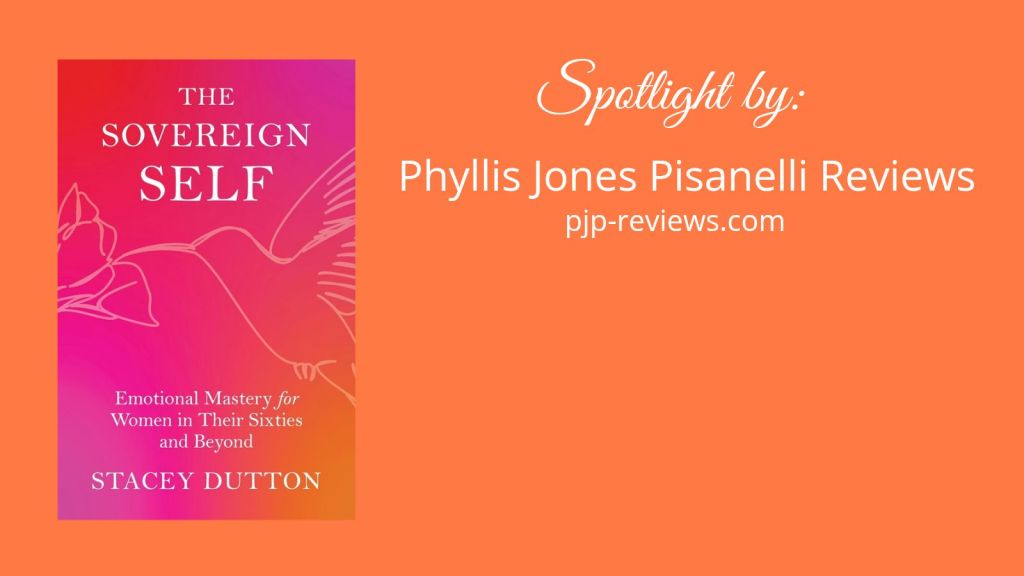
Themes of emotional clarity and the release of long-held roles come forward in The Sovereign Self by Stacey Dutton, a book that explores how the sixties reshape the inner landscape of women’s lives.
In The Sovereign Self, Stacey Dutton reflects on how entering the sixties signals a shift away from external expectations and toward deeper self-recognition. She examines how emotional mastery allows women to witness their patterns, choose intentional responses, and cultivate steadiness. The book explores identity evolution, the shedding of outdated obligations, the recalibration of relationships, and the invitation to live with less noise and more truth. Dutton also addresses spiritual curiosity, embodied living, postmenopausal changes, and the need for a more compassionate relationship with the body. Through thoughtful guidance, she positions this chapter as a time to reclaim one’s inner authority and live with grounded presence.
EXCERPT:
The Architecture of Emotional Mastery
“You have power over your mind—not outside events. Realize this, and you will find strength.” ~ MARCUS AURELIUS
For a woman to be emotionally masterful in her sixties is not about mere resilience; it is about refinement. It is not about enduring hardship, but about engaging with life’s complexities with intention, intelligence, and grace.
EMOTIONAL MASTERY AS A DISCIPLINE By our stage of life, we have encountered loss, reinvention, and profound shifts in identity. We have known both the exhilaration of new beginnings and the ache of things left behind. And yet, despite all we have lived through, true emotional mastery is not something we inherit simply because of experience. Rather, it is something we cultivate with discipline. The difference between women who struggle through their later years and those who move through them with deep, unshakable presence is not related to their circumstances. It depends on their level of emotional mastery. Those who engage with their emotions deliberately, rather than being ruled by them, typically step into a state of emotional sovereignty—a place where external forces no longer dictate their internal stability.
MASTERY VS. SOVEREIGNTY Mastery, in its truest sense, is about deep understanding more than control. To master our emotions does not mean suppressing them or forcing ourselves into an artificial state of positivity. It means learning to engage with our emotions as they arise, discerning which of them requires action and which requires release. It means standing in the midst of uncertainty, grief, or change and responding rather than reacting.
Sovereignty is the natural result of emotional mastery. When a woman reaches a place where her emotions no longer control her—a place where she can sit with discomfort without fear or experience joy without guilt—she becomes sovereign over her inner world. She is no longer subject either to the whims of others or to old wounds and the weight of societal expectations. She does not seek permission to feel, to express, or to change. She moves through life with an authority that cannot be given or taken away.
THE MIND AS AN EMOTIONAL ATHLETE Much like physical strength, emotional mastery requires active engagement. A woman does not wake up one morning emotionally agile, just as she does not develop high muscle tone overnight. Emotional engagement is a practice, like going to Pilates class or lifting weights a few times a week. And yet, many women enter their sixties believing that emotional maturity should be automatic, a natural byproduct of their age.
If emotional mastery is the discipline, emotional sovereignty is the reward.
This is a fallacy. A woman who neglects her emotional strength and agility will find herself bound by old wounds, reactive tendencies, and outdated narratives. But a woman who deliberately trains her mind—who practices stillness, discernment, and inquiry—will discover a different reality. She will no longer be pulled into every emotional undercurrent. She will not be at the mercy of her past. She will move through her days with a kind of cultivated stillness, unshaken by the temporary and attuned to what truly matters.
This is the foundation of everything that follows in her life.
ABOUT THE AUTHOR:
Stacey Dutton is an entertainment executive, creative producer, and emotional mastery advocate with more than three decades of experience across the music, television, and film industries. She was the original on-air host of TLC/Discovery’s Clean Sweep and later the casting director for the Emmy Award–winning Clean House on The Style Network. Through her developing platform, LiveSovereignSelf.com, she guides women in their third act toward clarity, boundaries, and emotional sovereignty. Stacey lives in New Preston, Connecticut, with her husband and their rescue dog. Visit Stacey at her website and on Instagram.
From Hypervisibility to Invisibility: A Woman’s Lifelong Battle with Being Seen
Women are judged long before we ever understand what judgment is. Our bodies are evaluated, ranked, compared, whispered about, laughed at, or picked apart—often by the very people who claim to love us. And then, as if by some cruel joke, after decades of scrutiny and self-surveillance, we are suddenly told we’re invisible.
Before I was even a teenager, I learned exactly what society thought of me (or at least the people closest to me at that point in my life). I was made fun of for my “big, ugly” feet, my large forehead, my “big” thighs, and my “flat” chest. I absorbed every comment like it was a fact, not an opinion. In high school, a classmate once called me “Frankenstein” because I wore my hair pulled back in a ponytail. Her comment landed with such force that I immediately cut bangs to hide the “bad” forehead she had so generously pointed out.
By my thirties, I was thoroughly trained. When my marriage ended at 37, I celebrated my divorce the way many women do: by trying to “fix” the parts of myself I believed were wrong. My gift to myself was a boob job—because in my mind, getting rid of that “bad flat chest” was the perfect divorce present. Why grieve when you can cosmetically upgrade?
Then came my forties. Purely by accident, I landed an on-air hosting role for a new design show on TLC/Discovery Network. I should have been proud, but instead I received a piece of advice from my best friend at the time—a very famous actress who was no stranger to needles and scalpels: “Buy yourself a top lip,” she told me. Of course. I was about to be on television, so naturally I needed to do something unnatural to my face to look the part. I ended up with a “semi-permanent” lip injection from her facialist—a teeny-tiny bit in both the top and bottom lips, just enough to be “camera ready.” That’s what I told myself.
Then came my fifties—menopause, the grand finale of womanhood. The unexplained weight gain, the emotional upheaval, the shifting body that refuses to obey. That decade was a war with my reflection. I once told my sister before we went out that I needed to put on some makeup. Her response? “Who cares? No one’s looking at us anymore anyway.” It was also during my late fifties that I learned that two of my “friends” were exchanging screenshots of me online, dragging my bangs—because evidently some grown women still behave like “Mean Girl” middle schoolers with nothing better to do.
So that’s the arc: we go from being relentlessly judged—picked apart for every feature, every flaw, every deviation from the ideal—to being told we’re irrelevant. After spending decades trying to be pleasing, presentable, and perfect, we age out of visibility entirely.
Sarah Jessica Parker captured this perfectly when she responded to the barrage of criticism about her gray hair and her lines. She called it what it is: misogynist chatter. She pointed out that the scrutiny she faced would never be aimed at men. She asked what she was supposed to do about aging—stop aging or disappear? She spoke aloud what so many of us feel: that there is a strange, sinister enjoyment society takes in watching women “pained” by their own aging.
This is the impossible landscape women navigate: be beautiful, but not vain; sexy, but not trying too hard; youthful, but not fake; thin, but not obsessed; flawless, but “naturally.”
And when we inevitably fail at achieving the impossible—we vanish.
But here’s the truth: invisibility is not an indictment of our worth. It’s an indictment of the culture that taught us to measure it.
And maybe—just maybe—this stage of life is not about disappearing at all.
Maybe it’s about finally being seen by the only person whose gaze ever mattered: ourselves.
QUESTIONS & ANSWERS
Writing Process & Creativity
How did you research your book? The research for my book came straight out of self-reflection and my own lived experience—the good, the bad, and the downright ugly. Every phase of my life, from childhood to this newest chapter, has taught me something worth examining. I also read philosophy every day, especially the Stoics, which at this point is like a form of therapy for me.
Where do you get your ideas? This book was literally born from the journaling I’ve been doing over the past couple of years. I jot down notes after reading passages that hit me in the gut, and I’m constantly writing little reminders to myself about the things I still need to work on (lots of material right there!). So what began as my own personal manifesto—basically a handbook for keeping myself sane—eventually had me thinking, “Why not share it?”
What sets your book apart from others in your genre? My book isn’t coming from a clinician, a guru, or someone pretending to have all the answers. It comes from someone who has lived through the transitions, reinventions, losses, joys, and identity shifts that women experience in their 50s, 60s, and beyond. Most books for women in midlife lean heavily into reinvention, “you go girl” energy, or vague self-help slogans. In mine, I’m offering a more refined approach: emotional intelligence, discernment, self-reflection, boundaries, and presence, speaking to women who are smart, self-aware, and tired of superficial advice.
Your Writing Life
Do you write every day? What’s your schedule? I always write at home, usually with my dog on my lap which is challenging at times because his comfort takes priority way over mine. I journal first thing in the morning and then again in the evening; I write something every day, whether it’s pages and pages or just a couple sentences.
Behind the Book
Why did you choose this setting/topic? I don’t think I chose this topic as much as the topic chose me. As I worked on my own personal growth and journaled about it, I saw this book begin to take shape.
Which author(s) most inspired you? I’m most inspired by The Stoics. Stoic philosophy originated in ancient Greece and Rome and teaches one essential idea: you can’t control life, but you can absolutely control your response to it. At its core, Stoicism emphasizes emotional steadiness, self-mastery, perspective, and the ability to stay grounded even when life is chaotic. It’s about separating what you can influence from what you can’t and anchoring your peace in that distinction. Most modern therapeutic frameworks, especially Cognitive Behavioral Therapy (CBT) (which is the most widely used form of therapy today) are directly built on Stoic principles.
Fun & Lighthearted Qs
What’s your go-to comfort food? Junk food: I LOVE potato chips. I’m all about savory foods. I also love sushi – my absolute fave.
What are you binge-watching right now? The last series I binge watched was The Righteous Gemstones. BRILLIANTLY funny!
If you could time-travel, where would you go? If I could time travel, I’d go straight ahead a century. I want to know if we’re living like the Jetsons, zipping around in flying cars or if the planet is even still thriving at all??
What 3 books would you bring to a desert island? The Daily Stoic by Ryan Holiday, The Catcher in The Rye by J.D. Salinger, and The Midnight Library by Matt Haig. Some philosophy, some laughs, and some entertaining fantasy.
What’s something that made you laugh this week? About five minutes ago my 20-pound, VERY reserved and well-behaved dog let out an enormously loud fart. I had no idea dogs could fart so loudly.
There’s a particular pull in stories that follow characters stepping away from what they know and into landscapes that challenge their sense of direction. The Book of Four Journeys by Veronica del Valle brings together four such moments, each defined by movement and change. These stories explore what unfolds when the familiar falls away and a new path quietly begins to take shape.
The Book of Four Journeys gathers four short stories connected by a central question: how does a journey shape the one who takes it? Through the perspectives of Alfalfa Spooly, Mumik and Pimnik, Neboo McCloudy, and Lincoln Jax, the book explores what unfolds when curiosity and necessity push characters away from what they know and toward what they must discover.
Alfalfa Spooly is a postman drawn into a mission that demands he cross into the unknown, challenging his sense of order and routine. Siblings Mumik and Pimnik embark on separate adventures in search of each other, each navigating unfamiliar paths filled with unexpected obstacles. Neboo McCloudy, a creature defined by his grumpiness and hesitation, faces his fears as he seeks a mysterious treasure tied to a world beyond his own. Meanwhile, Lincoln Jax, an orphan fueled by determination, follows a route that may lead her to a kingdom holding long-awaited answers.
With its blend of unpredictable turns and unusual characters, this collection highlights the courage found in taking the next step—no matter how uncertain.
EXCERPT: THE BOOK OF FOUR JOURNEYS (From the story Mumik & Pimnik)
Day One In the Northernmost Part of the World
Mumik Opipok opened his eyes and knew straight away what he had to do. It would take courage, loads of it. He would have to summon it all because he was not the most confident person. In fact, Mumik Opipok’s life had so far been dotted with doubtful moments: should I fish with my fishing rod or with my net? Should I walk to the lake or go on my sledge? Should I wear my white scarf or my checquered one? Should I make fish fillet, or seafood chowder for lunch? For each choice, Mumik debated with himself for hours, and when he finally made a choice, he would second-guess it one more time. Just in case.
But not that morning. Mumik was more confident than he had ever been about any decision. In fact, he had made up his mind as soon as he’d heard what the White Bright Sprite had told him. He knew what he had to do. There was no other way to look at it.
From that moment, his day was dedicated to getting everything ready for his journey. He borrowed an old sailboat courtesy of a former sailor-turned-igloo-maker who had a spare boat. It was rusty, but it floated and that was what mattered. The former sailor-turned-igloo-maker taught Mumik the essentials of sailing: the menaces one can find at sea, how to read charts, how to trim the mainsail and how to use a sextant to let the stars guide him to his destination.
When the sailing class was over, Mumik walked home. He lived in an igloo of bluish blocks of ice in the Northernmost Part of the World. “The top of the globe,” he liked to say. This was a place shrouded in eternal winter, which meant it was always very very cold, but also very very snowy, silvery white and spotless. His good friend, Koko, a wordy and cunning Arctic fox, was waiting by his front door.
“All ready?” Koko asked. “Almost,” Mumik answered. “Where are Sesi and Sila?” “Around the back of the igloo, sleeping like true grey wolves,” Koko said.
Mumik went inside and packed some items of clothing, his fishing rod, some cans of food and many bottles of water. He was aware he was not the best planner, but he figured he would be fine with the things he had selected. Before sunset, everything was ready. He would leave in the morning. When the full moon lit the sky, Mumik went outside and woke up Sesi and Sila.
“Come on, my friends, time for one last ride.”
ABOUT THE AUTHOR:
Veronica del Valle is the author of The Word-Keeper and The Book of Four Journeys. She holds an MA in Creative Writing from Kingston University and has worked as an editor and writer for news organizations and magazines in both London and Argentina. She has also taught creative writing at Universidad de San Andrés. Now based in Buenos Aires, she continues to write stories shaped by her love of language, imagination, and adventure. Learn more at her website and on Instagram.
Children, I’ve learned, are the sharpest editors: curious, unsparing, and attuned to truth in ways adults often forget. One such child is my nine-year-old daughter, Tomiko. Wild-hearted and keenly observant, she’s taught me as much—perhaps more—about writing for children than any book or editor ever could. If I had to distill the things I’ve learnt from her, it would take the shape of six essential reminders: 1. Children have an extraordinary radar for plot holes. If something doesn’t make sense, they’ll find it instantly, and let you know. They spot every inconsistency, every lazy sentence, every moment when the writer is no longer fully awake. 2. Logic matters as much as magic. If an imp appears, it must have a reason to be there. If a door opens into another world, it must do so with purpose. 3. Stories must earn attention. Adults might politely finish a chapter. Children will simply walk away. 4. Rhythm is key. Not just in language, but in the movement of the tale. A story must breathe, shift, and hold wonder. 5. Children don’t read to admire your prose; they read to believe. 6. Stories must find their way not only through the narrative, but into the reader. They must stir something real. The wilder the tale, the truer the emotion must be. Over time, I’ve come to understand two things: One: children don’t ask for perfection. They ask to be met with awe, coherence, and heart. And two: the best children’s stories are written for children, but they’re also written from the part of us that still remembers what it felt like to be one.
Writing Process & Creativity
How did you research your book? The Book of Four Journeys grew out of my fascination with the idea of the hero’s journey —that timeless mythic pattern that reveals how every adventure is, in the end, a path toward self-discovery. I wanted to explore what that means for younger readers today, in a world that often feels both vast and uncertain.
Where do you get your ideas? Honestly, I don’t really know. Everywhere around me. Everywhere within me, too. I’m not sure. Sometimes ideas come from things I’ve read, people I’ve met, or places I’ve travelled to. Other times, they seem to rise from somewhere deep inside, very much uninvited. I often wonder where ideas truly come from; they feel less like something we invent and more like something we stumble upon.
What sets your book apart from others in your genre? The reader will not find any dragons, wizards or witches in this book, but that doesn’t mean it is not filled with the most peculiar and unexpected characters, like Alfalfa Spooly, a postman who will dare cross the threshold into the unknown to carry out a menacing mission. Mumik and Pimnik, a brother and a sister who will explore unknown territories as they set about finding each other. Neboo McCloudy, a grumpy creature ready to weather his biggest fears so he can discover an otherworldly treasure. And Lincoln Jax, an orphan girl in search of a kingdom that holds the answer to everything she is looking for.
What helps you overcome writer’s block? I go for a walk; movement somehow frees the story. There’s something about being outside, and in motion, that untangles whatever was stuck on the page.
What’s your favorite compliment you’ve received as a writer? My favorite compliment comes when a child says they loved the story, or that it helped or inspired them. There’s a raw, unfiltered honesty in a kid’s reaction. There’s no polish, no pretense, just the truth. It’s the ultimate review.
Your Writing Life
Do you write every day? What’s your schedule? Where do you write—home, coffee shop, train? Any quirky writing rituals or must-have snacks?
I try to write every day. Discipline is very important to me, even if some days I only manage one very bad sentence. If I waited for inspiration to come, I suspect I’d still be curating an exquisite collection of half-written stories. It might sound painfully boring, but I always write in the mornings at my desk in complete silence, with (this bit is less boring; and it’s essential and delicious) mate —a traditional Argentine tea— always by my side. Although I’m no illustrator, I like to sketch characters, places, and maps on paper. Then I pin them to a moodboard above my desk, so the world of the book I’m writing stares back at me while I work.
Behind the Book
Why did you choose this setting/topic? As I said above, this book grew out of my fascination with the concept of the hero’s journey; the idea that every great adventure, no matter how far it takes you, is ultimately about finding out who you are.
From Gulliver’s Travels to The Odyssey and The Adventures of Huckleberry Finn, I’ve always been fascinated by how these stories chart the outer world as a reflection of the inner one; how every voyage, no matter how distant, mirrors a deeper transformation within.
If your book became a movie, who would star in it? If my book became a movie, I’d love it to be a Studio Ghibli film. Their worlds feel lived-in, and their magic is quiet and true and woven from wonder.
Which author(s) most inspired you? I’d say there are three —no, four— authors who’ve inspired me the most:
E. B. White, for his love of the English language, and because he taught me that children are among the most attentive and intelligent readers, making them an audience that deserves the writer’s best work. He said, “Anyone who writes down to children is simply wasting his time. You have to write up, not down.” Those words have always stayed with me. Philip Pullman, because there’s a kind of yearning in his writing that tugs at your heart —a deep hunger for life, for love, for knowledge and for adventure. Roald Dahl, because he’s unapologetically himself —bold, mischievous, idiosyncratic, and delightfully unafraid. And Dr. Seuss, for his wild, limitless creativity and the rhythm and joy that make his words leap off the page. He reminds me that nonsense can make perfect sense and that imagination can be a form of courage.
Fun & Lighthearted Qs
What’s your go-to comfort food? Anything homemade: a warm oatmeal cookie, a delicious spinach pie, freshly baked bread. If it’s homemade with love (and good music playing in the kitchen while you cook), it’s comfort food in the truest sense.
What are you binge-watching right now? My daughter and I are watching the three Paddington movies on a loop. I love them —I love the Michael Bond books too, of course— but the films are equally delightful.
If you could time-travel, where would you go? I wouldn’t travel in time, but I would love to visit a parallel universe. Maybe one where imagination is the main currency and dreams are taken incredibly seriously.
What 3 books would you bring to a desert island? I’d bring Philip Pullman’s His Dark Materials trilogy… And Dr. Seuss’s Oh, the Places You’ll Go! (because even on a desert island, it reminds you that life is an adventure.)
What’s something that made you laugh this week? My daughter, Tomiko. She’s nine and has the wittiest, most outlandish sense of humor —it’s like Monty Python but in a nine-year-old version.










 Phyllis Jones Pisanelli Reviews