INTRODUCTION:
The Last Adam by Ron Echols presents a story where faith, danger, and responsibility begin to collide. As pressure builds, the narrative traces how unseen forces influence decisions and place ordinary people at the center of extraordinary consequences.
Across locations stretching from urban streets to ancient contested ground, a hidden war begins to surface. Mary Levitt’s pregnancy becomes the catalyst for escalating threats, violent encounters, and visions that signal her child’s role in a prophecy long feared.
Joseph Riesman’s involvement in a major development project draws him into political maneuvering and ancient forces operating beneath visible power structures. What appears practical soon becomes spiritual confrontation.
The sacrifice of the archangel Raphael reveals the depth of the conflict now in motion—angels, fallen angels, and human agents maneuver to control or destroy what Mary’s child represents. Watched and hunted at every turn, Mary and Joseph face betrayal and spiritual warfare as they struggle to protect a life destined to alter the course of humanity.
EXCERPT:
Prologue
Location: The Lunar Surface, Tranquility Base, southwestern corner of the Sea of Tranquility.
The moon hung motionless, like a dead thing in the void of space. Its pockmarked exterior reflecting the sun’s merciless glare and millennia of asteroids pummeling its surface. In that airless waste where humans had once taken a small step, the lunar dust lay since undisturbed, marked only by boot prints and machinery left behind. Piercing through the silence of the void, a voice called out.
“Raphael!”
A brilliant white light erupted into existence, hovering above the moon’s surface like a tear in the fabric of space itself. The light intensified until it seemed to bend space around it, taking form. A figure of a man emerged. Behind him, the first suggestion of wings. Translucent, but appearing stronger than steel, they folded against his armor etched with ancient angelic symbols that seemed to move when viewed directly. Dark hair, wild and untamed accentuated his sapphire eyes and caressed his polished, glass-like skin.
The being that called itself Gabriel stood motionless on the lunar surface, its feet leaving no prints in the ancient dust. The face that poets had tried and failed to capture for millennia turned slowly, searching.
“Raphael?”
The name rippled out without sound, more like a thought given form in the vacuum. Gabriel’s wings stirred restlessly, creating eddies in the dust that danced like spirits in the harsh light.
“Here, Gabriel,” reverberated a voice, bright but commanding, from the shadowed surface. Another angel sat casually reclined within the lunar rover, abandoned by the humans who briefly touched the face of Heaven before retreating to their warm blue marble decades ago. His eyes were fixated upon the Earth, suspended in the cosmic darkness. Raphael mirrored Gabriel, but adorned in silver armor with fiery ginger hair framing his serene face.
“I’ve been searching for you,” Gabriel said, moving closer. In the moon’s one-sixth gravity, each step seemed to take too long, as if time itself was stretching.
“Observing,” Raphael replied simply, still watching Earth.
“Observing…anyone in particular?” Gabriel asked, also redirecting his gaze toward Earth. From this distance, cities glowed like constellations, tiny lights poking through the darkness that surrounded them.
Maintaining his stare, Raphael revealed what he had been witnessing, his voice heavy from countless years of disappointment. “There in Houston, a man, after a night of heavy drinking, returned home to engage in an argument with his wife, he killed her in a drunken fit of jealousy. Across the sea in Madrid, Spain, a young prostitute on the cusp of adulthood prepares to inject herself with an HIV-contaminated needle provided by a friend. There, in Manila, a corrupt politician embezzles funds meant for the poor, channeling them to fuel his business ventures. Wherever I look, human virtue becomes more scarce.”
Raphael shifted his gaze to Gabriel, his glowing eyes piercing the darkness. “Who is worthy down there? Even among ourselves, evil found a way to take root. We cast him down to Earth, and he has only brought misery and death upon everyone there. Since the dawn of humanity, the stain of evil has tainted them all. They have no hope.”
Gabriel hung his head in solemn contemplation of Raphael’s declaration. They both knew who “he” was. Neither needed to speak the name that had once been brightest among them.
“You have manifested yourself on the human plane of reality. What if you’re spotted?” Gabriel snapped, briefly changing the subject.
A small chuckle escaped Raphael’s lips. “I am on the MOON, Gabriel, not Times Square New York. Besides, you’re doing it too. Did you even hear anything I said?”
“We do not materialize on this plane without purpose,” Gabriel scolded. “And yes, I heard you. I came to you because I have news.”
“What news?” Raphael asked.
“Your complaining is timely for once,” Gabriel chided.
He stepped closer to the rover, standing beside Raphael. “You are correct; there is no one on Earth capable of saving them. However, he has devised a plan.”
Raphael peered up at Gabriel, rising from his reclined posture. “What plan?”
Gabriel leaned in, his voice whispering the secret. “He will go directly to them. He will send a part of himself to help them.”
“So, the time for final battle has come? He will lead us against the adversary?” Raphael asked, energy crackling around his form at the thought.
“No, this is not Armageddon,” Gabriel corrected. “This is the beginning. He will walk the Earth himself, using his own words, his truth, will be carried directly to them.”
Gabriel’s eyes widened. “That’s too much. They will panic at the sight,” he warned.
“As usual, you are not understanding. He will be born there.” Gabriel explained.
“What? Why?” Raphael’s bewilderment unusual for someone who existed since the earth was formed. “Become a human child? What could that possibly accomplish?”
Amused by the confusion etched on Raphael’s face, Gabriel continued, “He will birth himself into their world, experience their joys and their sorrows, breathe their air, and shed human tears. He will BE human. He says only then can he deliver what is necessary for their redemption. It is a necessary madness.”
“Incredible,” Raphael murmured, the word carrying both wonder and doubt. His gaze returned to Earth, that fragile sphere that held such consequence in the cosmic order. Resting his foot upon the rover’s steering wheel, he reclined once more, assuming his former pose, his mind wrestling with what he had just heard.
ABOUT THE AUTHOR:
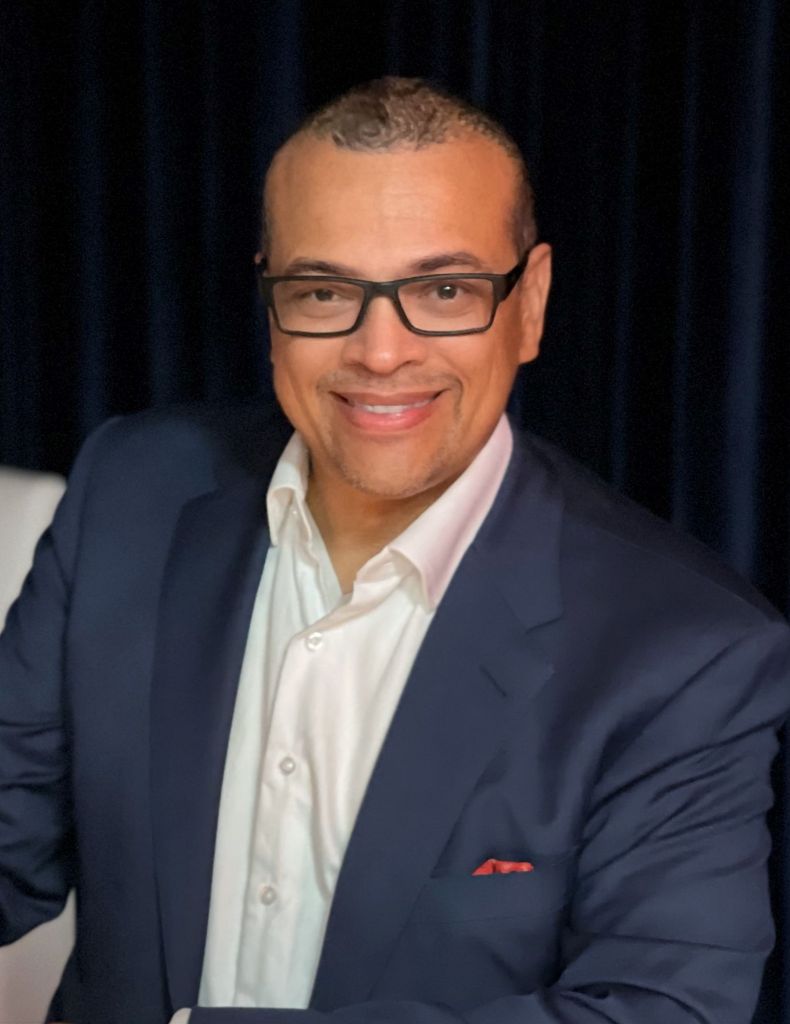
Ron Echols is an ordained minister of the Gospel, an award-winning business executive, and a four-time Telly Award–winning producer. With The Last Adam: Resurrection Day, he makes his debut as a novelist, bringing a cinematic sensibility and spiritual depth to contemporary Christian fiction. A storyteller at heart, Echols blends suspense, gritty realism, and biblical prophecy to create modern retellings that explore enduring themes of faith, power, sacrifice, and redemption. Drawing from his background in ministry, media, and leadership, his writing places ancient truths into present-day settings where spiritual warfare unfolds alongside deeply human struggles. He lives in Texas, where he balances business ownership, community service, family, and writing stories designed to engage the imagination while stirring the soul. Visit Ron at his website and on TikTok.
Amazon: http://bit.ly/49ZY4lQ
Goodreads: https://www.goodreads.com/book/show/244392186-the-last-adam
GUEST POST:
I love supernatural stories.
Angels. Demons. Prophecy. Chosen ones.
But most stories treat divine intervention like clarity. I wanted to treat it like a problem.
Because if something undeniably supernatural appeared today, on camera, in real time, it wouldn’t unite people. It would fracture them. Belief wouldn’t simplify anything. It would raise the stakes.
That’s why I wrote my story as a thriller first.
Fast chapters.
Escalating consequences.
Characters forced to act before they understand what they’re dealing with.
I wanted it to read like a movie in your head. The kind where you tell yourself, one more chapter, and suddenly it’s way too late. Where the supernatural isn’t there to comfort you, it’s there to push the story forward and keep you unsettled.
Readers are smart. You don’t want sermons. You want tension. You want vibes. You want stakes that feel personal.
So this isn’t a book that tries to explain God’s plan.
It’s a book that asks:
What would it cost if God actually showed up again?
And then it lets the story run with the consequences.
QUESTIONS & ANSWERS
What sets your book apart from others in your genre?
The Last Adam doesn’t treat faith as an abstract. It treats it as a lived, psychological struggle. Most supernatural thrillers either lean heavily into spectacle or into theology. This story lives in the tension between doubt and belief, power and responsibility, heaven and human consequence. The divine is present but never comfortable. Angels don’t arrive to reassure; they arrive to disrupt. The story asks what faith costs when it stops being symbolic and becomes real.
What’s your favorite compliment you’ve received as a writer?
A reader told me they forgot they were reading a faith-adjacent story and just tore through it as a thriller. They said, “I came for the supernatural angle and stayed because I couldn’t stop turning pages.” That’s exactly what I hoped for.
Why did you choose this setting/topic?
I wanted to place an ancient, world-altering story inside a modern America. We live in a time of deep skepticism, fractured authority, and spiritual exhaustion. That felt like the most honest place to ask what would actually happen if something undeniably divine showed up again, not in a church, but in a society that doesn’t believe in that anymore.
Which author(s) most inspired you?
Frank Peretti for showing me that faith-based stories could carry real tension and darkness. C.S. Lewis for his moral clarity and spiritual imagination. And Stephen King for his understanding of fear, character, and how the supernatural feels when it collides with ordinary lives.
Which 3 books would you bring to a desert island?
The Bible, because it’s not just one book, it’s an entire library, and I’d never stop finding something new in it. The Count of Monte Cristo, because if I’m stranded, I want a story I can live inside for a long time. And a desert survival manual, because faith and literature are important, but I’d still like to get off the island.
 Phyllis Jones Pisanelli Reviews