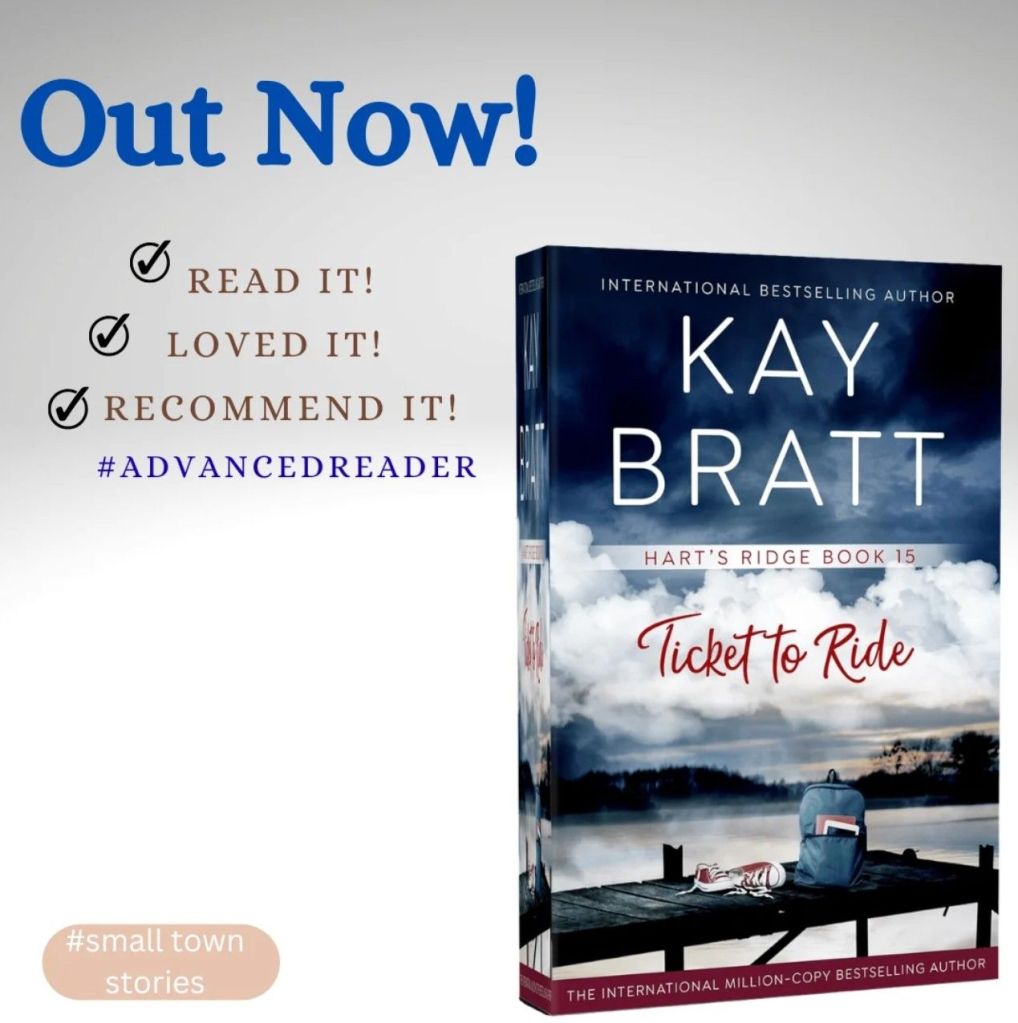
REVIEW COMING SOON!
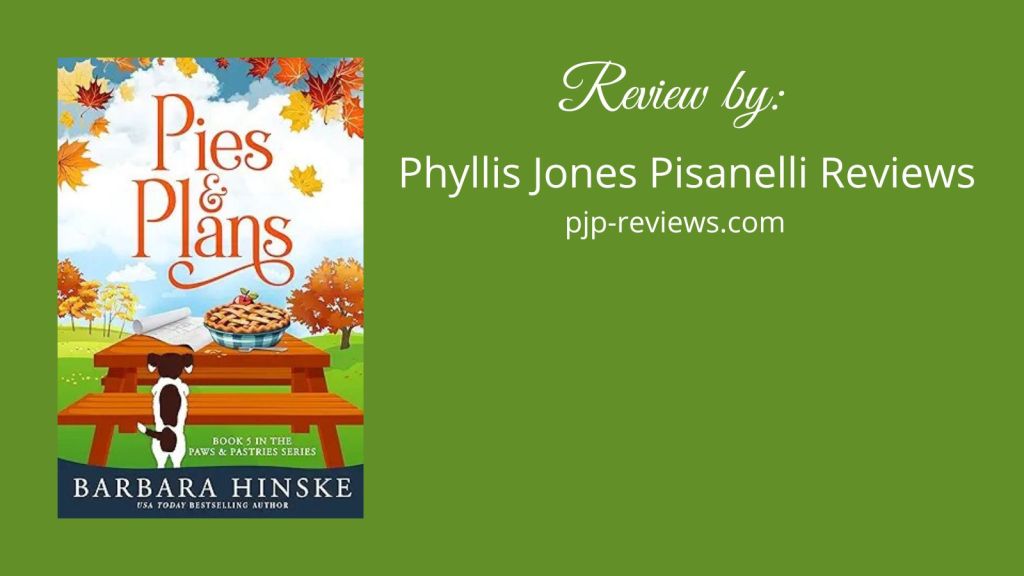
REVIEW:
I have not been a long time reader of Barbara Hinske, but Pies & Plans is the prime reason I have fallen in love with her writing. She has wonderful characters, great settings and such warmth in her stories. I have a book hangover every time I finish one of her books.
I came into this series late. Don’t let that bother you, do what I did and jump right in. Ms. Hinske has a way of bringing you right into the story so you never miss a beat. I know her books are almost all part of a series, but the ones I have read are a breeze. I never feel like I am lost. I’m so glad I found her books. Books like these bring me such a feeling of peace. It is an escape for me and all the problems of the world.
This book is about a Clara who owns the bakery in town and it is thriving so well she doesn’t have time to plan her wedding to her fiance Kurt. They decide to have a small intimate wedding at Bloom Cottage. I could see every detail in her descriptions of the wedding gown and the cottage. I so enjoyed this book and I think all of my romance readers will too.
Wouldn’t you know this takes place in a small town. All the people are so loving and caring. Well, at least the ones who made it into Pies & Plans were! I can’t think of a single thing I didn’t like about this book except I was reading along in bed last night when I turned the page and there was “The End”. I was so sad. It was a wonderful way to go to sleep last night and there were pleasant dreams too!
I highly recommend Pies & Plans by Barbara Hinske. It definitely belongs on your nightstand for a night of your own pleasant dreams. Until next time…Happy Reading!
I received a complimentary copy of this book from the author. The opinions I have expressed are my own and I was not required to write a review. I am disclosing this in accordance with the Federal Trade Commission’s 16 CFR, Part 255.
To follow my blog, click on the heading of any blog post. This will bring up just that blog and you will see a follow button on the bottom right hand corner. Thank you!
SYNOPSIS:
Sweets & Treats is thriving, and Clara Conway has no time to catch her breath, much less plan a big wedding. She and Kurt marry in an intimate ceremony at Bloom Cottage, where sparks fly between best man Brad and matron of honor Laura.
The newlyweds are buying a historic home near the downtown square and, in a stroke of luck, Kurt’s house sells before it hits the market. The romance between Brad and Laura is blossoming. Everything is working out well.
Until it’s not. Tabitha Trent is defrauded out of her life savings, forcing unthinkable changes on her family. The ripple effects of this catastrophe even reach Kurt and Clara. Promises are tested and new opportunities arise as everyone seeks a place to call home.
Return to Pinewood for another irresistible helping of small-town charm, courage, and connection.
ABOUT THE AUTHOR

USA Today Bestselling Author
Barbara Hinske is an attorney who left the practice of law to pursue her career as a full-time novelist. She inherited the fiction gene from her father, who wrote mysteries when he retired and told her a story every night of her childhood. Barbara is the author of the beloved Rosemont Series, the Guiding Emily Series, the Paws & Pastries Series, her sweet Christmas stories, the mystery, thriller, and suspense novels in her “Who’s There?” collection, and three novellas in The Wishing Tree Series.
She and her husband share their own Rosemont with two adorable and spoiled dogs. She is besotted with decorating, entertaining, cooking, and gardening. Her novels The Christmas Club (2019) and Guiding Emily (2023) have been made into Hallmark Channel movies.
Praise for Coming to Rosemont:
“In a category that doesn’t often feature felonious crimes as a main plot point, it’s somewhat surprising to see this title — with corruption, fraud, and arson coursing through the story — in a list of top performers. But with enough twists and turns to hook any reader’s attention, an adorable dog on the cover, and some classic women’s fiction tropes, Coming To Rosemont delivered more than enough firepower to win over our readers!” BookBub’s Best: Women’s Fiction (#4)
“In this series opener, Hinske immerses readers in a delightful small town….The joys of the tale come from the warm relationships and the story of a woman getting a second chance at life and love.” Publishers Weekly (BookLife)
Connect via my website, FB, Instagram, and YouTube, and check out images of Rosemont and places from the book on Pinterest.

REVIEW:
Second Bloom by Tess Thompson is book three of The Parent App. When I first read the premise for her new series, I knew I had to read it. I wasn’t wrong. I am so glad that I am reading this series. It is fun, heartwarming, romantic and takes place in a small beach town named Willet Cove. You know how I love small towns. What could be better than that? Nothing!
This one is about Esme Taylor. She is one of the five friends whose kids have signed them up for a dating app. She is the one who has two children and owns the flower shop in town and lives upstairs. She is divorced and has a best friend named Grady Nash. They’ve been friends for 5 years. I thought I knew where this book was going. Not so. It takes some sharp left turns and a few gradual right turns until we find out what is going to happen. As usual, I am not going to ruin the book for you. You’re going to have to read it and get all the pleasure yourself.
I think these are the perfect books to curl up with and just enjoy going along for the ride. I love a book that just lets me enjoy the story without having to figure anything out. These books are perfect for that. They bring me so much enjoyment, peace from the world around me and the fun of living another romance.
If you are like me and love small town romance or small town anything, you will love this book and series. If you haven’t started it yet, I don’t know what you are waiting for. Go pick up this series and this book and start giving yourself some relaxation. Make sure you put them on your nightstand. They are the perfect way to end your day. Until next time…Happy Reading!
Don’t forget to support the authors you read by leaving a review. Even a few words help.
I received a complimentary copy of this book from the author. The opinions I have expressed are my own and I was not required to write a review. I am disclosing this in accordance with the Federal Trade Commission’s 16 CFR, Part 255.
To follow my blog, click on the heading of any blog post. This will bring up just that blog and you will see a follow button on the bottom right hand corner. Thank you!
SYNOPSIS:
She’s been looking for the right man her entire life.
Everyone knows who it is—except her.
Single mom Esme Taylor doesn’t do risk. Not anymore. She runs her flower shop in the small coastal town of Willet Cove, raises two kids, and never again depends on a man who might leave when things get hard.
But there’s one man she lets close.
Grady Nash has been her best friend for five years. He fixes what breaks, shows up when she calls, and loves her kids unconditionally. He feels like everything she needs.
Which is exactly the problem.
Because Grady runs a surf shop, lives simply, and seems content with very little. To Esme—who needs security, stability, a man with a future—he looks like everything she can’t afford to risk.
What she doesn’t know is that Grady is hiding a past so toxic, he’ll do anything to keep it from touching her life.
A past that comes with a fortune he’s never claimed. A scandal that destroyed everything he was. And a truth that—if it ever surfaces—could bring danger and scrutiny crashing down on the family he’s sworn to protect.
When buried feelings force them past the safety of friendship, Esme must decide if she can trust the man who’s been lying to her for years.
And Grady must choose between the life he’s built in the shadows—or risking everything, including her safety, for the love he’s never stopped wanting.
Because some secrets are kept to protect the people we love.
And some will test whether love is strong enough to survive the truth.
A clean and wholesome friends-to-lovers romance set in a small coastal town from USA Today Bestselling author Tess Thompson.
ABOUT THE AUTHOR:

Tess Thompson is the USA Today Bestselling and award-winning author of contemporary and historical Romantic Women’s Fiction with over 50 published titles. Her books are emotional and heartwarming with themes of second chances, redemption and the power love has to change lives and create community.
She lives in the Pacific Northwest in a house on a small lake with her husband and kitties. Her four children are now young adults exploring their own paths and adventures, leaving an empty nest and a lot more time to write. She and her husband enjoy a quiet life, obsessed with birds and the other wildlife on their property, which makes them officially old. On any given day their yard could be visited by deer, bears, coyotes and squirrels.
Most days, she can be found curled up in her favorite chair reading or in her office writing while keeping an eye out for hummingbirds in the feeder outside of her office.
REVIEW:
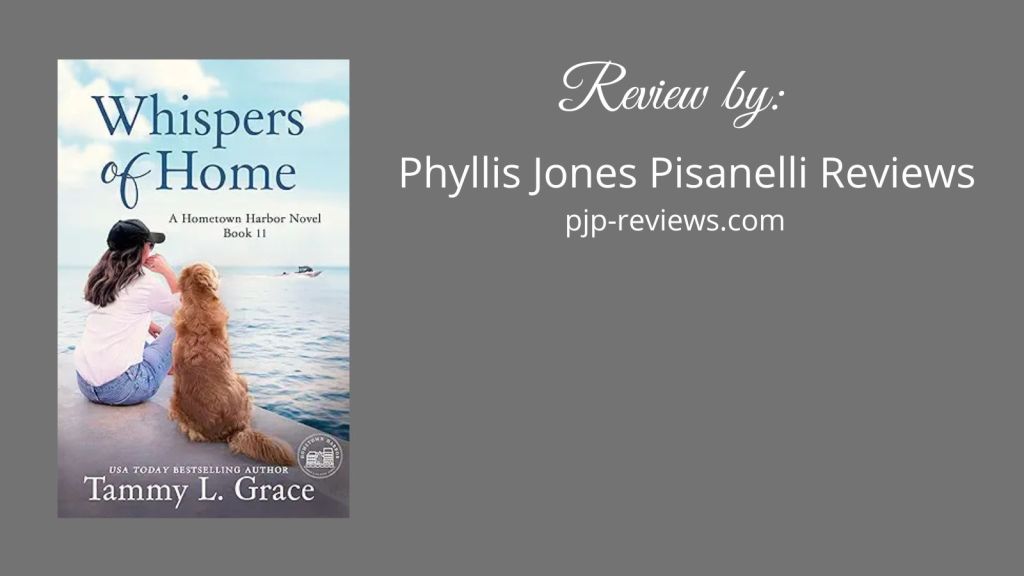
Whispers Of Home is book 11 of the Hometown Harbor series by Tammy L. Grace. I can’t tell you how much I loved this book. I have had a lot going on and have not been able to concentrate enough to read. I thought I had lost my love of reading. When I finished Whispers of Home, I knew I found it again. I couldn’t wait to start another book.
Thank you, Tammy L. Grace, for helping me remember why I love to read a good story.
I am always excited to read a new addition to the Hometown Harbor series. I love a good series. Don’t you? A new book is like going home to visit all of your old friends and having a good time catching up. It reminds me of trips home catching up with all my girlfriends from high school. Nothing like some good ole girl time!
The town of Friday Harbor is probably one of a kind. It is a busy town filled with tourists during the summer and when the tourists clear out it is time for the locals to come together again. They help each other out with anything and are there for them if there is a problem they need help working out. What more could you ask for? They give their time and resources to help their group of friends out. The group has grown over the years.
If you know me at all, you know that I love a small town. I love to live in them and small towns are my favorite setting for a good book. The setting is not mandatory, but it makes a big difference in how a book feels. I’m also one who can’t pass up a good love story. Tammy’s stories are clean and still makes you feel all the little tingles of love.
If you’re looking for a good series to get lost in that takes place in a small town with a new love story in every edition, then this book is for you. I’m so happy I remembered that life is so much easier with a good book to get lost in. This series definitely needs to be on your nightstand or the top spot in your tbr. Until next time…Happy Reading!
Don’t forget to support the authors you read by leaving a review. Even a few words help.
I received a complimentary copy of this book from the author. The opinions I have expressed are my own and I was not required to write a review. I am disclosing this in accordance with the Federal Trade Commission’s 16 CFR, Part 255.
To follow my blog, click on the heading of any blog post. This will bring up just that blog and you will see a follow button on the bottom right hand corner. Thank you!
SYNOPSIS:
Loss lingers softly. Salt heals slowly. Home whispers back.
At fifty-two, Camille Ashwood loses Theo—her fiancé, her future, the love they planned to bring to the islands someday. Heartbroken and unable to stay in Seattle where every corner holds a memory, she does the bravest thing she’s ever done. She moves alone to Friday Harbor, a dream they used to share, to open a little shop. Harbor Glow, where she hand-pours sea salt soaps and candles, becomes her sanctuary, her therapy, her new beginning.
The island welcomes her the way it always does, complete with familiar faces and one quietly kind handyman named Neal… but some memories follow no matter how far you run.
Whispers of Home, the eleventh installment in the Hometown Harbor Series, is love letter to every reader who has picked herself up after loss and kept a shared dream alive. If you cherish stories of second chances, resilient women, and small-town communities that feel like family, Tammy L. Grace delivers another unforgettable story, where healing begins with a single step.
Read more from USA Today bestselling author Tammy L. Grace:
HOMETOWN HARBOR SERIES
Hometown Harbor: The Beginning (Prequel Novella)
Finding Home
Home Blooms
Promise of Home
Pieces of Home
Finally Home
Forever Home
Follow Me Home
Long Way Home
Come Home for Christmas
Feels Like Home
Whispers of Home
STILLWATER INN SERIES
Harbor Dreams
COOPER HARRINGTON DETECTIVE NOVELS
Killer Music
Deadly Connection
Dead Wrong
Cold Killer
Deadly Deception
Deadly Pursuit
GLASS BEACH COTTAGE SERIES
Beach Haven
Moonlight Beach
Beach Dreams
SISTERS OF THE HEART SERIES
Greetings from Lavender Valley
Pathway to Lavender Valley
Sanctuary at Lavender Valley
Blossoms at Lavender Valley
Comfort in Lavender Valley
Reunion in Lavender Valley
CHRISTMAS BOOKS
A Season for Hope (Christmas in Silver Falls)
The Magic of the Season (Christmas in Silver Falls)
Christmas in Snow Valley (Hometown Christmas Series)
One Unforgettable Christmas (Hometown Christmas Series)
Christmas Sisters (FREE PREQUEL to Soul Sisters at Cedar Mountain Lodge)
Christmas Wishes (Soul Sisters at Cedar Mountain Lodge)
Christmas Surprises (Soul Sisters at Cedar Mountain Lodge)
Christmas Shelter (Soul Sisters at Cedar Mountain Lodge)
Christmas Hearts (Soul Sisters at Cedar Mountain Lodge)
OTHER TITLES
The Wishing Tree
Wish Again
Overdue Wishes
One More Wish
Pick of the Litter
Hearts Unleashed
Welcome Aboard
Uncharted Waters
WRITING AS CASEY WILSON
A Dog’s Hope
A Dog’s Chance
ABOUT THE AUTHOR:

Tammy L. Grace is a USA Today bestselling author of women’s fictions, family sagas, mysteries, and Christmas stories. She’s known for writing perfect escapes, unforgettable characters, and binge-worthy stories. Readers often say her characters feel like old friends and love the dogs she weaves into all her books. She brings readers entertaining stories that take them on an emotional journey, filled with complex relationships of friendship and family in her women’s fiction novels. Mystery readers delight in her fast-paced whodunits and fans of Christmas love her small town holiday stories filled with family, friendship, and furry characters.
Tammy also writes under the pen name Casey Wilson and has released two emotional and heartwarming stories about the bond we have with our beloved canine companions.
When Tammy isn’t working on ideas for a novel, she’s spending time with family and friends or supporting her addiction to books, tea, and chocolate. She and her husband make their home in Nevada and have one grown son and a spoiled golden retriever.
Tammy invites you to subscribe to her newsletter at http://www.tammylgrace.com/newsletter and she’ll send you a free interview with all the dogs in her Hometown Harbor Series as a thank you gift. Find her on Facebook at https://www.facebook.com/tammylgrace.books and be sure and click the follow button here on Amazon.

REVIEW:
Audrey J. Cole has brought us another Psychological Thriller that will keep you on the edge of your seat. If you have followed me for a while you know that this is one of my favorite genres and Ms. Cole is on my list of favorite authors. I can’t seem to pick just one. There are so many authors and genres to choose from.
If you like Psychological Thrillers this one should be on your to be read list if you haven’t read it already. It takes place in two different time periods with the same friends. These girls have been friends for many years. The most recent time period is recent time and the older one is when they were in high school. They all have different lifestyles now and aren’t necessarily close. Now they are going on a trip. The Trip. It takes place on a sailboat so you know they are going to be in close proximity. Then the fun begins…
You will like some of the characters and suspect all of them at one time or another. My mind was rolling in circles trying to figure out who was behind everything that was going on. There are those that you will suspect all the way until the end.
If you like Psychological Thrillers and if you haven’t read Audrey J. Cole, what are you waiting for? You must put this on your nightstand. Take caution, it might cause you a couple of sleepless nights! Until next time…Happy Reading.
Don’t forget to support the authors you read by leaving a review. Even a few words help!
I received a complimentary copy of this book from the author. The opinions I have expressed are my own and I was not required to write a review. I am disclosing this in accordance with the Federal Trade Commission’s 16 CFR, Part 255.
SYNOPSIS:
From USA Today bestselling author Audrey J. Cole comes a locked-room thriller at sea about image and influence, guilty secrets that won’t sink, and the lies we cling to in the storm.
A luxury sailing trip is the perfect escape from Palmer’s shattered marriage. Until the Pacific Coast cruise—a chance for old friends to mend old wounds—descends into a harrowing fight for their lives.
Twenty years ago, the five of them were inseparable. But after a rafting accident their senior year, only four of them returned. Volleyball captain Courtney’s body was never found. And their lives were never the same.
Now Palmer, her ride-or-die Beth, and home renovator Emma are on an all-expenses-paid trip with mega-influencer Gigi. But a mysterious note and a violent storm soon push them dangerously off course. The radio’s down, the captain’s missing, and the first officer’s woefully inexperienced. And in a chilling echo of the past, Gigi gets swept away. Perhaps on purpose.
Someone doesn’t want them to make it back. Palmer’s not sure who to trust, but she knows the truth lies in the murky depths of what really happened that day on the river.
ABOUT THE AUTHOR:

Audrey J. Cole is a USA TODAY bestselling thriller author. She resides in the Pacific Northwest with her two children. Before writing full time, she worked as a neonatal intensive care nurse for eleven years. She’s also a pilot’s daughter.
Sign up for her mailing list at https://www.audreyjcole.com/sign-up to receive free bonus content, promotions, and new release updates. Audrey can also be found on
Facebook: https://facebook.com/AudreyJCole
Instagram: https://www.instagram.com/audreyjcole/


INTRODUCTION:
Set against a story shaped by loss, longing, and unexpected possibility, One Alpen Day by Michele Davenport-Dutton centers on two people whose lives intersect at a moment when both are quietly hoping for something more than what they have known so far.
Angela Sutton has returned to the place she once called home after a series of personal losses leaves her rethinking everything she imagined for her future. Newly divorced and grieving multiple pregnancy losses, she begins helping her aunt run the family bakery, settling into a slower life shaped by routine and reflection. Her days take an unexpected turn when Mason Glade, a well-known Hollywood actor, walks into the bakery.
Mason arrives carrying his own burdens: a strained marriage to his estranged wife, Camila, whose struggles with alcoholism have spilled into the public eye, and a fierce desire to protect his two young children from the fallout. With Camila entering rehab, Mason takes his children and their nanny far from familiar pressures, hoping distance will offer clarity. As Angela grows closer to Mason and his children, questions emerge about timing, trust, and whether love can take root amid unresolved ties and uncertain futures.
EXCERPT:
Angela moved back to Grainau last year after Uncle Karl died from a massive heart attack at the age of seventy-six, leaving Aunt Terese to tend to their forty-year-old bakery alone. Around the same time, Angela had gone through a bitter divorce from her husband, Nick Sutton Jr. after three years of marriage. He had carried on his father’s legacy as a business mogul in L.A. Nick Jr. was in the Garmisch/Grainau area for business and it was there he met Angela at the bakery four years ago. He had swept her off her feet and dragged her to L.A where they were married a few short months later.
The Alpen Bakery, as named by Aunt Terese and Uncle Karl, carried an assortment of breads, rolls, sheet cakes and pastries. Bread is to Germans what cheese is to the French. There are more than four hundred types of bread in Germany. And, a good bakery such as Angela’s aunt and uncle’s, stocked at least ten to twenty kinds of breads, ten kinds of rolls and an assorted variety of sheet cakes and various pastries, including Aunt Terese’s delectable Apple Strudel. Plus, it was said by locals that they made the best cappuccino in town.
Angela was cleaning and dusting all the pictures and paintings displayed in the bakery, over the empty tables when she heard Aunt Terese yell.
“Oh, dear! Somebody left their wallet on the counter!” She looked inside to see if she could find identification. She peered sideways at Angela and batted her eyelashes. “Mason Glade,” she said. Angela’s stomach turned in knots. Just hearing his name made her break out in goosebumps.
“He’ll be back soon enough,” and with that, Aunt Terese closed the wallet. “He won’t get far without his wallet,” she quipped enthusiastically.
Angela went back to spritzing glass cleaner on the glass covering the Neuschwanstein picture which had smudges all over from people, mainly kids, touching it. It’s King Ludwig’s most beautiful and prized castle. The rest of the walls displayed photos of Garmisch-Partenkirchen and the ski jump, where the 1936 Winter Olympics were held. Both Aunt Terese and Uncle Karl’s parents attended, as it was a huge event. Uncle Karl was just a baby at the time. Next to the Olympic pictures were framed news articles and interviews from that event.
After she dusted the painting of the Zugspitze, Germany’s tallest and most glorious mountain, which has her town of Grainau at its base, she went back into the kitchen and washed her hands.
Aunt Terese saw Mason walking outside the front window and quickly shouted, “There he is, Angela!”
Mason opened the door and walked up to the counter. “Hello, excuse me, but I believe I left my wallet here, or I’m really hoping it’s here.” Aunt Terese picked it up from behind the counter and handed it to him. Mason was grateful he didn’t lose it. “Oh, you don’t know how scared I was, thinking I had lost it. Thank you so much,” he said, a nervous relief in his tone. At that moment, Angela walked out from the back and Mason said, “Wait, aren’t you Angela?” He pointed over to the rear corner where he remembered seeing her choking.
Angela’s insides did a cartwheel. She couldn’t believe he remembered her name from when Aunt Terese shouted it earlier, asking if she was okay.
Angela cleared her throat. “Yes, Hi, I’m Angela.” She reached out her hand and Mason shook it.
“Hello Angela. It’s very nice to meet you. I’m Mason, by the way. You work here?”
Her hands were clammy and sweaty from her nerves. “Yes, this is my Aunt Terese and Uncle Karl’s bakery. They’ve owned it for forty years now.”
ABOUT THE AUTHOR:

Michele Davenport-Dutton has loved reading since childhood and was once the top reader at her Montessori school in Garmisch, Germany. A lifelong fan of heartfelt love stories with happy endings, she finally brought her own story to the page with this debut novel. Michele earned her bachelor’s degree in Business Management from CSUB before putting her career on hold to raise her family, spending nearly 30 years as a stay-at-home mom. Now fulfilling a long-held dream of becoming an author, she lives in Shafter, California, with her husband, Chris. Together they have eight adult children and seven grandchildren, with hopes for many more. Visit Michele on Instagram.
Amazon: https://amzn.to/460BAhC
Goodreads: https://www.goodreads.com/book/show/206186582-one-alpen-day
GUEST POST:
A Memory of Opa Max and Me
It was a cool, crisp spring morning in Garmisch-Partenkirchen, Germany, in 1974. I was a cheerful five-year-old girl, holding my Opa’s hand and skipping along the sidewalk to keep up with his quick pace. We were hurrying to the station to watch the trains come and go, one of Opa’s favorite hobbies.
The recent rain left a shiny gloss over the cobblestone road, making the stones look like individual turtles hiding in their shells. As the stores prepared to open, I looked up at the balconies where many shop owners lived. High above, I saw an elderly woman with gray hair and a red scarf. With a large green watering can in her wrinkled hand, she quenched the thirst of a window box filled with vibrant red, white, and pink geraniums.
When we arrived at the station, Opa began singing the song he taught me: “Eisenbahn, Lokomotive, wer kein Geld hat, darf net mit.” Translated, it means, “Steel train, locomotive, whoever has no money cannot come along.” While the German lyrics rhyme, I always found the sentiment a bit harsh and felt pity for those who couldn’t afford a ride.
As Opa enjoyed a cigarette, I practiced flips on the nearby bars. Whenever he saw me, he would yell, “Ach Gott, Mimi! Du fällst runter!”—”Oh God, Mimi, you will fall down!” I would study him like a Monet or Van Gogh painting. He was a short, stout, yet well-dressed man who wore his grey feather hat with pride. His face was perfectly round, like a chef’s potato dumpling, and his large, steel blue-grey eyes always looked peaceful.
Opa wore Old Spice aftershave, and to this day, that scent instantly brings back his memory. Our walks to the train station were always an adventure, and they will forever be embedded in my heart.
My story takes place in the beautiful, scenic Garmisch/Grainau area of Germany and although the love story is fictitious, the setting holds fond memories for me as I lived in Garmisch as a little girl. Garmisch was my home, a special place with my loving family. I often reflect on the times walking to the train station with my Opa Max and below is a special memory from that time. I had to include Opa’s life events in my novel and share it with the world.
QUESTIONS & ANSWERS:
What’s a detail, theme, or clue in your book that most readers might miss on the first read—but you secretly hope someone notices?
Mason’s estranged wife always wears gold- glittered costumes for her rodeo shows. Angela, the protagonist, has Emerald green eyes. The last line of the book has Mason thinking, All that glitters isn’t gold. All that glitters is Emerald green.
When did this story or idea “click” into place for you—was there a single moment you knew you had to write it?
My sons went on a weekend Boy Scout camping trip with their dad. He took our five-year-old daughter with them. I was all alone at home (a rare treat) and thought, “I want to write a book.” I grabbed my notebook and a pen and the characters just came to me. The setting unfolded and yet it took years in the making of writing this novel, having been a stay-at-home mom was my top priority. I’m happy to see my little novel finally come into fruition.
Which character or real-life person surprised you the most while writing this book, and why?
Opa, my grandpa. Although he passed on many years ago, at the ripe old age of 93, every time I read the last two chapters of my book pertaining to him, I cry. No tears in the writer, no tears in the reader, right?
If your book had a soundtrack, what three songs would be on it and what scenes or moments would they pair with?
“Everything that Glitters is Not Gold,” (sung by Mason, while he’s strumming his guitar in the alps. That song hits me hard)
“Edelweiss” and “The Sound of Music,” because of the majestic alps in the background.
What’s one belief, question, or emotional truth you hope readers carry with them long after they finish your book?
Finding healing from loss. Love and connection help people grow. Love is better the second time around.
If your protagonist (or the central figure in your nonfiction) could give the reader one piece of advice, what would it be?
Love triumphs over fear. Love conquers all.
What real-world place, object, or memory helped shape a key element in your book?
The setting in the Garmisch/Grainau is where I lived as a young girl. My Opa would hold my hand as I skipped to the train station where we’d watch the trains coming and going.
What’s something you had to research, learn, or experience to write this book that genuinely shocked you?
Researching miscarriages and how it affects women deeply, the trauma they endure.
If your book were invited to join a shelf with two other titles, which ones would make you happiest—and what would that shelf say about your story?
Jane Porter’s Christmas at Copper Mountain and Julie Olivia’s If it Makes You Happy. The shelf would say “Come over, stay a while. Let me take you on an armchair adventure you won’t want to miss.”

INTRODUCTION:
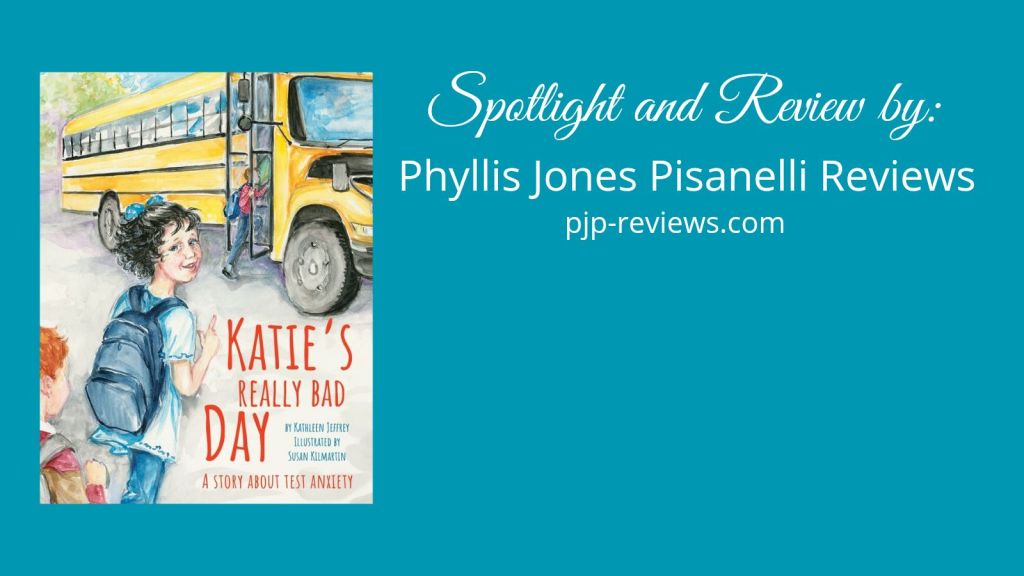
Some days unfold exactly as planned, while others take an unexpected turn. Katie’s Really Bad Day: A Story About Test Anxiety by Kathleen Jeffrey, illustrated by Susan Kilmartin, explores what happens when internal pressure overwhelms a child who usually feels prepared.
Katie enjoys learning and usually approaches her day with enthusiasm, but test days stir up uncomfortable feelings she struggles to control. During a spelling test, her anxiety becomes overwhelming, making it hard to think clearly or stay focused. In a moment of panic, Katie reacts in a way that draws attention and leaves her feeling embarrassed.
With thoughtful guidance, Katie begins to learn why her body reacts the way it does under stress. She is introduced to calming strategies that help her slow down and refocus. As she practices these tools, Katie gains confidence in her ability to manage anxious moments. The story gently shows how understanding and practical techniques can transform a stressful situation into a learning experience.
MY REVIEW:
I was offered the chance to review Katie’s Really Bad Day by Kathleen Jeffrey, a children’s book. I decided I would because many of my friends and followers have young grandchildren. I kind of wished this kind of book was available when I was a young child.
Kathleen Jeffrey has written an important book for parents and children. She has a wonderful Illustrator which takes this book up another notch. She is Susan Kilmartin. I especially enjoyed her beautiful illustrations.
I highly recommend Katie’s Really Bad Day written by Kathleen Jeffrey and Illustrated by Susan Kilmartin. In my opinion, this book can be a great learning tool to teach coping skills and other children how to be concerned and help their friends.
Please remember to support the authors you read by leaving a review. Even a few words help.
I received a complimentary copy of this book from the author. The opinions I have expressed are my own and I was not required to write a review. I am disclosing this in accordance with the Federal Trade Commission’s 16 CFR, Part 255.
ABOUT THE AUTHOR:

Kathleen Jeffrey is an author of children’s picture books, fulfilling her mission to create stories that shine with love, light, spirit, truth, and joy—helping children navigate life’s challenges, explore big emotions, and grow with courage, kindness, and wonder.
Visit Kathleen at her website and follow her on Facebook and Instagram.
Amazon: https://bit.ly/4qDMemF
Goodreads: https://www.goodreads.com/book/show/210447560-katie-s-really-bad-day
GUEST POST:
My inspiration for writing this book…
I was an anxious child in school. Eventually this anxiety developed into test anxiety that stayed with me through college. It didn’t matter if I knew the answers, the panic still set in!
Many children experience anxiety in school for various reasons. In researching for this book, it was wonderful to learn of the many resources and tools available today for teachers to help their anxious students. Some students are very good at concealing their test anxiety feelings and may suffer needlessly while also thinking they are the only ones. In addition, test anxiety can lead to a pattern of underachievement.
I hope Katie’s story will help children identify their own anxious feelings, know that they are not alone and encourage them to tell their teachers and caregivers what is going on before their anxiety leads to “A Really Bad Day!”
Who and what ultimately inspired you to become a writer?
About 23 years ago, after my dad passed away, I had a divine inspiration to write a spiritual children’s picture book. I started planning, thinking, praying on it, but the timing was never right to dig in and get it done. Life was busy, my children were young, and I worked full time.
Eventually I left my 28-year media sales career and ended up working in the bookstore at Glastonbury Abby, a benedictine monastery. Researching and buying books for the store was fun, inspirational and kept my book idea alive. Finally, I wrote a very long manuscript. Through working with critique groups, I concluded it was really two books. Out of that came Katie’s Really Bad Day. The next book is also about Katie and relates to my original inspiration for a spiritual picture book.
Between journaling for the past 23 years, joining the Society of Children’s Books Writers and Illustrators (SCBWI) to learn how to write a picture book, and writing poetry during covid, I was finally ready to leave my twelve-year bookstore adventure and get on with writing and getting the book published!
QUESTIONS &ANSWERS:
What’s a detail, theme, or clue in your book that most readers might miss on the first read—but you secretly hope someone notices?
Empathetic, concerned faces of Katie’s teacher, Mom & Dad, and her classmates when Katie is upset. No one is making fun of her.
When did this story or idea “click” into place for you—was there a single moment you knew you had to write it?
During critique group sessions with a long manuscript, I discovered I actually had two books to write. The first became Katie’s Really Bad Day: A Story About Test Anxiety, to identify Katie’s character with school & test anxiety, which is based on my personal story I had to tell for authenticity. The second book will feature Katie once again and will be illustrated sometime this year.
Which character or real-life person surprised you the most while writing this book, and why?
Katie’s sidekick Finn turned out to be quite the entertaining cut up as well a very concerned and empathetic friend.
If your book had a soundtrack, what three songs would be on it and what scenes or moments would they pair with?
“Inside Out” by Michael Giacchino, (From joyful school yard to Katie’s sudden test anxiety.)
“When I Breathe” by Stephanie Leavell (Learning belly breathing with Miss Julie and later with the class.)“When I’m Nervous” (A song for kids about overcoming anxiety.)
Overall story wrap up. Would play at the end of the book.
What’s one belief, question, or emotional truth you hope readers carry with them long after they finish your book?
That many students are anxious in school or before tests so you are not the only one. Because you are anxious before a test does not mean you are not smart or capable.
Tell us about a moment during the writing process when the story (or message) took an unexpected turn.
I was determined to have Mom take Katie into school the day she did not want to go because that was my personal experience. Through teacher critique partner advice and their experiences with children in today’s classrooms, I realized Katie would have to take the bus, work through it and tell Miss Julie what was going on.
If your protagonist (or the central figure in your nonfiction) could give the reader one piece of advice, what would it be?
Lots of kids get anxious before tests! Let your teacher and caregivers know when you are anxious. There are always solutions!
What real-world place, object, or memory helped shape a key element in your book?
My second grade elementary classroom and getting caught having scratched on my varnished desk was a deep rooted memory. A boy noticed it and yelled out to the teacher. She was very angry and scolded me in front of the class. I was so embarrassed I refused to go to school the next day so my mom had to bring me in and talk to the teacher.
What’s something you had to research, learn, or experience to write this book that genuinely shocked you?
Through my research on childhood, school and test anxiety, I learned test anxiety can start as early as second through fourth grade and may lead to underachievement. Between this research, writing my bio, interviewing my mom, older sister, adult neighbor and childhood classmates, I was able to make connections. The seeds of my overall school anxiety started with significant separation anxiety my first three weeks of kindergarten. By fourth grade my overall school anxiety did lead to test anxiety and eventually underachievement. Anxiety triggers fear and panic which makes it hard to concentrate when learning new concepts or taking notes while trying to keep up with the teacher or actually taking a test.
If your book were invited to join a shelf with three other titles, which ones would make you happiest—and what would that shelf say about your story?
Wilma Jean The Worry Machine by Julia Cooke (Classic, Funny, Popular)
The Big Feelings Book for Children: Mindfulness Moments to Manage Anger, Excitement, Anxiety, and Sadness by Sharon Selby MA (Respectable, Useful, Popular)
Alexander and the Terrible, Horrible, No Good, Very Bad Day by Judith Viorst & Ray Cruz Total Classic! (Happiest)

INTRODUCTION:
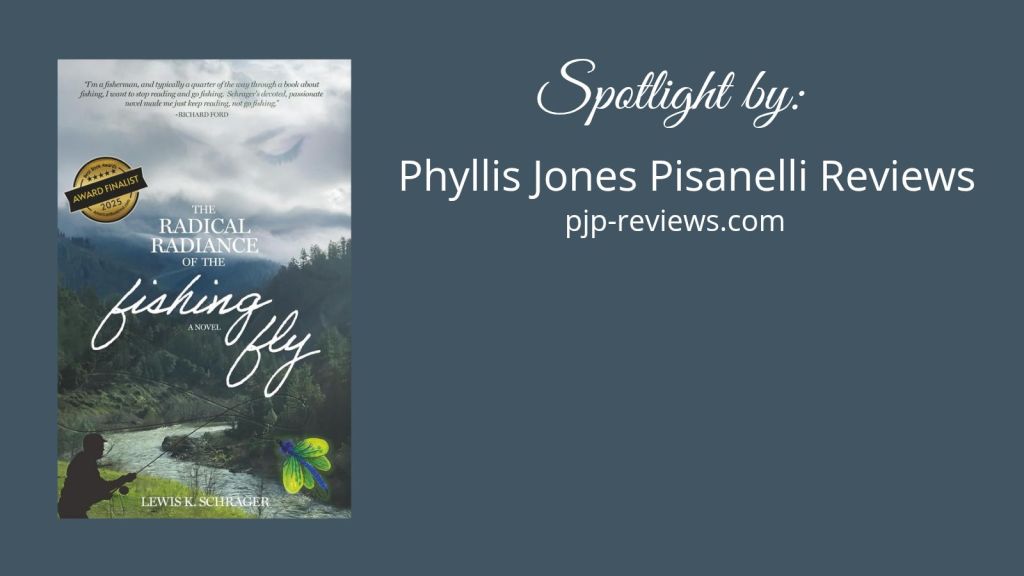
David Nichols arrives in Alaska grounded in logic, not instinct. In The Radical Radiance of the Fishing Fly, Lewis K. Schrager places a methodical mind into an unforgiving environment that exposes emotional truths long kept in check.
When rational certainty collides with emotional unpredictability, transformation becomes unavoidable. David Nichols’ structured life begins to shift after his brother Larry faces cancer. During treatment, Larry finds endurance through the creation of fishing flies and imagined waters, sustaining himself through uncertainty.
After recovery, Larry invites David on a fishing journey that tests both their relationship and David’s reliance on control. Immersed in a group driven by shared passion, David struggles to connect as unresolved conflicts between the brothers surface. He is drawn to Kathy Sands, another member of the group whose personal grief mirrors the emotional weight of the journey.
As the experience deepens, a covert nighttime expedition fueled by revenge forces David to confront the limits of reason, reshaping his understanding of loyalty, fear, and emotional restraint.
EXCERPT:
From Chapter One
I pulled out of the underground garage onto Wisconsin Avenue, then down the ramp heading east on the Washington Beltway. Rays of the rising sun glowed orange in a far-off bank of clouds. Gray banks of night fog, exhaled from dying creeks and streams entrapped within the urban sprawl, drifted over the roadway bridges before dissipating as rising haze over the slim remains of vestigial marshland. I turned onto I-95 North, speeding past countless semis parked close along the shoulders of the highway, red running lights blinking crazy in the half-light. I imagined the truckers awakening in their dark, coffin-like spaces, yawning and stretching and rubbing their eyes as they plan for another day bringing who-knows-what to who-knows-where.
Wondering where I was going.
Wondering why.
In fact, I knew. My destination on that steamy August morning was the Philadelphia airport, a rendezvous with my older brother Larry. In less than three hours I would be meeting him there. We would board our plane to Seattle, and then another to Anchorage, and then a third and a fourth, our destination somewhere in the Alaskan wilderness for a week of fly fishing.
The first rays of the freshly risen sun flared above the distant cloudbank. I squinted against the blinding glare, lowered my sun visor, fumbled with my sunglasses, and slipped them on.
This was a bad idea.
I was nervous about spending this much time with Larry. Growing up, he was brash and loud, determined to be the center of attention. I was quiet, more than happy to disappear into the background, unnoticed and undisturbed. This worked out fine when we were apart. On the few occasions where we found ourselves thrown together, like at an occasional high school party, he’d notice my subtle signals of embarrassment at his behavior and would talk more loudly, act more wildly, dance more crazily, until I shrunk away into a kind of nothingness and headed home on my own. I could never even think of taking him on physically when he pushed me past my breaking point as he was taller and far stronger than I, and a champion wrestler as well.
I tried to convince myself that this fishing trip would work out fine. So much had changed since our high school days. Larry had become a successful businessman, having grown Leather and More, our father’s store in South Philly to three times its original size. He’d expanded the business, establishing a second store in the Mall at Short Hills, a prime shopping destination in the tony New Jersey suburbs just west of New York City. He’d married Tina Simons, a wonderful woman who gave him a couple of lovely daughters. He’d mellowed.
Besides, I realized that all this cogitation was irrelevant. Mellowed or not, I never would have agreed to go on this trip if not for Larry’s cancer
ABOUT THE AUTHOR:

Lewis K. Schrager is an author and playwright whose short fiction has twice been honored in the F. Scott Fitzgerald Literary Contest and has appeared in numerous literary journals, including South Carolina Review, Cottonwood, and Bryant Literary Review. His plays have been produced in Baltimore and St. Paul, and The Radical Radiance of the Fishing Fly is his first published novel. A graduate of Johns Hopkins University and the Vanderbilt University School of Medicine, Schrager has also spent much of his professional career in global health, serving as an HIV/AIDS researcher at the National Institutes of Health and as a vaccine developer focused on tuberculosis prevention. Visit Lewis at his website.
Amazon: https://bit.ly/3YJofq0
Goodreads: https://www.goodreads.com/book/show/239710220-the-radical-radiance-of-the-fishing-fly
QUESTIONS & ANSWERS
What’s a detail, theme, or clue in your book that most readers might miss on the first read—but you secretly hope someone notices?
The importance of appreciating the humanity in “others”. Our society is currently terribly divided. The general discourse, running from casual posts on social media sites to the language of our country’s leaders, too often is overtly, aggressively, dehumanizing – and seems to be getting worse each day. The consequences can be grave, leading to bigotry, violence, and even killings. This wasn’t the case when I wrote the book, (I first drafted this in ~2005). The initial title of the book was The Secret River. When I discovered that there was a Booker Prize finalist book with this name, I decided to change the title. The current title unexpectedly brought to my mind a focus on how something like a work of art (in this case, expertly hand-tied fishing flies) that could be appreciated by persons across economic, educational, and socio-political backgrounds could serve to serve to bridge societal schisms and help us appreciate others as fully “human,” with many of the same desires, and fears, as we hold ourselves.
When did this story or idea “click” into place for you—was there a single moment you knew you had to write it?
Great question – yes, there was such a moment. While this story is mostly fictional, the foundation is based in reality (as is true for most realistic, literary fiction, I think). My younger brother developed Hodgkin’s disease and was cured by a bone marrow transplantation. He was a passionate fisherman and, like the Larry character, tied beautiful flies while suffering through his transplantation, promising himself a trip to Alaska if he survived. He did survive, and invited me to go along, which I did, reluctantly. The “click” you refer to has to do with the circumstances surrounding the loss of his flies, and their subsequent recovery. This part of the book – how the flies were left behind in the Anchorage airport, how my brother went kind of crazy when he learned about this after we arrived in our distant village, how I came up with the story of one of the fishermen having a heart attack and needing the medicines left behind in his bag and threatened the airline with this, resulting in the delivery of his bag with his flies, and the bags of the other fishermen as well – actually happened. This was the “click.” The rest, particularly any of the story involving Kathy and Angie (there were no women on our trip) I mostly made up.
Which character or real-life person surprised you the most while writing this book, and why?
This is a tough one. Many of the characters I named above progressed, and changed, along different arcs. In terms of who “surprised me” the most…perhaps Kathy. She was the empath; she sensed David’s inner turmoil and reached out to him, even though he was a stranger to her. Although she projected a personality of tolerance and accommodation, she also had a no-bullshit side of her. This came through early, when she had the guts to approach the hunters and tell them to put out their cigars in the hotel restaurant. This also came through when she decided to join Rick Garret, Zack, Butch, and Larry on their naked, midnight attack on the hunters’ camp – and demanded that David join her in this, saying that “sometimes revenge is therapeutic.” I really liked Kathy.
If your book had a soundtrack, what three songs would be on it and what scenes or moments would they pair with?
Wow. I’m going to show my age here.
1. Muddy Waters – Rollin’ Stone (Catfish Blues) – pp. 68-69, when David and Kathy return to the hotel dining room and find all the fishermen sitting around, gloomy at the prospect of having to go on the trip without their equipment.
2. The Doors – Riders on the Storm – pp.201-203 – When the raiding party crosses the river in the moonlight to attack the hunters’ camp.
3. Crosby, Stills, and Nash – Wasted on the Way – p.212-213 – As they ride the last stretch of river, when everyone fishes in the warm sunshine. (I’d like to talk about more…)
What’s one belief, question, or emotional truth you hope readers carry with them long after they finish your book?
That “people are people” – fundamentally with the same set of desires and concerns (broadly written) – living, loving, dying. It’s easy to forget this and be distracted by various influences to view others as threatening and different. It’s more difficult to appreciate the similarities in others – with the most fundamental one being their existence as a human being. Sometimes, something as simple as appreciation for radically radiant fishing flies can serve as a reminder.
Tell us about a moment during the writing process when the story (or message) took an unexpected turn.
In an earlier draft, the scene on pp. 122-123, when David discovers Kathy bathing in the river and declines her invitation to join, had a different outcome. In the earlier draft, Kathy strode out of the water feeling angry, embarrassed, and hurt. It took about 40 pages of additional story for them to overcome this. Later, as I got to “know Kathy better,” I realized that this really wasn’t who Kathy was. I revised this and had her emerge from the river, nonplussed, and place a cold kiss on David’s forehead, before drying herself and getting dressed. This was the true Kathy…and also allowed me to cut 40 pages from the novel!
If your protagonist (or the central figure in your nonfiction) could give the reader one piece of advice, what would it be?
Avoid making character assumptions of people based on social, economic, educational, and cultural differences; there may be more similarities between you and “the other” than you may realize.
What real-world place, object, or memory helped shape a key element in your book?
The key place was the Alaskan wilderness, particularly the river that my brother and I traveled on and the little village in which we stayed (I call it Nalunaq; the actual village was Aniak) during the trip upon which this fictional story is based. I should add that the second real place is NYC in the wake of the 9/11 attack.
What’s something you had to research, learn, or experience to write this book that genuinely shocked you?
Not a whole lot “shocks” me – but I guess I’d say the intensity of the fly fishing subculture. The guys who were on the trip took fly fishing VERY seriously – sometimes comically so (to an outsider, like myself). As an example, the scene on pp. 143-149, fishing in a driving cold rain at the “Moan and Groan Hole”, actually happened. Everything was real, up to the point where Russ slipped into the river. (I still get the chills thinking about that day.)
If your book were invited to join a shelf with three other titles, which ones would make you happiest—and what would that shelf say about your story?
It’s going to be hard to answer this without sounding grandiose. Please cut me some slack here.
1. In Our Time (Ernest Hemingway);
2. The English Patient (Michael Ondaatje);
3. The Things they Carried (Tim O’Brien).
Including these novels on the shelf (and I was pained to exclude books by Graham Green and Reynolds Price) is that writing an engaging, page-turning story, and writing a book that has a kind of rhythmic resonance to it, are not necessarily mutually exclusive. I’ve read compelling stories that “sound” like a stone knocking on a rotted log – these can do well in the marketplace, but I don’t enjoy reading them. Similarly, “writer-first” stories, which are all about the writing with no compelling narrative (and, sometimes, no narrative at all) also are not interesting for me to read; they seem pretentious and, if I’m being honest, arrogant. I have found the books I’ve listed extraordinarily beautiful to read, while they also pull me along in their engaging, powerful stories. I can’t say I’ve achieved this in Radical Radiance…but I’ve tried as best I could.


INTRODUCTION:
The Last Adam by Ron Echols presents a story where faith, danger, and responsibility begin to collide. As pressure builds, the narrative traces how unseen forces influence decisions and place ordinary people at the center of extraordinary consequences.
Across locations stretching from urban streets to ancient contested ground, a hidden war begins to surface. Mary Levitt’s pregnancy becomes the catalyst for escalating threats, violent encounters, and visions that signal her child’s role in a prophecy long feared.
Joseph Riesman’s involvement in a major development project draws him into political maneuvering and ancient forces operating beneath visible power structures. What appears practical soon becomes spiritual confrontation.
The sacrifice of the archangel Raphael reveals the depth of the conflict now in motion—angels, fallen angels, and human agents maneuver to control or destroy what Mary’s child represents. Watched and hunted at every turn, Mary and Joseph face betrayal and spiritual warfare as they struggle to protect a life destined to alter the course of humanity.
EXCERPT:
Prologue
Location: The Lunar Surface, Tranquility Base, southwestern corner of the Sea of Tranquility.
The moon hung motionless, like a dead thing in the void of space. Its pockmarked exterior reflecting the sun’s merciless glare and millennia of asteroids pummeling its surface. In that airless waste where humans had once taken a small step, the lunar dust lay since undisturbed, marked only by boot prints and machinery left behind. Piercing through the silence of the void, a voice called out.
“Raphael!”
A brilliant white light erupted into existence, hovering above the moon’s surface like a tear in the fabric of space itself. The light intensified until it seemed to bend space around it, taking form. A figure of a man emerged. Behind him, the first suggestion of wings. Translucent, but appearing stronger than steel, they folded against his armor etched with ancient angelic symbols that seemed to move when viewed directly. Dark hair, wild and untamed accentuated his sapphire eyes and caressed his polished, glass-like skin.
The being that called itself Gabriel stood motionless on the lunar surface, its feet leaving no prints in the ancient dust. The face that poets had tried and failed to capture for millennia turned slowly, searching.
“Raphael?”
The name rippled out without sound, more like a thought given form in the vacuum. Gabriel’s wings stirred restlessly, creating eddies in the dust that danced like spirits in the harsh light.
“Here, Gabriel,” reverberated a voice, bright but commanding, from the shadowed surface. Another angel sat casually reclined within the lunar rover, abandoned by the humans who briefly touched the face of Heaven before retreating to their warm blue marble decades ago. His eyes were fixated upon the Earth, suspended in the cosmic darkness. Raphael mirrored Gabriel, but adorned in silver armor with fiery ginger hair framing his serene face.
“I’ve been searching for you,” Gabriel said, moving closer. In the moon’s one-sixth gravity, each step seemed to take too long, as if time itself was stretching.
“Observing,” Raphael replied simply, still watching Earth.
“Observing…anyone in particular?” Gabriel asked, also redirecting his gaze toward Earth. From this distance, cities glowed like constellations, tiny lights poking through the darkness that surrounded them.
Maintaining his stare, Raphael revealed what he had been witnessing, his voice heavy from countless years of disappointment. “There in Houston, a man, after a night of heavy drinking, returned home to engage in an argument with his wife, he killed her in a drunken fit of jealousy. Across the sea in Madrid, Spain, a young prostitute on the cusp of adulthood prepares to inject herself with an HIV-contaminated needle provided by a friend. There, in Manila, a corrupt politician embezzles funds meant for the poor, channeling them to fuel his business ventures. Wherever I look, human virtue becomes more scarce.”
Raphael shifted his gaze to Gabriel, his glowing eyes piercing the darkness. “Who is worthy down there? Even among ourselves, evil found a way to take root. We cast him down to Earth, and he has only brought misery and death upon everyone there. Since the dawn of humanity, the stain of evil has tainted them all. They have no hope.”
Gabriel hung his head in solemn contemplation of Raphael’s declaration. They both knew who “he” was. Neither needed to speak the name that had once been brightest among them.
“You have manifested yourself on the human plane of reality. What if you’re spotted?” Gabriel snapped, briefly changing the subject.
A small chuckle escaped Raphael’s lips. “I am on the MOON, Gabriel, not Times Square New York. Besides, you’re doing it too. Did you even hear anything I said?”
“We do not materialize on this plane without purpose,” Gabriel scolded. “And yes, I heard you. I came to you because I have news.”
“What news?” Raphael asked.
“Your complaining is timely for once,” Gabriel chided.
He stepped closer to the rover, standing beside Raphael. “You are correct; there is no one on Earth capable of saving them. However, he has devised a plan.”
Raphael peered up at Gabriel, rising from his reclined posture. “What plan?”
Gabriel leaned in, his voice whispering the secret. “He will go directly to them. He will send a part of himself to help them.”
“So, the time for final battle has come? He will lead us against the adversary?” Raphael asked, energy crackling around his form at the thought.
“No, this is not Armageddon,” Gabriel corrected. “This is the beginning. He will walk the Earth himself, using his own words, his truth, will be carried directly to them.”
Gabriel’s eyes widened. “That’s too much. They will panic at the sight,” he warned.
“As usual, you are not understanding. He will be born there.” Gabriel explained.
“What? Why?” Raphael’s bewilderment unusual for someone who existed since the earth was formed. “Become a human child? What could that possibly accomplish?”
Amused by the confusion etched on Raphael’s face, Gabriel continued, “He will birth himself into their world, experience their joys and their sorrows, breathe their air, and shed human tears. He will BE human. He says only then can he deliver what is necessary for their redemption. It is a necessary madness.”
“Incredible,” Raphael murmured, the word carrying both wonder and doubt. His gaze returned to Earth, that fragile sphere that held such consequence in the cosmic order. Resting his foot upon the rover’s steering wheel, he reclined once more, assuming his former pose, his mind wrestling with what he had just heard.
ABOUT THE AUTHOR:

Ron Echols is an ordained minister of the Gospel, an award-winning business executive, and a four-time Telly Award–winning producer. With The Last Adam: Resurrection Day, he makes his debut as a novelist, bringing a cinematic sensibility and spiritual depth to contemporary Christian fiction. A storyteller at heart, Echols blends suspense, gritty realism, and biblical prophecy to create modern retellings that explore enduring themes of faith, power, sacrifice, and redemption. Drawing from his background in ministry, media, and leadership, his writing places ancient truths into present-day settings where spiritual warfare unfolds alongside deeply human struggles. He lives in Texas, where he balances business ownership, community service, family, and writing stories designed to engage the imagination while stirring the soul. Visit Ron at his website and on TikTok.
Amazon: http://bit.ly/49ZY4lQ
Goodreads: https://www.goodreads.com/book/show/244392186-the-last-adam
GUEST POST:
I love supernatural stories.
Angels. Demons. Prophecy. Chosen ones.
But most stories treat divine intervention like clarity. I wanted to treat it like a problem.
Because if something undeniably supernatural appeared today, on camera, in real time, it wouldn’t unite people. It would fracture them. Belief wouldn’t simplify anything. It would raise the stakes.
That’s why I wrote my story as a thriller first.
Fast chapters.
Escalating consequences.
Characters forced to act before they understand what they’re dealing with.
I wanted it to read like a movie in your head. The kind where you tell yourself, one more chapter, and suddenly it’s way too late. Where the supernatural isn’t there to comfort you, it’s there to push the story forward and keep you unsettled.
Readers are smart. You don’t want sermons. You want tension. You want vibes. You want stakes that feel personal.
So this isn’t a book that tries to explain God’s plan.
It’s a book that asks:
What would it cost if God actually showed up again?
And then it lets the story run with the consequences.
QUESTIONS & ANSWERS
What sets your book apart from others in your genre?
The Last Adam doesn’t treat faith as an abstract. It treats it as a lived, psychological struggle. Most supernatural thrillers either lean heavily into spectacle or into theology. This story lives in the tension between doubt and belief, power and responsibility, heaven and human consequence. The divine is present but never comfortable. Angels don’t arrive to reassure; they arrive to disrupt. The story asks what faith costs when it stops being symbolic and becomes real.
What’s your favorite compliment you’ve received as a writer?
A reader told me they forgot they were reading a faith-adjacent story and just tore through it as a thriller. They said, “I came for the supernatural angle and stayed because I couldn’t stop turning pages.” That’s exactly what I hoped for.
Why did you choose this setting/topic?
I wanted to place an ancient, world-altering story inside a modern America. We live in a time of deep skepticism, fractured authority, and spiritual exhaustion. That felt like the most honest place to ask what would actually happen if something undeniably divine showed up again, not in a church, but in a society that doesn’t believe in that anymore.
Which author(s) most inspired you?
Frank Peretti for showing me that faith-based stories could carry real tension and darkness. C.S. Lewis for his moral clarity and spiritual imagination. And Stephen King for his understanding of fear, character, and how the supernatural feels when it collides with ordinary lives.
Which 3 books would you bring to a desert island?
The Bible, because it’s not just one book, it’s an entire library, and I’d never stop finding something new in it. The Count of Monte Cristo, because if I’m stranded, I want a story I can live inside for a long time. And a desert survival manual, because faith and literature are important, but I’d still like to get off the island.


INTRODUCTION:
History often reveals itself through personal moments. In America, Mike Bond follows young lives shaped by upheaval as a generation comes of age during a decade that redefined the nation’s future.
Against a backdrop of cultural rebellion and political unrest, four young people search for meaning and direction. Troy, orphaned and newly adopted, finds hope through family and dreams of flight. Tara discovers the power of her voice as she moves toward rock ’n’ roll stardom. Mick, Troy’s brother, balances athletic success with rebellion and growing concern over war. Daisy seeks purpose through equality, service, and the study of the human mind, committing herself to activism and the Peace Corps. Together, their stories capture the victories, losses, and lasting questions left behind by a generation shaped by transformation.
EXCERPT:
FREEDOM
THE BOY STARED through the cyclone fence at the dirt road, golden meadow and forested hills beyond. He listened a moment more to the din of other boys playing in the concrete yard behind him, scrambled up the cyclone fence ripping his shirt on the barbed wire top and dashed across the meadow uphill into the cool shadowed forest.
Minutes later he glanced down from the hilltop at the hostile brick walls and barred windows of the orphanage. A black Ford police car with white doors had stopped at the gate, its yellow roof globe flashing. Two priests and a cop were walking along the road, one priest gesturing at the forest.
He imagined them catching him, hitting him, wished he’d never run away, turned uphill through the dark trees then down a wooded valley to a stream. He knelt in the wet moss, his reflection rising toward him – dirty and skinny, tan hair askew – and drank the icy water tasting of rock and mud. So this is what it’s like to drink from a stream.
He followed the valley for a long time till he saw a dirt road ahead through the trees. A big red car was there. Afraid he’d been seen, he pulled back into the trees. From the car’s open windows came voices, a man and woman. If he moved back up the hill they’d surely see him. He’d be taken back to the Boys’ Home, the Fathers would whup him.
A warm breeze stirred the leaves. His heart hammered, his knees shook with fear and fatigue. Soon the car would leave and he could cross the road.
The woman was moaning. Holding his breath he listened. The man must be hurting her. She cried out; the boy glanced round but there was no one who could help.
Shivering with fear, he worried what to do. If the man killed her and he had done nothing to help, it was a terrible sin. But if he tried to help her he’d get sent back to the Boys’ Home. Standing, he tried to see better. The man was pushing the woman down in the back seat, maybe strangling her.
The boy dashed across the road and banged on the car. “You leave her alone Mister!” he yelled, voice shaking, “I’ll call the cops!”
They were naked from the waist down. “Get him out of here!” the woman screamed. The man threw open the back door shouting, “You little shit!” and slapped the boy hard across the head. The boy tumbled into the ditch and scrambled through brambles uphill. The man wasn’t following but the boy kept running, gasping for wind, legs weak with fear that the man would circle somehow and get him. He ran till he could run no more, stumbled, fell, and ran again.
After a while he stopped and bent over panting, watching behind him. He couldn’t stop shivering but wasn’t cold. He tried to talk to himself and his voice trembled. His head spun, his ears whined. If the man wasn’t killing her what was he doing? Why had she said get him out of here? Why were they naked like that?
Confused and terribly lonely, the boy moved on through the forest, jumping in terror at the crash of an animal running away, a flash of tawny fur. Even the Boys’ Home was better than this.
In late afternoon he came to a big place of empty, run-down tarpaper-covered buildings, some of their windows broken, tall grass spiking up from their concrete yards. He felt hungry and afraid, then angry at himself for feeling it. He snuck along one building and looked in a window hoping for something to eat, but there were only empty concrete floors, yellowed newspapers, rusty cans, torn tarpaper, and a broken toilet lying on its side. He slipped through a half-open door and stepped silently from room to room around broken bottles, boards with nails sticking up and chunks of fallen ceiling.
A window shattered overhead and he ducked into a closet, broken glass in his hair, deafened by his pounding heart, hoping whoever it was hadn’t seen him.
Maybe it was a bird hit that window. Stupid bird.
He tiptoed from the closet toward the door. Another window crashed. He ran stumbling over cans and bottles. Someone was shooting at him. At the door he halted, fearing what to do. Blood ran down his cheek onto his shirt. They were going to kill him.
Steps scuffed outside in the concrete courtyard. A kid. The kid picked up a rock and slung it. Glass shattered and the rock hopped across the floor inside.
ABOUT THE AUTHOR:
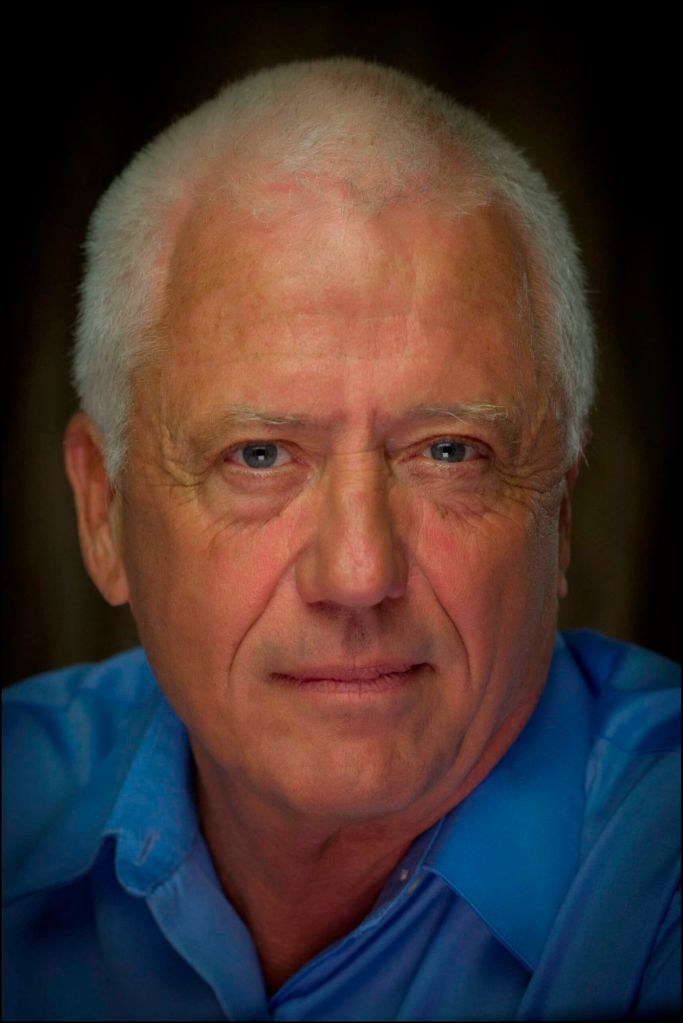
Mike Bond is the author of nearly a dozen bestselling novels and an ecologist, war and human rights journalist, award-winning poet, and international energy expert. His work spans more than thirty countries across seven continents, often drawn from firsthand experiences in remote, dangerous, and war-torn regions. His novels are praised worldwide for their intricate plots, vivid settings, and explosive pacing. His reporting has covered wars, revolutions, terrorism, and major environmental crises. Learn more at his website.
Amazon: https://amzn.to/4qtsBxK
Goodreads: https://www.goodreads.com/book/show/57580047-america
 Phyllis Jones Pisanelli Reviews