Genre: Women’s Fiction Release Date: June 30, 2026
REVIEW:
Hello Friends!
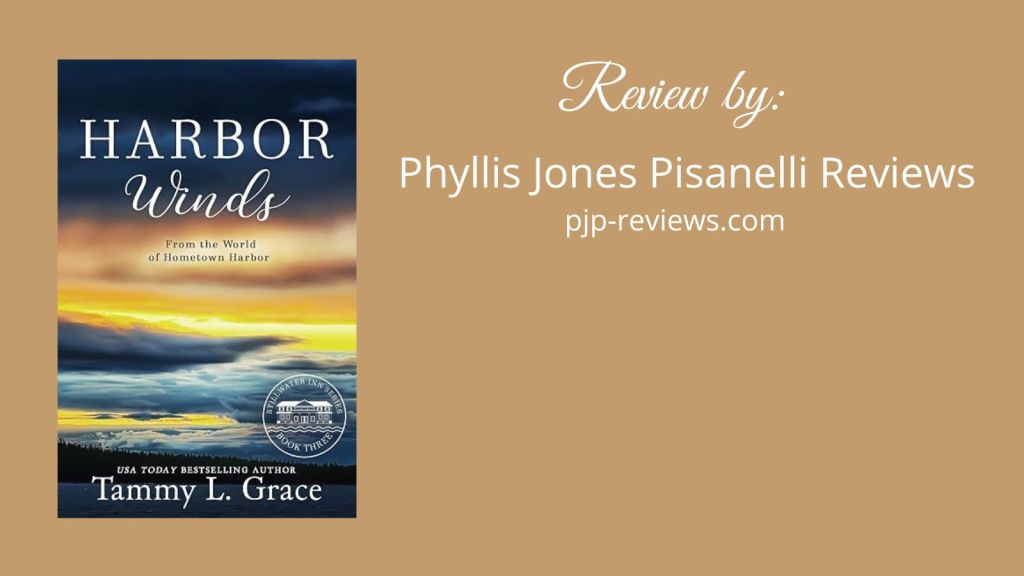
I have been enjoying my time with Tammy L. Grace’s new Stillwater Inn Series and the new friends I am making on the island. If you have been a fan of the Hometown Harbor Series, the Stillwater Inn Series lives in the world of Hometown Harbor. You will be able to catch up with some of the friends we have made and meet some new ones!
The whole premise is a little unique. The first book is Harbor Dream. That is when we meet Ida Grayson who is dying and devised the plan that we see put in place in this series. In her will she has left the run down Stillwater Inn to her two adult children and two step-children, a friend named Tully and a stranger to the rest.
In book two, Harbor Echoes we see all the heirs come together to learn of the will and then later arrive to live in the caretaker’s house while working on the Inn. It is also told from the viewpoint of Bryn, who is Ida’s daughter.
Book three is Harbor Winds. This book was so good! We get to see how the dynamics of the heirs change as they start working together to restore the Inn and it is told from the viewpoint of Miles, Ida’s Stepson. Each book will be told from one of the heirs. You get to learn more about their lives and relationship with Ida.
They are very good and I find myself regretting the end of each book, but I am also looking forward to the next one to learn a little more about who is telling the story. The characters are like each of us who have had hurdles to conquer in our lives.
I hope you all are well and things are going great in your reading world. You really need to join me and Tammy L. Grace at the Stillwater Inn. Come and sit a spell and enjoy the Harbor Winds! Until next time…Happy Reading!
P.S. Don’t forget to support the authors you read by leaving a review. Even a few words help.
I received a complimentary copy of this book from the author. The opinions I have expressed are my own and I was not required to write a review. I am disclosing this in accordance with the Federal Trade Commission’s 16 CFR, Part 255.
SYNOPSIS:
“Heartbreak and healing collide in the Stillwater Inn Series—an emotional family drama that breaks your heart, mends it again, and stays with you long after the last page.”—Kay Bratt, Multi-Million Copy Bestselling Author
His strategy was perfect. Then the one thing he couldn’t outrun showed up.
Miles Larson built his life on distance — from people, from need, from anything that could hurt. Feelings cost too much, and caring always comes with strings.
Three months into his year-long obligation at the Stillwater Inn and he’s counting the days until he can cash out and leave the crumbling legacy, and the people in it, behind.
But spring brings complications he can’t spreadsheet away.
A stranger arrives looking for answers Miles has buried. His daughter shows up desperate and afraid. Secret phone calls promising a fortune start sounding more like leverage than luck.
As past and present tangle, Miles is pulled toward the very things he’s avoided most—connection, loyalty, and the terrifying risk of being needed. When he uncovers what the developers truly want with the inn and why, he faces the choice he’s dodged his entire life—take the payout and stay detached, or stay and fight for the place and the people he never meant to love
Return to the world of Hometown Harbor with Harbor Winds, the third book in the Stillwater Inn series—a poignant story of forgiveness, found family, and one man discovering that sometimes love doesn’t arrive gently — it breaks in and rearranges everything.
ABOUT THE AUTHOR:
Tammy L. Grace is a USA Today bestselling author of women’s fictions, family sagas, mysteries, and Christmas stories. She’s known for writing perfect escapes, unforgettable characters, and binge-worthy stories. Readers often say her characters feel like old friends and love the dogs she weaves into all her books. She brings readers entertaining stories that take them on an emotional journey, filled with complex relationships of friendship and family in her women’s fiction novels. Mystery readers delight in her fast-paced whodunits and fans of Christmas love her small town holiday stories filled with family, friendship, and furry characters.
Tammy also writes under the pen name Casey Wilson and has released two emotional and heartwarming stories about the bond we have with our beloved canine companions.
When Tammy isn’t working on ideas for a novel, she’s spending time with family and friends or supporting her addiction to books, tea, and chocolate. She and her husband make their home in Nevada and have one grown son and a spoiled golden retriever.
Tammy invites you to subscribe to her newsletter at http://www.tammylgrace.com/newsletter and she’ll send you a free interview with all the dogs in her Hometown Harbor Series as a thank you gift. Find her on Facebook at https://www.facebook.com/tammylgrace.books and be sure and click the follow button here on Amazon.
Read more from USA Today bestselling author Tammy L. Grace:
HOMETOWN HARBOR SERIES Hometown Harbor: The Beginning (Prequel Novella) Finding Home Home Blooms Promise of Home Pieces of Home Finally Home Forever Home Follow Me Home Long Way Home Come Home for Christmas Feels Like Home Whispers of Home
STILLWATER INN SERIES Harbor Dreams Harbor Echoes Harbor Winds Harbor Lights Harbor Reflections Harbor Shores Harbor Hearts
COOPER HARRINGTON DETECTIVE NOVELS Killer Music Deadly Connection Dead Wrong Cold Killer Deadly Deception Deadly Pursuit
GLASS BEACH COTTAGE SERIES Beach Haven Moonlight Beach Beach Dreams
SISTERS OF THE HEART SERIES Greetings from Lavender Valley Pathway to Lavender Valley Sanctuary at Lavender Valley Blossoms at Lavender Valley Comfort in Lavender Valley Reunion in Lavender Valley
CHRISTMAS BOOKS A Season for Hope (Christmas in Silver Falls) The Magic of the Season (Christmas in Silver Falls) Christmas in Snow Valley (Hometown Christmas Series) One Unforgettable Christmas (Hometown Christmas Series) Christmas Sisters (FREE PREQUEL to Soul Sisters at Cedar Mountain Lodge) Christmas Wishes (Soul Sisters at Cedar Mountain Lodge) Christmas Surprises (Soul Sisters at Cedar Mountain Lodge) Christmas Shelter (Soul Sisters at Cedar Mountain Lodge) Christmas Hearts (Soul Sisters at Cedar Mountain Lodge)
OTHER TITLES The Wishing Tree Wish Again Overdue Wishes One More Wish Pick of the Litter Hearts Unleashed Welcome Aboard Uncharted Waters
WRITING AS CASEY WILSON A Dog’s Hope A Dog’s Chance
Genre: Women’s Fiction Release Date: June 23, 2026
REVIEW:
Hello Friends!
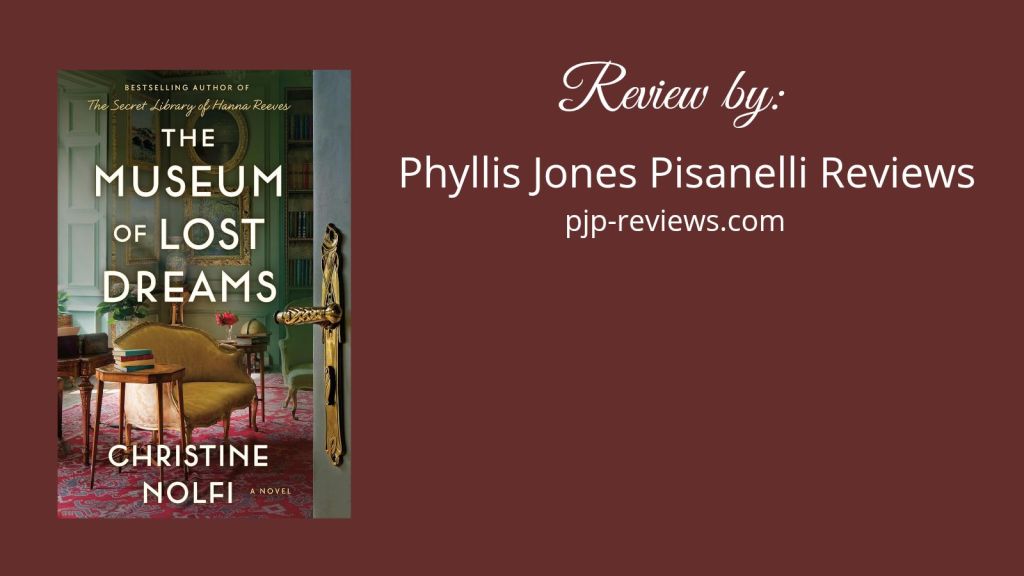
I hope all is well with you because I have a book recommendation for you! I hope you will love it as much as I do. It is The Museum of Lost Dreams by Christine Nolfi. If you’ve read any books by her, you know how awesome her writing is. If you haven’t read her yet, you don’t know what you are missing. She writes the most intriguing books, making the characters and the storyline come alive in your mind. I was literally absorbed in the world she created and completely tuned out of my own.
This book is about a family that has a lot of hurt. It all started with a grandmother who was brilliant and far exceeded the men in her field back in her time period. There are family secrets uncovered in this book and relationships that were destroyed along the way. Some of them can’t be mended, but others will absolutely warm your heart. This book had me in tears, and I’m having a major book hangover as I write this!
Christine Nolfi always weaves a little extra magic into her storytelling; if you’ve ever read her work, you know exactly what I mean. I completely fell in love with the characters—even the ones who didn’t show up to the party until near the end! She is one of the few authors where I don’t even read the synopsis before committing to a book. All of her stories are completely unique, and I know without a doubt she will deliver something unforgettable. They live in my heart forever.
If you are like me and love a good family story with strong ties, a bit of angst, and a romance thrown in, you’re gonna love this book. It is a slow burn, but after a certain point, I just couldn’t put it down! This book deserves a spot on your nightstand. Until next time… Happy Reading!
P.S. Don’t forget to support the authors you read by leaving a review. Even a few words help!
I received a complimentary copy of this book from the author. The opinions I have expressed are my own and I was not required to write a review. I am disclosing this in accordance with the Federal Trade Commission’s 16 CFR, Part 255.
SYNOPSIS:
Returning to her fractured past, a woman is determined to end a cycle of heartbreaks in a moving novel about family, sacrifice, and redemption by the bestselling author of The Secret Library of Hanna Reeves.
When Bess Rollins’s parents die in a tragic accident, she is forced to abandon her dream job overseas. After three years away, she returns to her family’s estate in the Finger Lakes, a veritable monument to her brilliant late grandmother, and a reminder of the wreckage Bess left behind.
There’s the guilt over leaving her younger twin siblings, Casey and Caleb, and she struggles to rebuild a bond that may be irrevocably broken. Amid the grief, resentment still looms toward her reckless and self-indulgent mother and father. And then there’s Luke Monticelli, the devoted man Bess walked out on but never stopped loving.
Haunted by her regrets at every turn, Bess soon realizes that the past is far more complicated than she ever knew. With each secret that she uncovers about her family, Bess comes closer to healing their wounds, seizing a second chance at love, and fulfilling dreams that can lift them all—right here at home, where she belongs.
ABOUT THE AUTHOR:
Christine Nolfi is the award-winning and bestselling author of eighteen novels. Look for her 2026 release, The Museum of Lost Dreams.
Other works include her 2025 bestseller, The Secret Library of Hanna Reeves (sequel coming in 2027); the reader favorite A Heart Like Home; A Brighter Flame, selected by She Reads as a best book club pick and The Passing Storm, cited by Publishers Weekly as “Tautly plotted, expertly characterized, and genuinely riveting” and gold medal winner in general fiction, International Book Awards.
Earlier works include The Road She Left Behind, a top book club pick by Working Mother and Parade magazines; the award-winning Sweet Lake Series; Second Chance Grill, highly recommended by The Midwest Book Review and Treasure Me, recognized by the Next Generation Indie Awards. The Tree of Everlasting Knowledge was cited by The Midwest Book Review as “Poignant and powerful, as much a saga of learning to survive, heal, and forgive as it is a chilling crime story, unforgettable to the very end.”
A native of Ohio, Christine now resides in South Carolina with her husband. Visit Christine Nolfi at the website of the same name.
Genre: Women’s Detective Fiction Release Date: June 16, 2026
REVIEW:
Dear Friends,
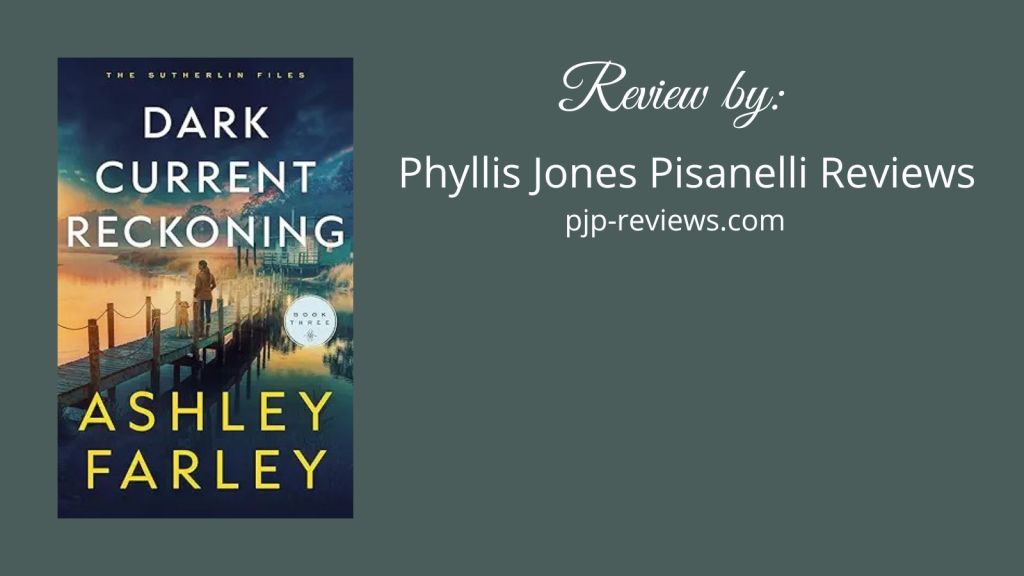
Dark Current Reckoning by Ashley Farley is book three of The Sutherlin Files. This book kept me returning to read just one more page. I’ve been rather busy due to life circumstances lately, but I found myself wanting more. I thought this was the last book in the series. I was stunned at the end and ready to fire off a letter to plead for book number four. There were too many strings that weren’t tied. Imagine my surprise when I finally figured out there is a book four coming. All of this was to say, if you haven’t started The Sutherlin Files yet, HURRY UP! It is too good to miss and you will have time to read the first three before the next and probably final book comes out.
The characters in this book come alive. The scoundrels and all of the good guys. From Lane Sutherlin to the Old Guard. I can’t wait until this series is all tied up like a pretty bow. I want to see who will be held in prison for the rest of their lives and who will talk a pretty story and get off. I’m going to miss these characters!
I think this is one of the best series that Ashley Farley has written yet. She’s hit it out of the park. I’ve read most of her series and liked every single one of them. This one is just over the top. The writing is great, the characters, the small town and I could go on and on. I just think the mystery, suspense and the angst are just a notch better. There are murders to be solved and love lives to be sorted and health problems and old relationships to be healed.
If you love a great series, characters, setting and best of all a storyline that will draw you in and keep you engaged, then this is a series you want to read! It is full of mystery and suspense. I can’t wait for book four. Until next time, Happy Reading!
P.S. Don’t forget to support the authors you read by leaving a review. Even a few words help.
I received a complimentary copy of this book from the author. The opinions I have expressed are my own and I was not required to write a review. I am disclosing this in accordance with the Federal Trade Commission’s 16 CFR, Part 255.
SYNOPSIS:
Lane Sutherlin has dragged Tidewell’s darkest secrets into the light—except the one still poisoning its future. A powerful faction of the Old Guard, including Lane’s own stepfather, is quietly orchestrating a land grab that will wipe out Tidewell’s most historic neighborhood and replace it with a waterfront casino. But before Lane can stop them, a far more personal truth resurfaces.
New evidence emerges about the boat accident that killed her brother nineteen years ago, forcing Lane to confront the lies that shaped her life and the man who buried them. Sheriff Boone didn’t just fail her—he hid the truth to protect one of Tidewell’s most privileged sons. And the boy who “rescued” her that night wasn’t a savior at all.
As Lane digs deeper, the Old Guard closes ranks, desperate to silence her before she exposes their final, most dangerous secret. And complicating everything is Briggs—the town’s embattled commonwealth’s attorney—whose feelings for Lane are getting harder to deny, even as the pressure threatens to break them apart.
With enemies closing in, a community on the brink, and the past demanding justice, Lane must decide what she’s willing to risk to finish what she started. Tidewell is running out of time.
And this time, the reckoning is hers.
ABOUT THE AUTHOR:
Ashley Farley, Amazon Charts and USA Today bestselling author writes Southern women’s fiction about love, loss, and the quiet courage it takes to start over. Her stories follow everyday women—mothers, daughters, sisters, and friends—as they navigate life’s hardest moments and find their way back to hope.
A South Carolina native, Ashley’s heart still belongs to the Lowcountry, where moss-draped oaks meet salty air and Southern charm runs deep. She now writes from her waterfront home on Virginia’s Northern Neck, where she shares her days with family and two strong-willed Labradors, Emmie and Willa.
Genre: Contemporary Women’s Fiction Release Date: June 11, 2026
REVIEW:
Dear Friends!
Have I got a book for you to read! I am so excited about this series. Barbara Hinske has been writing The Rosemont series for many years. The first one is Coming to Rosemont which was published in February of 2013. That is a lot of dedication to a series! She even has a book club just for that series you can join with other readers that love the series. Anyway, her brand new Rosemont book number 12 is Love and Legacy. I just started with book eleven and I can’t wait to have the time to go back and read the first ten books.
If you haven’t already guessed, this series takes place in a small town called Rosemont. You already know I love small towns. I really don’t know what took me so long to find Barbara Hinske and her wonderful books. She has a unique talent to write every book in a series as if it were a standalone. I began to read her books when I was assured I would not be lost. So, my advice to you is dive in and enjoy the entertainment.
The town of Rosemont has the most wonderful characters. I feel like I know these people and when I open the book I feel like I’ve left my chair and have been transported to their town. The people are warm and welcoming. It is not all wine and roses. There have been some misunderstandings between some of the town folk. They seem to get it ironed out. I really can’t tell you how much enjoyment I get from reading these books. Oh! There is even a resident ghost you’re going to love. I have enjoyed his antics and his thoughts about what is going on.
I’m highly recommending this series and if you want to start at the beginning or jump in now, either way is fine. These really belong on your nightstand. They will bring you many happy dreams.
Until next time, Happy Reading!
P.S. Don’t forget to support the authors you read by leaving a review. Even a few words help them so much.
I received a complimentary copy of this book from the author. The opinions I have expressed are my own and I was not required to write a review. I am disclosing this in accordance with the Federal Trade Commission’s 16 CFR, Part 255.
SYNOPSIS:
Maggie Martin has spent years healing a fractured town, and suddenly she finds herself at odds with one of her favorite Westbury leaders, who happens to be a close personal friend. As tempers flare, will she be able to soothe troubled waters?
Across town, the renovation of the future site of Anita Archer’s sewing machine museum unearths shocking relics from the past. As if that isn’t enough, her world tilts when Gordon Mortimer invites her to Paris—and confesses the secret he’s been keeping. Can she trust the man who has captured her heart?
Back home, Susan welcomes her new baby, Sunday faces an unexpected possibility, and Grace wonders if friendship has finally grown into love as David’s mentors step in to offer the lovelorn young man much-needed advice.
Full of heart, hope, and second chances, Love and Legacy celebrates the joy and courage of new beginnings.
ABOUT THE AUTHOR
Barbara Hinske is an attorney who left the practice of law to pursue her career as a full-time novelist. She inherited the fiction gene from her father, who wrote mysteries when he retired and told her a story every night of her childhood. Barbara is the author of the beloved Rosemont Series, the Guiding Emily Series, the Paws & Pastries Series, her sweet Christmas stories, the mystery, thriller, and suspense novels in her “Who’s There?” collection, and three novellas in The Wishing Tree Series.
She and her husband share their own Rosemont with two adorable and spoiled dogs. She is besotted with decorating, entertaining, cooking, and gardening. Her novels The Christmas Club (2019) and Guiding Emily (2023) have been made into Hallmark Channel movies.
Praise for Coming to Rosemont:
“In a category that doesn’t often feature felonious crimes as a main plot point, it’s somewhat surprising to see this title — with corruption, fraud, and arson coursing through the story — in a list of top performers. But with enough twists and turns to hook any reader’s attention, an adorable dog on the cover, and some classic women’s fiction tropes, Coming To Rosemont delivered more than enough firepower to win over our readers!” BookBub’s Best: Women’s Fiction (#4)
“In this series opener, Hinske immerses readers in a delightful small town….The joys of the tale come from the warm relationships and the story of a woman getting a second chance at life and love.” Publishers Weekly (BookLife)
Connect via my website, FB, Instagram, and YouTube, and check out images of Rosemont and places from the book on Pinterest.
Genre: U.S. Biographies Release Date: November 13, 2025
INTRODUCTION:
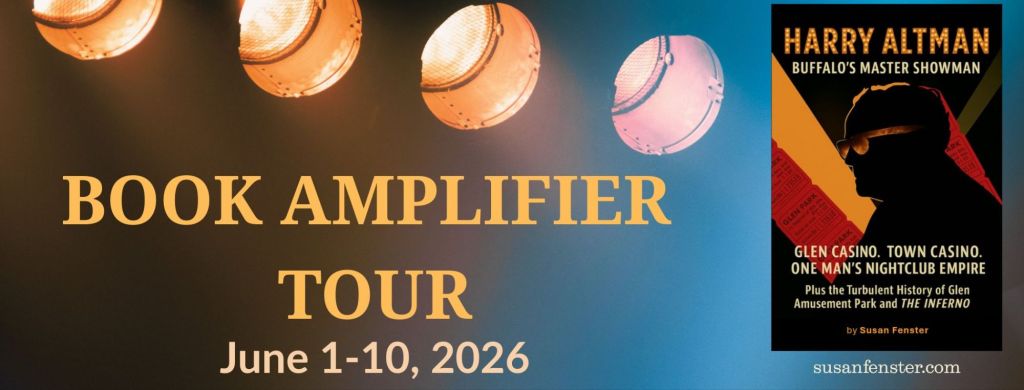
There are places that once felt permanent until time erased almost every trace of them. Susan Fenster’s Harry Altman: Buffalo’s Master Showman looks back at a world of crowded venues, late-night entertainment, and a figure whose influence once reached far beyond the spotlight itself.
SYNOPSIS:
At one time, Harry Altman stood behind some of the biggest entertainment venues in Western New York. He booked performers, built gathering spaces, and helped create an atmosphere that drew audiences searching for excitement, music, and spectacle. The momentum surrounding his success seemed unstoppable. His venues were packed, the performances constant, and the entertainment industry itself was expanding in real time. But behind every successful night was an unstable business shaped by risk, shifting audiences, and relentless pressure. As decades passed, entertainment changed. Crowds moved elsewhere, older systems stopped working, and the world Altman helped create began disappearing piece by piece. His role in that history slowly faded as well. Drawing from surviving records, advertisements, and archival material, Susan Fenster reconstructs the rise and decline of a forgotten showman while exploring the larger question beneath the story: what happens when someone builds something meaningful, only to watch it vanish from public memory?
EXCERPT:
CHAPTER 5—SERIAL ENTREPRENEURSHIP (1925-1935)
Driven by sheer ambition, Harry Altman was a powerhouse of activity, spending up to 18 hours a day juggling multiple business ventures. No sooner had one business contract been finalized than Altman would show up at his lawyer’s office with another, proudly waving a document he proclaimed was “The Best Idea Yet!” Several of the early enterprises persisted for a few years, but the majority were attempted and subsequently discontinued within months, or even weeks. Old newspaper ads and musty business filings serve as the only evidence of the many projects that ran hot out of the gate before turning to ash. Harry’s approach to business was that of a serial entrepreneur. If the monthly receipts did not prove financially viable, the business was cast aside or, more likely, recast to suit the needs of the latest trend in entertainment. Altman favored leasing buildings with large, open floor plans that could easily be converted into a dance hall or a roller rink or a restaurant/nightclub—whatever Harry thought would pay the bills and attract the money of business partners who could fill the coffers. For much of this era, he would hopscotch along Main Street in downtown Buffalo, leasing different commercial buildings, sometimes for only a year, to accommodate his various business ventures. He had a small group of investors that he mixed and matched according to the scale of the project and the financial risk each investor was willing to take. In the early 1920s, Harry shifted his focus to ballroom dancing, capitalizing on its popularity as an affordable form of entertainment during Prohibition and the Depression. Patrons eagerly embraced dancing as a cost-effective way to enjoy themselves during these economically challenging times. The music of the era went far beyond staid waltzes to include lively, upbeat rhythms that celebrated the peace and stability following the victory of a brutal world war.
GUEST POST:
Shea vs. Altman: How History Chose Who to Remember
History doesn’t remember the busiest man in the room; it remembers the one whose name is etched into the building.
In downtown Buffalo, Michael Shea is still spoken every time the lights go up at Shea’s Performing Arts Center. A generation before Harry Altman, Shea anchored the city’s entertainment culture in something permanent: a grand movie palace designed for film but rooted in the vaudeville tradition, where live performance and spectacle shaped a full night out.
Altman followed Shea, whom he admired, and developed that model with keen insight.
Like Shea, he rose through the immigrant experience, reading the crowd and building venues where working- and middle-class audiences could escape for a few hours and feel part of something larger. He shared Shea’s populist sensibility: give people a show, make it accessible, keep it moving. And if the crowd shifted, you shifted with it.
But where Shea created a container, Altman lived inside the content.
Their defining venues still face each other across Main Street. Shea’s name still glows in lights at Shea’s Performing Arts Center on every theater night. The Town Casino, now Town Ballroom, has cycled from nightclub to theater to indie music venue under different monikers. The building survived. Altman’s memory did not.
Shea did not just build a theater. He built a following. His audience, and the community that claimed him, kept his name in circulation long after he was gone.
Altman had no such constituency. His legacy was experiential, tied to nights that could not be replicated, the kind where the room was full, the act hit, and everyone knew it mattered while it was happening. His business structures were built to survive financially, not to preserve a legacy. While Altman had stars in his eyes, his feet were always on the ground, trying to make payroll, keep the doors open, and outmaneuver whatever came next.
Shea built something that could survive him. Altman built something that needed him.
And history made its choice.
QUESTIONS & ANSWERS:
What’s a detail, theme, or clue in your book that most readers might miss on the first read but you secretly hope someone notices? One detail I hope readers notice is the pattern in Harry Altman’s early career, and how it abruptly disappears just before his greatest successes. For more than two decades, Altman tried to build something of his own and kept getting knocked back. Fires. Violence. Sudden disruptions that made it nearly impossible to sustain anything independently. It happens often enough that it begins to feel less like bad luck and more like the conditions of the industry at the time, especially in a border city where nightlife, money, and control were closely intertwined. Then, after his mid-1930s bankruptcy, the pattern stops. The disruptions fade. His businesses stabilize, expand, and succeed at a level he had never reached before. What I hope readers sit with is that shift, and what it must have felt like from his side. He was no less driven before than after. He was working just as hard, taking the same risks. But something changed. The environment around him shifted, and the resistance he had been pushing against for years was suddenly gone. The book doesn’t claim more than the record supports. But the contrast is hard to ignore. It suggests that success in that world was not just about ambition or talent, but about whether you are willing to operate within the system that governs it.
When did this story or idea “click” into place for you—was there a single moment you knew you had to write it? It clicked during the research, when I began to see the pattern. Harry was a serial entrepreneur, building and rebuilding over and over, and each time something knocked him back. After a while, it stopped looking like bad luck. I realized he wasn’t failing for lack of effort; he was hitting the limits of the business environment he was operating in. Then comes the public failure in the mid-1930s—his bankruptcy—and after that he’s forced to make changes. He realized that personal effort alone wasn’t enough. He doesn’t lose his drive; he stops trying to succeed on his own terms and starts playing by rules set by those who controlled the nightlife economy, rules no one wrote down but no one dared ignore. That’s when his success takes off. What stayed with me was what that must have felt like. After years of believing that hard work would be enough, he realized that it wasn’t, and he had to adapt to rules that weren’t always visible but were clearly enforced. That’s when I knew I had the story.
Which character or real-life person surprised you the most while writing this book, and why? Harry Altman surprised me. At first, I only saw the glitz and the glamour of the Town and Glen Casinos. I assumed I would find a straightforward rise. But the deeper I went into the research,, the more I realized he was anything but an overnight success. He spends decades getting knocked back, building and rebuilding, trying to make it on his own and failing to sustain it. Then, after his most public failure, bankruptcy, something shifts. The pattern changes. The resistance he had been pushing against for years begins to ease. His businesses stabilize, expand, and succeed at a level he had never reached before. But even that is not enough. Over time, the world changes. Music changes. Television changes everything. And this time, there is no rebuilding. His business model is gone, as is Harry and his legacy.
If your book had a soundtrack, what three songs would be on it and what scenes or moments would they pair with? If the book had a soundtrack, it would follow his arc from struggle, to success, to disappearance. First, “Brother, Can You Spare a Dime?” by Bing Crosby. I hear that over the early chapters, when Harry is doing whatever it takes to survive. There’s a moment where he’s literally shifting his venue back and forth between a ballroom and a skating rink on a daily basis, trying to get people through the door. It captures that constant improvisation—effort without stability. Second, “Fly Me to the Moon” by Frank Sinatra. That’s the peak—the Town and Glen Casino years—when the rooms are full, the acts are strong, and he has finally figured out how to operate successfully in that world. And then, for the final note, “Gloomy Sunday” by Billie Holiday. I think of a moment near the end when he’s still putting shows on at the Glen Casino, but the rooms that once held 800 people three times a night are nearly empty. He’s relying on the legacy of the place more than the power of what’s on stage. The show goes on—but no one’s there to see it.
What’s one belief, question, or emotional truth you hope readers carry with them long after they finish your book? You can build a meaningful life, be celebrated in your time—and still be forgotten.
Tell us about a moment during the writing process when the story (or message) took an unexpected turn. I thought I was writing a straightforward success story. I began with the high points—the Town and Glen Casinos—and assumed I was tracing a rise. But as I dug into the earlier years, that narrative fell apart. The pattern was instability, not momentum. Then, in the mid-1930s, the disruptions ease. The businesses stabilize. And that shift forced me to rethink the entire story. It stopped being about how one man succeeded and became a question of what he was willing to compromise in order to succeed.
If your protagonist (or central figure) could give the reader one piece of advice, what would it be? You can fight the system for years. Or you can learn how to live with it. Just know the cost either way.
What real-world place, object, or memory helped shape a key element in your book? There’s a moment in the book, in 1936, when Harry Altman is developing the Glen Casino while still operating a ballroom on the edge of the city. Within six months, both venues burned to the ground, along with the instruments of the same orchestra that played them. It becomes a turning point, the moment when everything begins to change. His reaction? “I’m just going to need to start building them (the buildings) in iron.” The black humor says everything.
What’s something you had to research, learn, or experience to write this book that genuinely surprised you? What surprised me most was how unforgiving the business actually was. The book details what Harry Altman and other impresarios of the era dealt with behind the scenes. No-shows. Lost wardrobes and props. Difficult talent. Last-minute cancellations. Union disputes that could shut a night down entirely. What looked glamorous from the outside was, in reality, relentless. One bad night could cost you everything, and there was always another one waiting.
If your book were invited to join a shelf with three other titles, which ones would make you happiest—and what would that shelf say about your story? I’d be happiest to see it alongside Empire of Pain by Patrick Radden Keefe, Random Family by Adrian Nicole LeBlanc, and The Power Broker by Robert A. Caro. Those books stay with you because they are not just about what people achieve, but about what shapes them, what constrains them, and what ultimately outlasts them. They show lives in motion, full of effort and intention, but also shaped by forces that are larger and often invisible. If my book belongs on that shelf, it says that this is not just the story of a man’s success, but of a life shaped by its moment, and of how even a meaningful life can slip quietly out of memory. PS – If my book is even in the same library as Robert A. Caro’s, I’d be overjoyed.
ABOUT THE AUTHOR:
Susan Fenster is a nonfiction author and historian whose work focuses on New York State and the evolving cultural life of the region.
With degrees in history and journalism from Buffalo State University, she brings together long-form research and narrative storytelling to examine how people, businesses, and communities shaped their time. Her work draws extensively from archival sources, including newspapers, business records, and local collections.
She has spent more than 30 years writing about the region and lives in Williamsville, New York. Visit Susan at her website.