Release Date: August 10, 2026
INTRODUCTION:
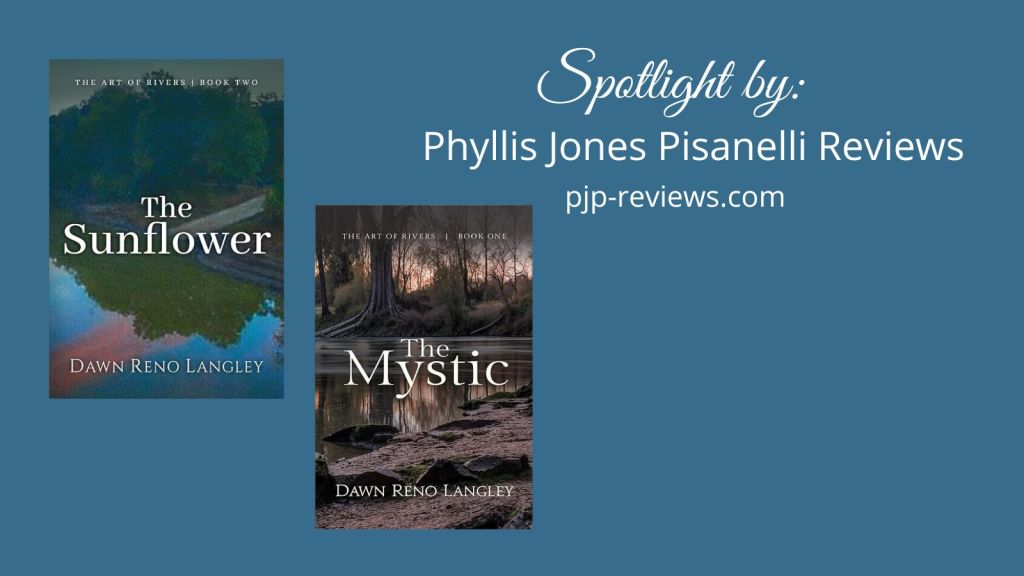
I’m so excited to bring you the first two books in The Art of Rivers series. The Mystic is book one and The Sunflower is book two and just released for our reading pleasure. One of my favorite genres is Historical Fiction and I can’t wait to sit down and immerse myself in these books. For us lovers of series, there is a book three in the works!
THE MYSTIC:
“An enticing deep dive into the mind of the main character as she grapples with her role in a terrible accident.” –Drew Becker, author of The Joyful Brand
It’s the 1950s in Massachusetts when Beth Robbins’ world is shattered by her husband’s hit-and-run accident compounded by his mysterious disappearance. The police investigating the accident include Graham Jackson, the only Black officer on the force, and a man Beth feels strangely drawn to. As Beth navigates a complex web of secrets, racial tensions, and moral dilemmas, she must face the truth about her husband’s actions while forging her own path forward, perhaps toward fulfilling her dream of becoming an artist.
With twists and turns centered around the search for Jack Robbins, The Mystic offers an unforgettable exploration of remorse, responsibility, and the power of human connection. Let the river sweep you away into a gripping tale of mystery, relationships, and the transformative nature of truth.
THE SUNFLOWER:
In the heart of 1960s Mississippi, where every act of courage risks everything, a Black police officer and his White wife dare to love—and to hope—in the shadow of segregation. “The Sunflower” by Dawn Reno Langley follows Graham Jackson and Beth as they navigate a world hostile to their union, facing threats from the Ku Klux Klan, community scorn, and the looming danger that follows every step. When Beth discovers she is pregnant, their fears intensify, yet so does their determination to build a better life for their child.
As Beth finds solace and purpose in teaching art to a gifted student, and Graham is called upon by Senator Kennedy himself to help shape the course of history, the couple is drawn deeper into the struggle for justice. Tragedy, loss, and unexpected kinship force them to make a heartrending decision: escape the only home they’ve known for the promise of a safer future.
In this poignant and gripping novel, Langley paints a portrait of resilience and hope, reminding us that love—in all its forms—can bloom even in the most inhospitable soil.
QUESTIONS & ANSWERS
You published your first article at nine years old, about the Cuban Missile Crisis. What made a child want to write about the fate of the world?
My parents encouraged open communication about what was happening in the world around us. We always had great dinner conversations, even when I was very young. I remember being curious about what was happening with the Cuban Missile Crisis, because my school taught us how to remain safe during that time. We had drills in grammar school on a daily basis that sent us down to the basement where we would line up by classroom until the bell rang to send us back to our rooms. I felt safe in that cement bunker, but I wanted to know what we were hiding from. My mother told me about nuclear war and how she coped with it when my father was fighting in World War II and Korea, and that is what inspired the article.
You have written everything from children’s books to novels about gender identity, from antiques guides to a book about the goddess in all of us. Is there a thread connecting it all, and can you put it into words?
To be honest, everything I’ve written has been about me exploring something I’m interested in. The first children’s books I wrote (The Jenny Books) were for my daughter, and she really loved that I had written stories with a character who had her name—but the stories were part of my own story and spawned from my childhood.
My antiques books started when I was writing articles for antiques and collectibles newspapers and magazines. I was an antiques dealer, so I researched everything I sold, and I wrote articles about those items. When I created a two-page spread about Black American collectibles, an editor at Crown Publishers contacted me about expanding what I’d written into a whole book. After that, I kept writing for newspapers and magazines, and having written one book, I queried editors about additional ones. I was very lucky to find an editor who liked my work, and we collaborated for many years and many books after that.
I’ve always wanted to write novels, and my first one (All That Glitters) was born when my editor and I were relaxing in a hot tub at her cottage in Maine. She helped me get an agent, and pretty soon, ATG found a home. After that, I continued to write novels, and I produced four more. Analyzing the Prescotts was actually the result of my PhD dissertation, which centered on transgender authors.
You Are Divine came from the love I have for feminist studies and my yoga background. I’ve always felt strongly about the world we women create, and I’ve read widely about goddesses and strong women. To put together those “loves” was a work of the heart for me.
Your novel Analyzing the Prescotts follows a family torn apart when the father chooses to live as a woman. How do you prepare yourself to write about something that sensitive, and why do stories like that matter right now?
I studied transgender authors and their voice pre- and post-transition during my doctoral program, and my writer’s mind automatically wanted to create a story about what happens to families who live through such a drastic change in the family makeup. My research in my PhD years helped me truly understand what it means to transition from one gender to the other, and I hope it’s obvious that I have compassion for what it means to each member of the family as the father transitions to her female self.
Preparation to write about sensitive topics changes as the topic changes. I try to do as much research about the topic as possible, and I immerse myself in what human beings might be experiencing and feeling. Compassion is extremely important when one is writing about topics that are not always understood by the general public. I feel that my job as a writer is to open up the discussion people should have about those topics. It’s not always easy to present a difficult subject in a way that might allow readers to understand.
Stories like the Prescotts, and the interracial relationship I write about in The Art of Rivers series, are not always accessible to all readers, and I like to think that readers want to explore difficult stories like transgender issues and civil rights in the fiction arena, because it’s easier to understand those topics in a story rather than, say, a documentary. The fiction format brings people closer to the characters because they’re “not real,” and readers can relate when there isn’t the challenge of facing a real person.
You are a Fulbright scholar, hold a PhD and an MFA, and have worked with university programs in Pakistan. How has that academic journey shaped you as a storyteller rather than constrained you?
The academic journey actually happened long after my writing journey began. I appreciated education during my formative years and got great grades, but after I graduated from high school, I felt like my education had ended, and that was a big disappointment for me.
Every one of my educational experiences was separated from the next one by at least five years, and to be honest, that was good because it gave me time to digest what I had learned. I’ve always been thirsty for learning new things, and I believe that started the moment I entered my first library. When I realized that books existed on any topic I was curious about, I felt as though I’d opened a treasure trove. The first book I read that spawned my love for travel was Kon Tiki, and it gave me a thirst for discovery that still hasn’t been quenched.
The MFA program at Vermont College made me feel for the first time that I was a writer—and a successful one, at that. I had always felt as though someone would find out, sooner or later, that I had come to this profession too easily. I felt like everyone else was a better writer than I was—true imposter syndrome. But being at VC made me realize that I was finally accepted as a professional writer, and that I could explore the fictional world even more than I already had.
When I came to my PhD program, they asked what I wanted to research, and since I had looked into women writers and their private and public writings during my MFA program, I knew I had to take it up a notch. I realized that I had some prejudice toward transgender folks, and in order to conquer that prejudice, I knew I had to understand trans people. And it did. As a result of that research, I created a story that I believe is one of the best I’ve created.
So, all in all, creativity and education go hand in hand.
You live with an ocean view, you call it “Writing from the Beach,” and you have even opened your guest room to other writers on a donation basis. What does the sea give you that nothing else can?
I no longer live on the coast of North Carolina, but I’ll soon be moving to the coast of Portugal! When I opened my house to other writers in North Carolina, I felt both like I was giving back, as well as spending time with other writers (and there is nothing better than that). The sea gives me a feeling of peace, and it also reminds me that the peace I feel is often offset by the strength and power of the ocean. When I can walk on a beach, my mind is free to explore whatever ideas I have and creativity expands.
You are working on a memoir about the loves of your life, you are a certified yoga instructor, a mosaic artist, and you travel the world with your husband Ian. How do you protect your creativity in the middle of all that living?
I’m no longer married to Ian.
All of the work that you mentioned actually buoys my creativity. One idea gives birth to another. I find that I can creative when working up a yoga lesson, and my mosaic work is inspired by nature, literature, and art. I don’t feel like I have to protect my creativity while I live, because living is what inspires me creatively.
What do you want the children who one day read your books to understand about who you were and what you fought for?
Oh, this is a great question.
I want future children to know that I was once a child, too, and that my days in libraries and reading as many books as I could were what helped me become a writer. I learned early in my childhood to dream, and the more I dreamt, the more I realized there were people in the world who had different experiences than I did. Once I realized that, I wanted to travel and to meet those people and see those places that I had read about. Offering stories of my own world—or of others I’d learned about—gave me a reason to write and to be as a human being. I do hope that those future children realize that if they care about something, whether it’s a person or an issue, they can fight for/against it, they can write about it/them, and their voices matter.
ABOUT THE AUTHOR:
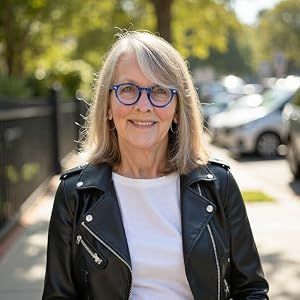
Dawn Reno Langley
Book Two of the Art of Rivers, THE SUNFLOWER, will launch on August 10!
At the tender age of nine, Dawn Reno Langley wrote her first published piece: an essay on the Cuban Missile Crisis. Since then her pen/computer has spewed forth a great number of written works ranging from newspaper articles to novels, poetry to children’s books, memoirs to fantasies. Her pseudonyms include: Dawn Reno, Dawn E. Reno, Dawn Elaine Reno, Dawn Reno Langley, and Diana Lord.
A nomad, she travels the world, caring for other people’s homes and animals. She’s traveled throughout Europe, the Far East, South America, and Africa–and is always looking for new places to visit.
As a teacher, Dawn has touched the lives of students from a 6th grade Montessori class to students in honors-level university courses, and writers in MFA and PhD programs. She counts many of them among her friends.
She blogs about books on Goodreads; talks about writing and the world around her on LinkedIn; and speaks to groups about writing, the social justice issues she stands for, and life as a Buddhist-yogi-writer. Her business, Rewired Creatives, Inc., offers editing, ghostwriting, coaching, and writing retreats.
Next on her plate: launching Love, Leashes & Letting Go — a memoir — in September!

